Automatic Gate Opener Installation in Elgin, IL — Residential & Commercial Operators
The operator gets chosen from leaf weight, leaf length, cycle count and wind load. Get those four right and the motor lasts; get them wrong and it runs at its limit until it doesn't.
Elgin Elite Metal Gates is your local resource for gate opener installation, operator replacement and gate automation upgrades throughout Elgin, Kane County and the Fox Valley. We work with qualified local gate and access-control specialists who size the operator to the gate rather than to the budget line.
Operator selection is arithmetic, not preference. Leaf weight, leaf length, expected daily cycles and wind load determine the class of machine the gate needs. Buy below that and the operator runs at the edge of its duty cycle permanently — the mechanical equivalent of redlining an engine — and it fails early in a way that looks like bad luck and isn't.
Wind load is the input most often left out. A solid panel gate catches air like a sail, so it can need a full size more operator than an open picket gate of identical weight. Anyone sizing from weight alone will undersize a panel gate every time.
The other half of the job is the safety system, and it isn't optional. UL 325 requires two independent means of entrapment protection at each entrapment point in each direction of travel, and operators manufactured from 2016 onward monitor their external devices and will not run without one connected. This page covers the operator hardware itself; the gate it goes on is automatic and electric gates, and the entry hardware is gate access control systems.
What a Gate Opener Installation Quote Covers
- Leaf weight calculated and length measured, rather than estimated from the opening
- Honest cycle-count assessment, since a house where trades come and go daily is closer to commercial duty than it looks
- Wind load factored in where the gate has solid or dense infill
- Usage class identified — Class I residential through Class IV restricted-access — and stated plainly
- The right operator type for the gate: slide, articulated arm, linear ram or underground
- A check that the existing gate can take mechanical cycling before any operator is fitted
- Two independent means of entrapment protection per entrapment point per direction, per UL 325
- Conduit, trenching and correctly sized conductors for the run length so the motor isn't starved
- Battery backup and vehicle detection — loop, exit wand or button — where the layout calls for it
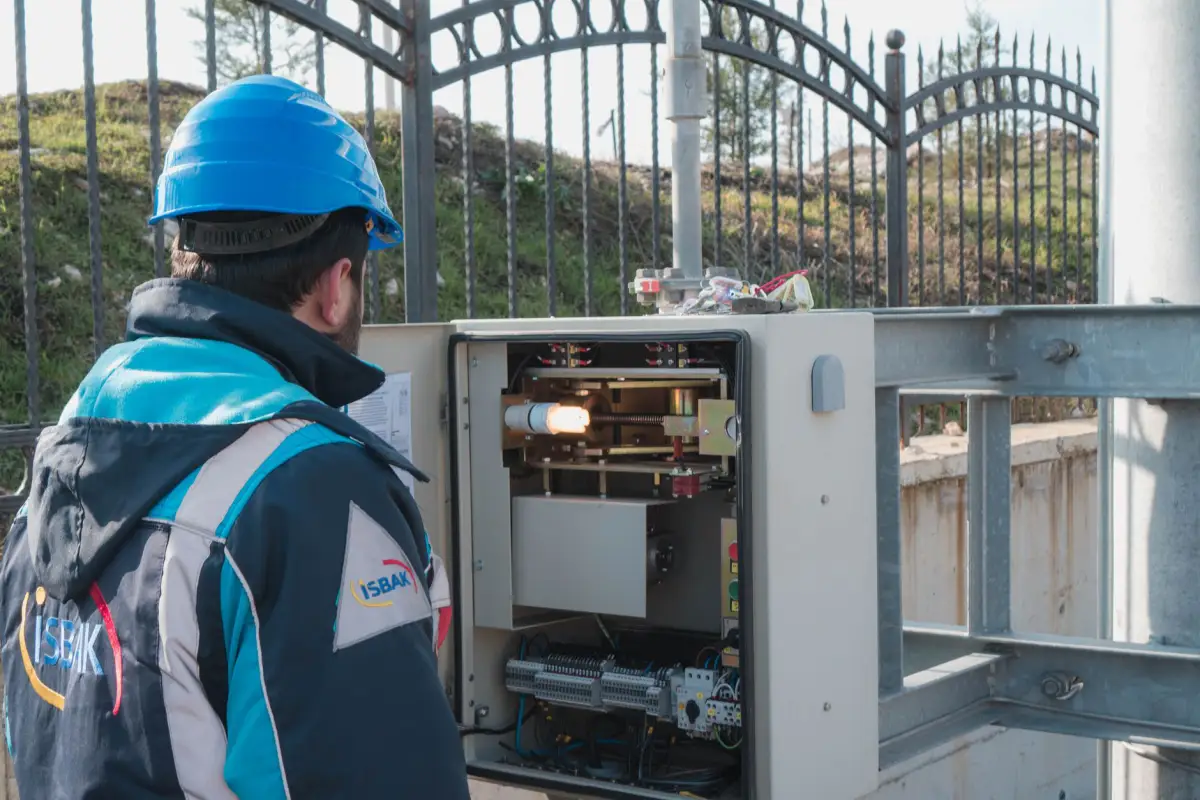
- Travel limits set, obstruction sensitivity tuned, every safety device triggered and verified, manual release demonstrated

Automatic Gate Opener Installation in Elgin, IL
Sliding Gate Opener Installation
Slide operators drive the gate along its run with a rack-and-pinion arrangement or a chain. The installation detail that determines how long it lasts is rack alignment: a rack that isn't parallel to the pinion chews teeth, gets steadily noisier over months, and eventually skips under load. Getting it straight and correctly meshed at install is the whole job. Mounting matters too — the operator pad has to be stable and at the right height relative to the gate, and a pad that settles takes the alignment with it. The climate consideration here is what the gate runs on. A ground-level V-track collects grit, road salt and refrozen meltwater, and the operator reads that resistance as an obstruction and reverses, which is why a gate that stops halfway every January morning is usually a track problem rather than a motor problem. On a cantilever gate, nothing touches the ground and that failure mode largely disappears. See sliding gates.
Swing Gate Opener Installation
Swing operators come in three types that suit different gates. Articulated arm operators tolerate a gate that isn't perfectly true, mount easily to most posts, and are the simplest to service — which makes them the common residential choice. Linear ram operators are compact and powerful but less forgiving of a leaf with any play in it. Underground operators disappear from view entirely, which genuinely matters on ornamental work, at the cost of a housing that must drain properly or it fills with meltwater and freezes solid in January. On a bi-parting pair, the two operators need sequencing so the passive leaf lands before the active one closes against it; skip that and a double gate that latched fine manually stops latching once automated. Every swing gate has two entrapment points — the leading edge and the hinge side — and both need protecting in each direction of travel. See swing gates.
Electric Gate Motor Installation
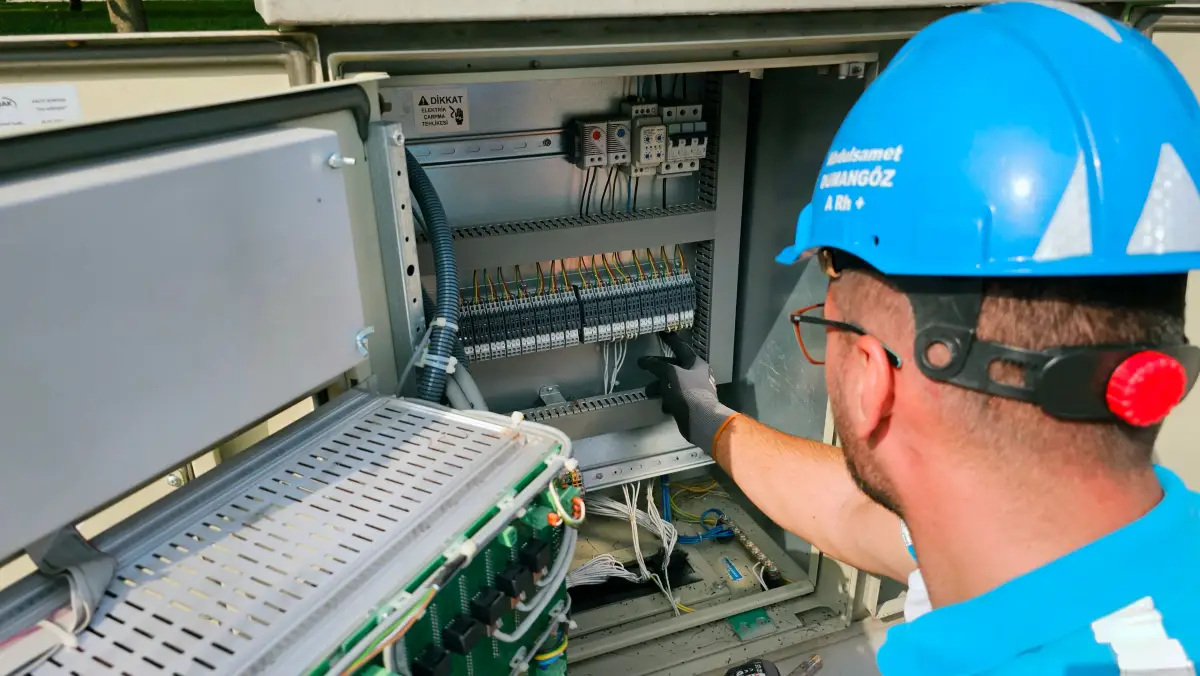
The electrical side is where corners get cut invisibly. Line voltage has to reach the operator with enough left at the far end — a long run in undersized conductor drops voltage and starves the motor, which then behaves exactly like a failing motor: slow, straining, cutting out on load. Sizing the conductor for the actual run length is cheap at install and impossible to retrofit without re-trenching. Low-voltage runs go out to the photo eyes on the opposite post, to any keypad or intercom at the road, and to a vehicle detection loop if one is going in. Where the path crosses finished concrete or asphalt, that means saw-cutting and patching, and it is consistently the most underestimated line on an automation quote. Battery backup gets wired at this stage as well — Fox Valley ice storms take power down often enough that a gate without backup is a gate you'll be releasing by hand in the worst conditions of the year.
Gate Operator Replacement & Upgrades
Replacing an operator is a chance to correct an original sizing mistake, and it's worth taking. If the outgoing unit failed early or repeatedly on a heavy leaf, fitting the same class again reproduces the outcome — leaf weight gets recalculated and the class revised. Age is the other common driver. An operator predating 2016 has no monitored external entrapment protection, meaning it will happily run with a disconnected or misaligned photo eye, which is precisely the failure mode the monitoring requirement exists to prevent. Obsolete units with no parts availability are the third case: repairing one is money spent on a machine that has no future. On any replacement, the existing gate gets assessed too, because a gate that has spent years being driven by a struggling operator has usually taken some wear at the hinges and welds while doing it. See gate opener repair for when repair is still the right call.
Smart & Remote Gate Opener Systems
How the gate gets triggered is a separate layer from how it moves, and it's worth specifying deliberately rather than accepting whatever ships in the box. Remotes are simple and fail simply — a battery, or a receiver that lost its programming after a surge. Keypads let you give a contractor a code without handing over hardware. Smartphone control adds two things that genuinely change how a gate is used: letting someone in while you're elsewhere, and a log of when the gate opened. Exit detection is the piece most often forgotten at install and most missed afterward — something has to tell the gate to open for a departing vehicle, whether a loop buried in the drive, an exit wand, or a button. Without it you're reaching for a remote to get off your own property. Full detail on gate access control systems.
Signs You Need an Opener Installed or Replaced
- You're getting out of the car in weather to push a gate by hand
- The existing operator has failed more than once, which usually means it was undersized rather than unlucky
- The motor strains audibly at the same point in travel every cycle
- Your operator predates 2016 and has no monitored photo eyes or safety edges
- Parts are no longer available for the unit you have
- The gate has no way to open for a departing vehicle without a remote in every car
- You're building or replacing a gate and want the conduit run before the drive gets patched
- The gate is manual now but the household or business use has changed enough to justify automating it
How Gate Opener Installation Works

- 1
Gate assessment and load calculation
Before any operator is specified, the gate gets checked for whether it can be cycled mechanically at all. It's pushed through its full travel by hand to find binding points — a gate that catches at one spot will make an operator fight that resistance every cycle for the life of the machine. Hinges get lifted for play, the leaf gets checked for racking at the latch corner, and on a slide the run and rollers get inspected end to end. Then the numbers: leaf weight calculated rather than guessed, leaf length measured, infill assessed for wind load, and daily cycle count discussed honestly. That last one catches people out — a household where trades, deliveries and family come and go can approach commercial duty without anyone noticing. These four inputs produce the usage class and the operator size, and everything downstream depends on them being right.
- 2
Operator selection and safety design
Usage class comes from the property: Class I for a single-family residence, Class II for general-access commercial like an apartment or retail lot, Class III for industrial or limited-access sites such as a loading dock, Class IV for restricted, guarded locations. The specific model then comes from weight, length, cycles and wind load. Operator type follows the gate — slide, articulated arm, linear ram or underground — and isn't interchangeable between gate types. Then the safety system gets designed rather than assembled from whatever came in the box. Every entrapment point is identified: on a swing gate, the leading edge and the hinge side; on a slide, the leading edge, the receiving post and the gap at the parked position. Each gets two independent means of protection in each direction of travel, typically the operator's inherent obstruction sensing plus a monitored external photo eye or safety edge.
- 3
Power, conduit and mounting
A JULIE locate goes in before digging. The electrical path is planned end to end: line voltage from the source to the operator with the conductor sized for the run length, since voltage drop over a long undersized run starves the motor and produces every symptom of a faulty one. Low-voltage runs go to the photo eyes on the far post, to any keypad or intercom at the road, and to a detection loop if one is being cut into the drive. Loops get cut, laid and sealed. Where the path crosses finished concrete or asphalt, saw-cutting and patching is real work that belongs on the quote rather than in a change order. The operator's mounting pad or bracket gets set stable and true — on a slide, rack alignment depends on it, and a pad that settles takes the alignment down with it. Battery backup gets wired at the same time.
- 4
Commissioning, testing and handover
Travel limits get set so the gate stops where intended rather than driving into its end stops. Obstruction sensitivity gets tuned to reverse off a person without nuisance-tripping on wind — a balance, not a default. On a bi-parting pair, the operators get sequenced so the passive leaf lands before the active one closes. Then each safety device is deliberately triggered and the gate's reaction verified in both directions of travel, because a monitored device that's wired but aimed at the wrong place satisfies the controller and protects nobody. ASTM F2200 items get checked on the gate itself: frame openings under 2.25 inches, smooth bottom edges with protrusions no greater than half an inch, and construction such that the gate won't fall more than 45 degrees from vertical if it detaches from its supporting hardware. Finally the manual release is demonstrated to whoever uses the gate, and remotes, keypads and codes are handed over documented.
What Does Gate Opener Installation Cost in Elgin, IL?
- Usage class — Class I residential and Class II general-access hardware are genuinely different tiers
- Operator type: slide, articulated arm, linear ram and underground all price differently
- Leaf weight, length and wind load, which together set the minimum machine
- Whether the existing gate needs hinge, brace or frame work before it can be cycled mechanically
- Number of entrapment points, since each needs two independent means of protection per direction
- Distance from the power source and the conductor size that run requires
- Trenching, especially where the path crosses a finished driveway and needs saw-cutting and patching
- Vehicle detection — a loop cut into the drive, an exit wand, or a button
- Battery backup, close to essential where outages are routine
- Access control hardware — keypad, intercom, reader or smartphone control
Trenching is the line most often missing from a cheap automation quote and the hardest to add afterward. Power has to reach the operator and low-voltage has to reach the far post, the keypad and any loop. If that path crosses a finished drive, it involves cutting and patching. A quote that assumes power is already at the gate line — when it isn't — isn't a lower price, it's an incomplete one, and the difference appears as a change order once the crew is on site.
What to Look for in an Elgin Gate Opener Installer
Leaf Weight Calculated, Not Estimated
Weight, length, cycles and wind load produce the operator class. An installer who can't tell you the leaf weight hasn't sized anything.
Wind Load Included for Solid Gates
A panel gate catches air like a sail and can need a full size more operator than its weight suggests. Sizing from weight alone undersizes it every time.
The Gate Pushed by Hand First
Any point where the gate binds becomes a point the operator fights for its whole life. That check happens before the motor is ordered.
Conductor Sized for the Run
Voltage drop over a long undersized run starves the motor and mimics a failing one. It's cheap at install and needs re-trenching to fix later.
Every Safety Device Triggered and Verified
Both directions of travel, each entrapment point. A monitored device that's wired but misaligned passes the controller's check and protects nobody.
Manual Release Demonstrated Before Handover
The moment you need it will be during an outage in bad weather. Learning where it is then is too late.
Residential & Commercial Gate Opener Installation
Residential
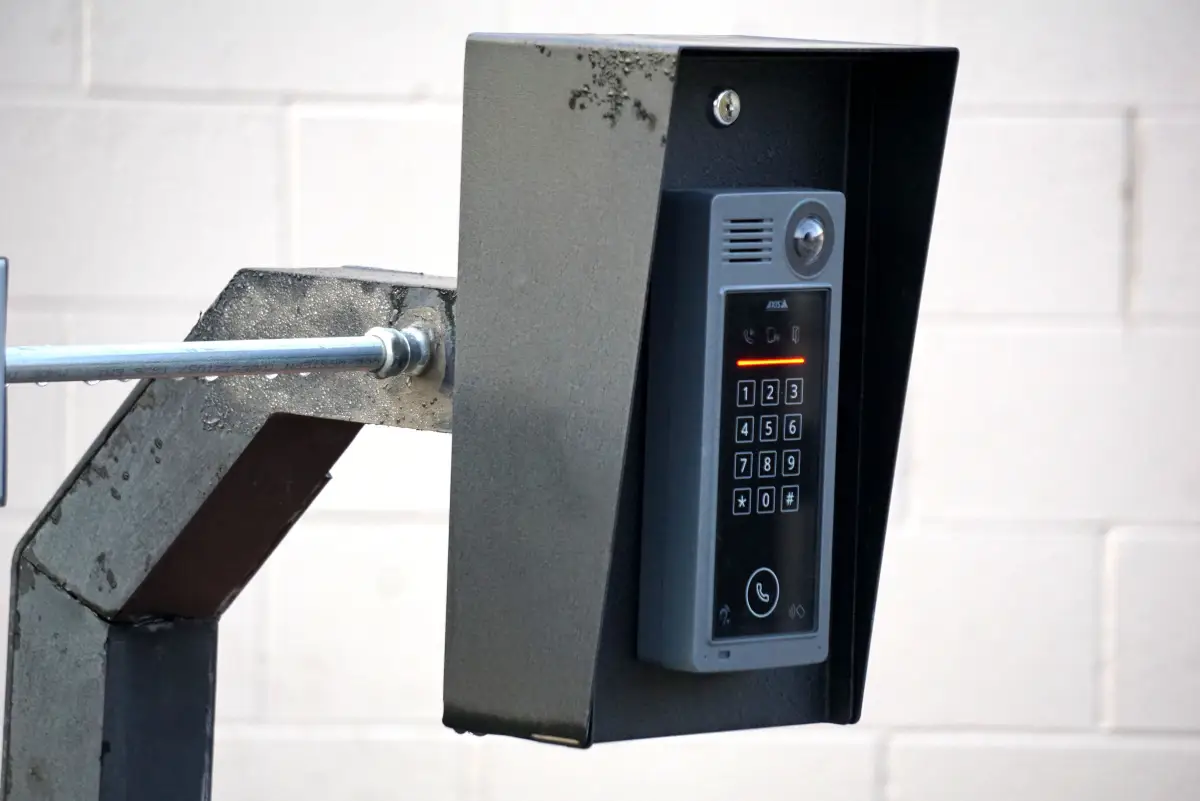
Residential installations are usually one drive gate, a couple of remotes, a keypad at the road and exit detection so nobody needs a remote to leave. Most homes are Class I, but the honest cycle-count conversation is worth having — a property with trades, deliveries and several drivers can push toward commercial duty, and sizing for the real number costs little more now than discovering it later.
Commercial
Commercial installations are duty-cycle problems first. A gate cycling sixty times a day needs high-cycle hardware and hardware redundancy, and downtime carries a direct cost when the gate blocks a dock or a tenant lot. See commercial automatic gates and industrial gates.
When an Opener Installation Isn't the Right Call
- The gate binds, drags or sags when pushed by hand. Automating it accelerates every one of those problems — see metal gate repair first.
- Your existing operator has a discrete fault like a capacitor or limit switch and is correctly sized and still supported. That's a repair, not a replacement.
- The budget covers the operator but not the trenching, and power is a long run across a finished drive. Price the whole path before committing to the machine.
- You want the operator without the required safety devices. A post-2016 unit won't run without a monitored device connected, and fitting one that would isn't something a reputable installer will do.
- The property is outside Kane, Cook, DuPage, McHenry and Lake Counties.
Related Services
- Automatic & Electric Gates in Elgin, IL
The gate side of automation — what a motor demands of the leaf, hinges and frame.
- Gate Opener & Motor Repair in Elgin, IL
When an existing operator hums, stalls, or leaves the gate stuck open.
- Gate Access Control Systems in Elgin, IL
Keypads, intercoms, credentials and vehicle detection — how the gate gets triggered.
- Driveway Gates in Elgin, IL
Specifying a new gate with automation planned in rather than retrofitted.
Serving Nearby Cities
Gate work across Kane, Cook, DuPage, McHenry & Lake Counties. Each city page covers the local permit requirements, footing depth and the configurations that come up most often there.
- South Elgin
- Streamwood
- Bartlett
- Carpentersville
- Hanover Park
- Hoffman Estates
- St. Charles
- Algonquin
- Schaumburg
- Lake in the Hills
- West Chicago
- Carol Stream
- Huntley
- Batavia
- Glendale Heights
- Palatine
- Crystal Lake
- Wheaton
- Arlington Heights
- Addison
- Lombard
- Mount Prospect
- Buffalo Grove
- Aurora
- Elmhurst
- Des Plaines
- McHenry
- Naperville
- Downers Grove
- Woodstock
Frequently Asked Questions
- How do I know what size gate opener I need?
- Four inputs: leaf weight, leaf length, expected daily cycles and wind load. Weight and length are measured, cycles are estimated honestly, and wind load depends on how solid the infill is — a panel gate can need a full size more operator than an open picket gate of the same weight. Those produce a usage class, from Class I for a single-family residence up to Class IV for restricted guarded sites. Anyone sizing from opening width alone is guessing.
- Can any opener go on any gate?
- No. Slide operators and swing operators are different machines, and within swing gates the arm, ram and underground types suit different situations. Beyond type, the gate has to be capable of mechanical cycling in the first place — a leaf that binds, sags or has hinge play will make the operator fight it every cycle. That assessment comes before the operator is chosen, not after it's fitted.
- What safety equipment comes with a gate opener installation?
- UL 325 requires two independent means of entrapment protection at each entrapment point in each direction of travel — typically the operator's inherent obstruction sensing plus a monitored external device, either a non-contact photo eye or a contact safety edge. Operators built from 2016 onward monitor those devices continuously and will not run if one is disconnected or faulting. ASTM F2200 additionally governs the gate: frame openings under 2.25 inches, smooth bottom edges, protrusions no greater than half an inch.
- Does the gate opener need its own power supply?
- It needs a dedicated line voltage supply, and the conductor has to be sized for the run length rather than the load alone. A long run in undersized wire drops voltage and starves the motor, which then behaves exactly like a failing motor — slow, straining, cutting out under load. Getting that right at install is inexpensive; correcting it later means re-trenching. Battery backup is a separate and worthwhile addition where outages are routine.
- Can I add an opener to a gate that was built manual?
- Often, but the gate needs assessing first. A leaf built to be pushed by hand may have hinges rated for that use, a frame without the stiffness for repeated mechanical cycling, and no conduit anywhere near it. Sometimes the retrofit is straightforward; sometimes it means hinge upgrades, added bracing and trenching under a finished drive. An honest assessment before ordering the operator is what separates the two outcomes.
- How long does gate opener installation take?
- The operator itself mounts and commissions relatively quickly. What sets the schedule is everything around it — the JULIE utility locate before any digging, trenching and any concrete cutting and patching, and concrete cure time where a mounting pad is being poured. Ask for those as separate stages rather than a single figure, since a job with an easy power run and a job that crosses a finished driveway are very different timelines.
Learn More
- UL Solutions — UL 325 External Entrapment Protection Devices — What counts as an entrapment protection device, and why operators built from 2016 onward refuse to run without a monitored one connected.
- DASMA — An Installer's Guide to ASTM F2200 — The construction requirements an automated gate has to meet: gap limits, bottom-edge protrusions, and how the gate has to behave if it leaves its hardware.
- JULIE — Illinois One-Call Utility Locate — The free locate request that has to go in before anyone digs a post hole in Illinois.
Get a Quote for Gate Opener Installation in Elgin, IL
Send over the opening you’re working with and get an on-site measurement and quote — no charge for the estimate, no obligation to book it.
Get My Free Estimate