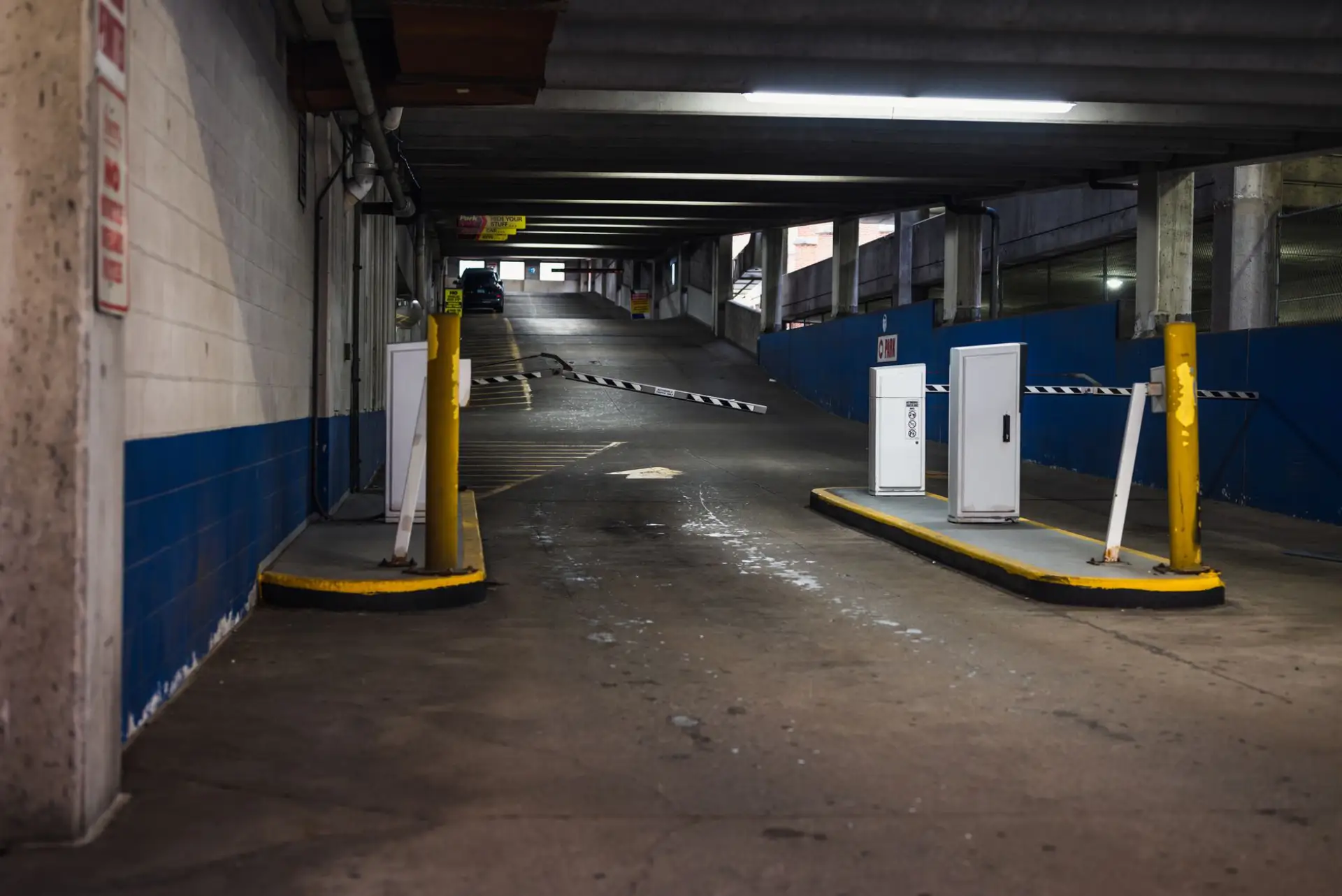
Commercial Automatic & Electric Gates in Elgin, IL — High-Cycle Entry Systems
A gate cycling sixty times a day is a different machine from the same gate cycling four times. Duty class, not gate size, is what decides the operator.
Elgin Elite Metal Gates is your local resource for commercial automatic gates, high-cycle operators and vehicle access systems across Elgin, Kane County and the Fox Valley. We work with qualified local gate and access-control specialists who specify operators by usage class rather than by opening width.
Commercial gate automation is a duty problem. The same physical gate, automated for a house and automated for a tenant lot, needs different machines — not because the leaf is heavier but because the number of cycles is an order of magnitude apart. Operators are rated in usage classes for exactly this reason, and buying below the class the site actually needs produces a motor running at its limit permanently.
The classes describe the property, not the gate. Class I is a single-family residence. Class II is general-access commercial — apartments, hotels, retail lots, anywhere serving the general public. Class III is industrial or limited-access, like a loading dock, not serving the public. Class IV is restricted, guarded access.
The second commercial difference is that failure has an operational cost. A gate that won't open blocks deliveries, traps tenants or stops a shift starting, which changes the calculation on redundancy, spares and scheduled inspection. Specifying for repairability matters as much as specifying for load.
What a Commercial Automatic & Electric Gates Quote Covers
- Usage class identified from actual site operation — Class II, III or IV — and stated plainly
- Real cycle count established from deliveries, staff, tenants and contractor traffic rather than estimated
- Leaf weight, length and wind load calculated for operator selection
- Assessment of whether the existing gate can sustain commercial cycling before any operator is fitted
- Two independent means of entrapment protection per entrapment point per direction, per UL 325
- ASTM F2200 construction verification on the gate itself
- Vehicle detection: entry loop, exit loop and a safety loop to hold the gate open under a vehicle
- Anti-tailgating timing where a second vehicle following through is a real concern
- Battery backup and, where downtime is costly, a plan for failure modes and spares
- Access control sized for tenant, staff and contractor turnover with revocable credentials


Commercial Automatic & Electric Gates in Elgin, IL
Automatic Commercial Entrance Gates
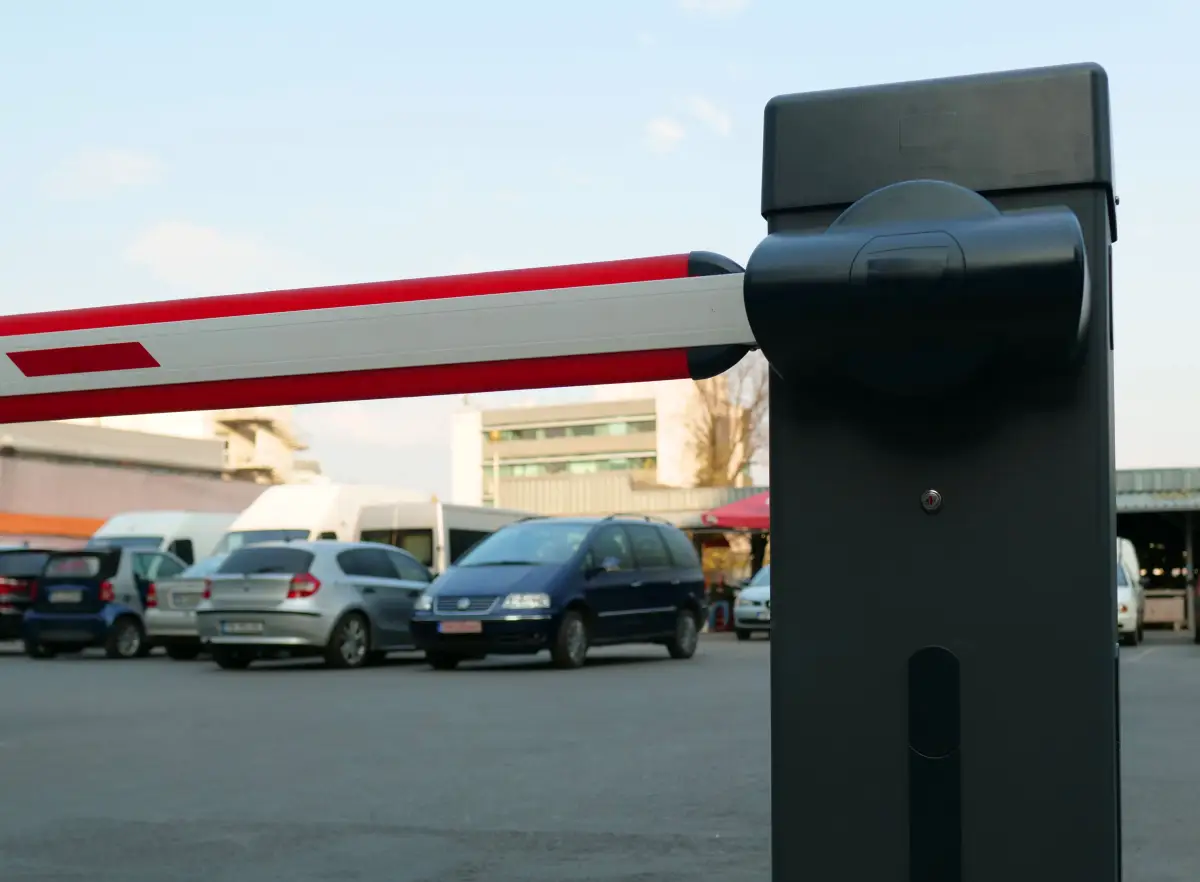
The main entrance carries the highest cycle count on most commercial sites, and it's where under-specification shows up fastest. An operator sized for occasional use on a gate that cycles dozens of times daily runs continuously near its thermal limit, and the failure pattern is recognisable — it works fine in mild weather and starts cutting out on the hottest and coldest days, because those are when it has the least margin. That gets misdiagnosed as a weather problem when it's a duty problem. The other entrance-specific consideration is queueing. If the gate takes twelve seconds to open and vehicles arrive every thirty, a queue forms and backs onto the road. Gate speed is a specification, not a fixed property, and on a busy entrance it's worth paying for. Auto-close timing then has to balance clearing one vehicle against letting a second follow through unnoticed.
Commercial Sliding Gate Systems
Commercial slides are the most common automated configuration, because arc space rarely exists on a working site. Slide operators drive the leaf with a rack-and-pinion arrangement or a chain, and at commercial cycle counts the rack becomes the primary wear item — a rack out of parallel with its pinion chews teeth, gets progressively noisier, and skips under load, usually months after it started announcing itself. Listening to the gate is genuinely diagnostic here. Cantilever designs are strongly preferred commercially: nothing touches the ground, so plough damage, packed salt and refrozen meltwater stop being failure modes. On a ground-track system at a site with truck traffic, the track takes physical damage as well as debris, and the operator reads the resulting resistance as an obstruction and reverses. That produces a gate that reverses every winter morning and gets blamed on the motor. See sliding gates.
Commercial Swing Gate Systems
Swing gates automate well on commercial secondary entrances, staff lots and any opening where arc space genuinely exists and cycle counts are moderate. The specification difference from residential is margin: hinges rated well above leaf weight, frame bracing that a residential gate of the same size wouldn't need, and an operator a class up from what the weight alone suggests. On bi-parting pairs, operator sequencing is not optional — the passive leaf has to land before the active one closes against it, and a mis-sequenced pair stops latching within days of commissioning. Each leaf carries two entrapment points, the leading edge and the hinge side, and each needs protection in both directions of travel. Where the site has plough traffic, the arc area needs to be somewhere snow won't be pushed, or the gate stops opening in December regardless of how good the operator is.
High-Cycle Gate Operators & Motors
High-cycle operators differ from residential ones in ways that justify the price: continuous-duty motors rather than intermittent-duty, heavier gearboxes, better thermal management, and components designed to be replaced individually rather than as a sealed assembly. That last point matters more commercially than any other, because it determines how quickly a failed gate becomes a working gate again. Power supply deserves attention at this scale too — a long run in undersized conductor drops voltage and starves the motor, producing exactly the symptoms of a failing operator, and it's a fault that gets chased for months before anyone measures voltage at the machine rather than at the panel. Battery backup is close to mandatory where a power cut would trap vehicles or stop operations, and on sites where the gate genuinely cannot be down, keeping common failure components on the shelf costs less than one emergency visit.
Automated Vehicle Entry Gates
Vehicle detection is where commercial automation gets specific. Three loops do three different jobs and conflating them causes most of the recurring complaints. An entry loop or credential reader triggers the open. An exit loop detects a departing vehicle and opens the gate — without it, drivers are stuck inside, which is the single most common commercial complaint and often simply wasn't installed. A safety or shadow loop sits under the gate's path and holds it open while a vehicle is beneath it so it can't close on a truck. Loops get broken by pavement movement, frost heave and heavy vehicle loading, and a failed loop presents as a specific symptom rather than a general fault, which makes diagnosis quick if the symptom is described accurately. Auto-close timing then determines tailgating risk: long enough for one vehicle to clear, short enough that a second can't follow through unnoticed. Where that risk is real, anti-tailgating logic addresses it. See gate access control systems.
Signs Your Commercial Gate Automation Needs Upgrading
- The operator cuts out on the hottest and coldest days, which is a duty-class problem rather than a weather one
- The gate has needed repeated repairs on the same component, pointing at under-specification
- A queue forms at the entrance because the gate opens too slowly for the arrival rate
- Vehicles can get in but there's no reliable way to open the gate on exit
- A second vehicle regularly follows through behind the first before the gate closes
- The operator predates 2016 and has no monitored entrapment protection
- Gate downtime has stopped deliveries or blocked a lot more than once
- Access is controlled by a shared code that has never been changed
How Commercial Gate Automation Gets Specified
- 1
Duty and traffic analysis
The specification starts from the site's real traffic. Cycle count gets established from actual operation — deliveries, shift changes, tenant movements, contractor visits — rather than estimated, because it determines the operator class and every wearing component downstream. Arrival rate matters separately from total cycles: a gate that opens sixty times spread across a day is a different problem from one that opens forty times between seven and nine, when a slow gate creates a queue that backs onto the road. Vehicle types get recorded, since a site with semi traffic needs detection positioned for a vehicle that doesn't sit like a car. Then usage class is set: Class II for general-access commercial, Class III for industrial and limited-access sites, Class IV for restricted guarded locations. Getting this number right is the difference between an operator that lasts and one that runs at its thermal limit permanently.
- 2
Gate assessment and operator selection
The gate gets checked for whether it can sustain commercial cycling. It's run through its full travel by hand to find binding points, hinges and rollers are checked for wear, and the frame is assessed for racking — because anything the operator has to fight, it will fight tens of thousands of times a year here rather than a few thousand. Then operator selection from leaf weight, length, wind load and the established cycle count. High-cycle operators get specified for continuous rather than intermittent duty, and serviceability becomes an explicit criterion: an operator whose common failure components can be replaced individually returns a blocked entrance to service far faster than a sealed assembly. Where downtime carries a real operational cost, spares strategy gets discussed at this stage rather than during the first failure.
- 3
Detection, safety and electrical design
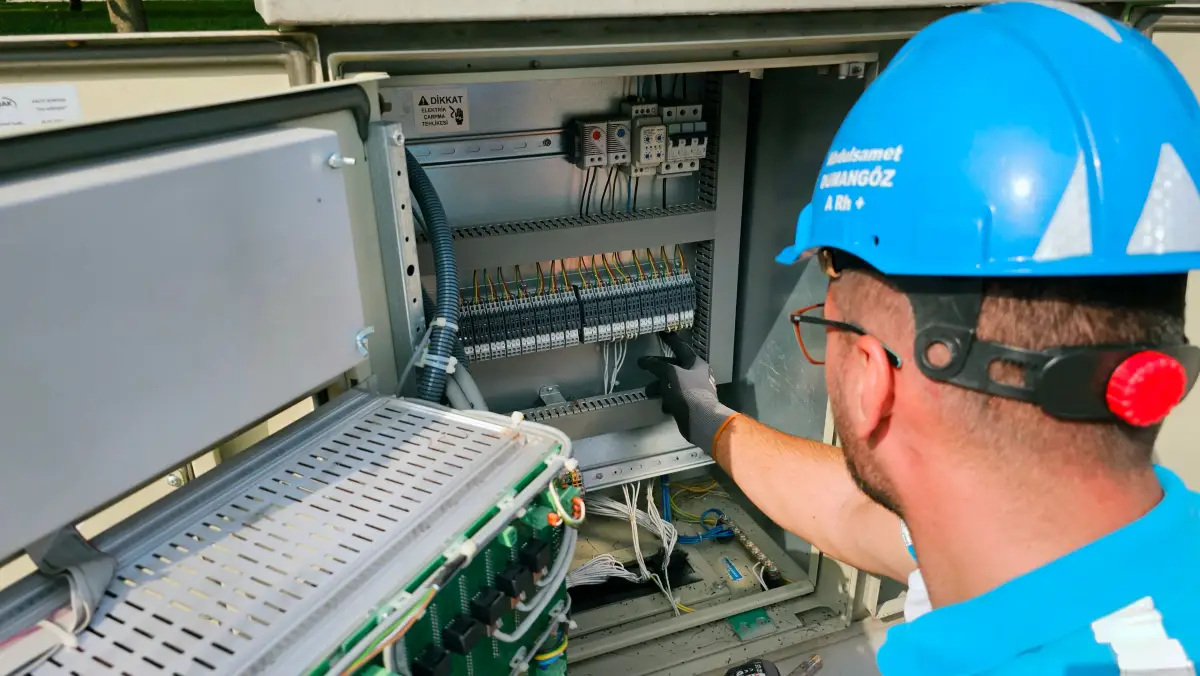
A JULIE locate goes in before digging. Loops get planned as a set with distinct jobs: entry detection or a credential reader to trigger opening, exit detection so departing vehicles aren't trapped, and a safety loop under the gate's path to hold it open while a vehicle is beneath. Positions get set for the vehicles that actually use the site. Then the safety system: every entrapment point identified — leading edge, receiving post and parked position on a slide; leading edge and hinge side on each leaf of a swing — with two independent means of protection in each direction of travel as UL 325 requires. Line voltage is sized for the run length, since voltage drop starves a motor and imitates a failing one. Low-voltage runs go to every device. Where any of this crosses a working apron, the disruption to operations gets scheduled rather than discovered.
- 4
Commissioning, timing and handover
Travel limits get set, and gate speed gets configured against the site's arrival rate rather than left at default — on a busy entrance this is a real specification decision. Obstruction sensitivity gets tuned to reverse off a person without nuisance-tripping on wind, which at commercial exposure takes more care than on a sheltered drive. Auto-close timing gets set to clear one vehicle without allowing a second to follow through unnoticed. On bi-parting pairs, operators get sequenced. Then every safety device is deliberately triggered and verified in both directions of travel, and ASTM F2200 items checked on the gate: frame openings under 2.25 inches, smooth bottom edges with protrusions no greater than half an inch, and construction such that the gate won't fall more than 45 degrees from vertical if it detaches. Manual release is demonstrated to site staff, credentials and administrator access are documented and handed over.
What Do Commercial Automatic Gates Cost in Elgin, IL?
- Usage class — Class II, III and IV operators are materially different machines at different price tiers
- Established cycle count, which is the primary driver of every hardware decision
- Gate speed, which is a specification worth paying for where arrival rates create queueing
- Leaf weight, length and wind load
- Whether the existing gate needs work before it can sustain commercial cycling
- Loop count: entry, exit and safety loops each do a different job
- Anti-tailgating logic where a following vehicle is a genuine concern
- Safety devices, one set per entrapment point per direction of travel
- Electrical run length and conductor sizing, plus trenching across working aprons
- Battery backup, spares holding, and any scheduled maintenance agreement
The number that belongs in a commercial automation decision and rarely appears on the quote is the cost of an hour of downtime. Once that's estimated even roughly, the case for a higher duty class, individually serviceable components and a small stock of common failure parts usually makes itself. Specifying to the minimum that meets the load is a reasonable strategy on a house and a poor one on an entrance that stops deliveries when it fails.
What to Look for in an Elgin Commercial Gate Automation Contractor

Usage Class Named and Justified
Class II, III or IV, with the reasoning from actual site traffic. A contractor who can't say which class the site is hasn't sized the operator.
Cycle Count From Real Operation
Deliveries, shifts, tenants and contractors counted rather than estimated. It's the number every other decision depends on.
Three Loops, Three Jobs
Entry, exit and safety loops are distinct. Missing the exit loop is the most common omission, and it traps people inside.
Serviceable Components Specified
Individually replaceable parts return a blocked entrance to service faster than a sealed assembly. That's worth more than a small purchase saving.
Voltage Measured at the Operator
A long undersized run starves the motor and mimics a failing one. On a commercial site that fault gets chased for months before anyone measures.
Auto-Close Timing Set Deliberately
Long enough to clear one vehicle, short enough that a second can't follow through. Left at default, it does one of those badly.
Residential & Commercial Commercial Automatic & Electric Gates
Residential
Large residential sites — apartment complexes, managed communities — sit squarely in commercial duty even though the users are residents. Cycle counts, credential turnover and the consequences of downtime all follow commercial patterns, and Class I residential hardware on a hundred-unit entrance is the most common mismatch in this category.
Commercial
Retail lots, office parks, multi-tenant buildings and service yards share the same specification drivers: cycle count, arrival rate, vehicle type and the operational cost of failure. See commercial metal gates for the gate itself and industrial gates for heavier duty than general commercial.
When Commercial Automation Isn't the Right Call
- The existing gate binds, sags or has worn rollers. Automating it at commercial cycle counts destroys it faster — see commercial gate repair first.
- The entrance opens a few times a week. Commercial-duty automation is capacity you'll pay for and never use.
- Your operator has a discrete fault and is correctly sized and still supported. That's a repair, not a replacement.
- You want the system without the required safety devices. Post-2016 operators won't run without a monitored device connected, and no reputable contractor will fit one that would.
- The property is outside Kane, Cook, DuPage, McHenry and Lake Counties.
Related Services
- Commercial Metal Gates in Elgin, IL
The gate itself — vehicle envelope, heavy-gauge fabrication and configuration.
- Commercial Gate Repair in Elgin, IL
Wear-driven repair and preventative maintenance at high cycle counts.
- Gate Access Control Systems in Elgin, IL
Credentials, intercoms and vehicle detection for tenant and contractor turnover.
- Industrial & Heavy-Duty Gates in Elgin, IL
Class III and IV systems for warehouse, distribution and restricted-access sites.
Serving Nearby Cities
Gate work across Kane, Cook, DuPage, McHenry & Lake Counties. Each city page covers the local permit requirements, footing depth and the configurations that come up most often there.
- South Elgin
- Streamwood
- Bartlett
- Carpentersville
- Hanover Park
- Hoffman Estates
- St. Charles
- Algonquin
- Schaumburg
- Lake in the Hills
- West Chicago
- Carol Stream
- Huntley
- Batavia
- Glendale Heights
- Palatine
- Crystal Lake
- Wheaton
- Arlington Heights
- Addison
- Lombard
- Mount Prospect
- Buffalo Grove
- Aurora
- Elmhurst
- Des Plaines
- McHenry
- Naperville
- Downers Grove
- Woodstock
Frequently Asked Questions
- What operator class does a commercial gate need?
- It depends on the property, not the gate. Class II covers general-access commercial — apartments, hotels, retail lots, anywhere serving the general public. Class III covers industrial and limited-access sites not serving the public, like a loading dock. Class IV covers restricted, guarded locations. Class I is residential and is the wrong answer on almost any commercial entrance, though it gets fitted regularly because it's cheaper.
- Why does our gate operator fail in extreme weather?
- Usually because it has no margin. An operator running near its thermal limit through normal cycling copes in mild conditions and cuts out on the hottest and coldest days, when the margin disappears. It reads as a weather fault and is really a duty-class fault — the operator was specified below what the site's cycle count actually demands. Fitting the same class again reproduces it.
- Why won't our gate open for vehicles leaving?
- Exit detection, which is a separate system from whatever lets vehicles in. An exit loop cut into the drive, an exit wand or a button has to tell the gate a vehicle is departing. Loops fail from pavement movement, frost heave and heavy vehicle loading, and sometimes the exit loop was simply never installed. The symptom is distinctive — entry works perfectly, exit doesn't — which makes it quick to diagnose once described accurately.
- How do we stop vehicles tailgating through the gate?
- Start with auto-close timing, which needs to be long enough for one vehicle to clear and short enough that a second can't follow through. Where the risk is genuine rather than incidental, anti-tailgating logic using the detection loops can hold the gate closed until the first vehicle has fully cleared. What doesn't solve it is a heavier gate — tailgating is a timing and detection problem, not a barrier problem.
- What safety requirements apply to a commercial automated gate?
- The same standards as any automated gate, applied to a site with more entrapment points and more traffic. UL 325 requires two independent means of entrapment protection at each entrapment point in each direction of travel, and operators built from 2016 onward monitor external devices and won't run with one faulting. ASTM F2200 governs the gate's construction — frame openings under 2.25 inches, smooth bottom edges, protrusions no greater than half an inch, and construction such that the gate won't fall more than 45 degrees from vertical if detached from its hardware.
- Should we keep spare parts for a commercial gate?
- If the gate being down stops deliveries or blocks a lot, almost certainly yes. The components that fail are predictable — capacitors, limit switches, rollers, loop detectors — and holding a small stock costs less than a single emergency call-out plus the operational cost of the outage. It also argues for choosing operators whose common failure components can be replaced individually rather than as a sealed assembly.
Learn More
- UL Solutions — UL 325 External Entrapment Protection Devices — What counts as an entrapment protection device, and why operators built from 2016 onward refuse to run without a monitored one connected.
- DASMA — An Installer's Guide to ASTM F2200 — The construction requirements an automated gate has to meet: gap limits, bottom-edge protrusions, and how the gate has to behave if it leaves its hardware.
- City of Elgin — Common Residential Permits — Which residential projects need a permit in Elgin and how the application is filed.
Get a Quote for Commercial Automatic & Electric Gates in Elgin, IL
Send over the opening you’re working with and get an on-site measurement and quote — no charge for the estimate, no obligation to book it.
Get My Free Estimate