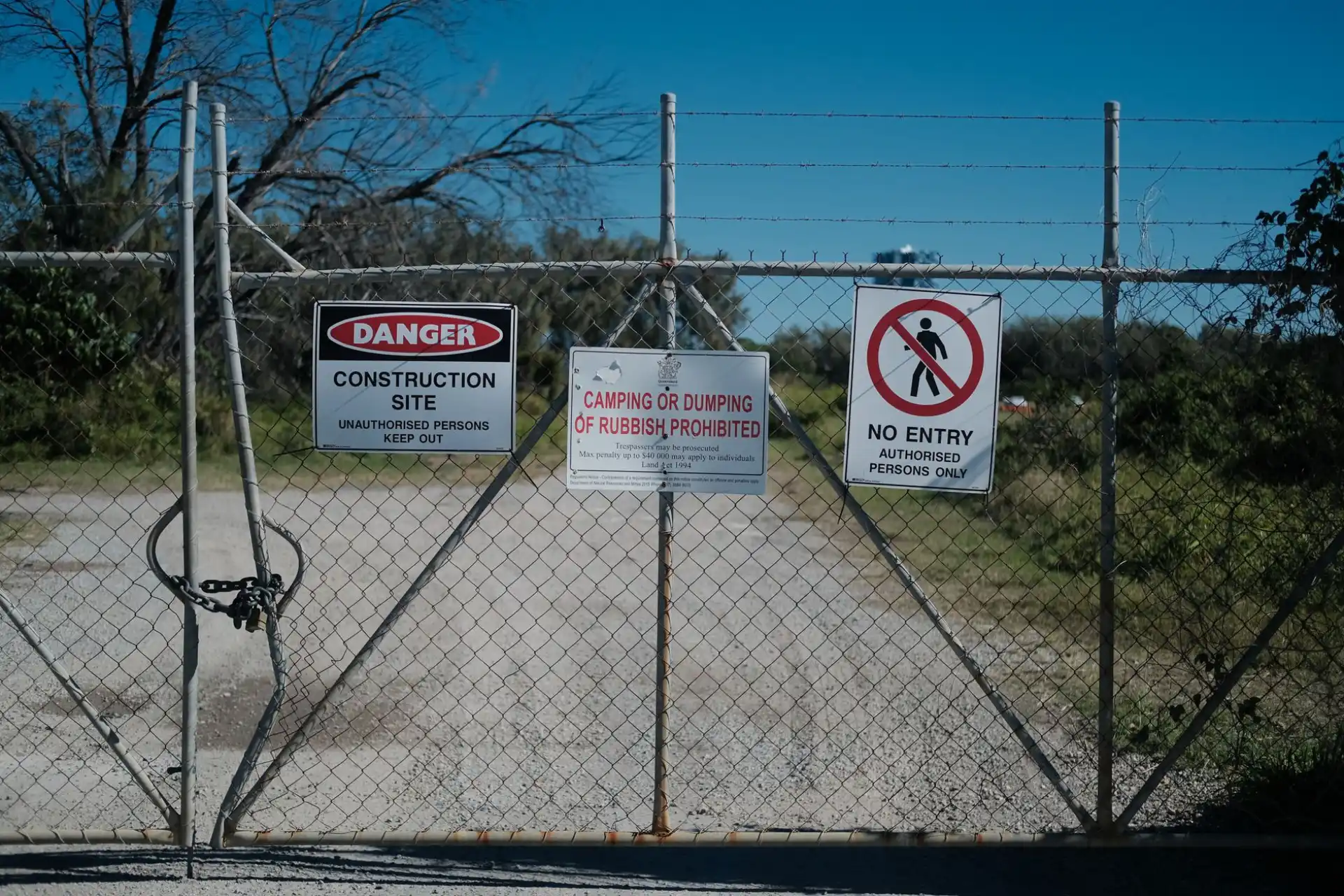
Commercial Security Gate Installation in Elgin, IL — Business & Facility Perimeter Specialists
A secured site is a perimeter, not a gate. The gate is the part everyone looks at and rarely the part that gets tested.
Elgin Elite Metal Gates is your local resource for commercial security gates, perimeter protection and controlled-access entry throughout Elgin, Kane County and the Fox Valley. We work with experienced fabricators and access-control specialists who look at the whole perimeter before quoting the opening.
The most common failure in commercial site security is a strong gate in a weak line. Money goes into the entrance because that's what the property presents to the street, while the fence beside it can be climbed, the rear access is unlit, and half the credentials in circulation belong to people who left years ago.
So the useful starting point is a walk of the whole perimeter, in the dark as well as in daylight. Where is the actual easiest way in? Frequently it isn't the gate, and once that's established the budget goes to the right place.
Where the gate itself is the right investment, commercial security design comes down to specific, nameable things: infill that can't be levered out, frame stock that can't be flexed, hardware that can't be lifted or reached, and a gate that is closed by default because an operator closes it rather than because someone remembered. What it isn't is a vehicle barrier — stopping a vehicle is crash-rated engineered construction and a different product entirely.
What a Commercial Security Gates Quote Covers
- A perimeter walk covering approach routes, sight lines and lighting, not just the opening
- A frank conversation about what the site is actually protecting and from what
- Frame and infill specified for resistance — heavier stock, tight fixing, continuous welds where load is carried
- Hardware that can't be lifted or reached: non-removable hinge pins, shrouded or relocated latching
- Positive locking specified independently of the operator, since a drive mechanism is not a lock
- Post sizing and footings below Elgin's 42-inch frost depth, sized for heavy commercial leaves
- Automation with auto-close so the gate is secured by default rather than by decision
- Revocable credentials with logging, sized for tenant, staff and contractor turnover
- Lighting and camera sight lines considered alongside the steel, since both are cheaper and often more effective
- UL 325 safety devices and ASTM F2200 construction compliance throughout

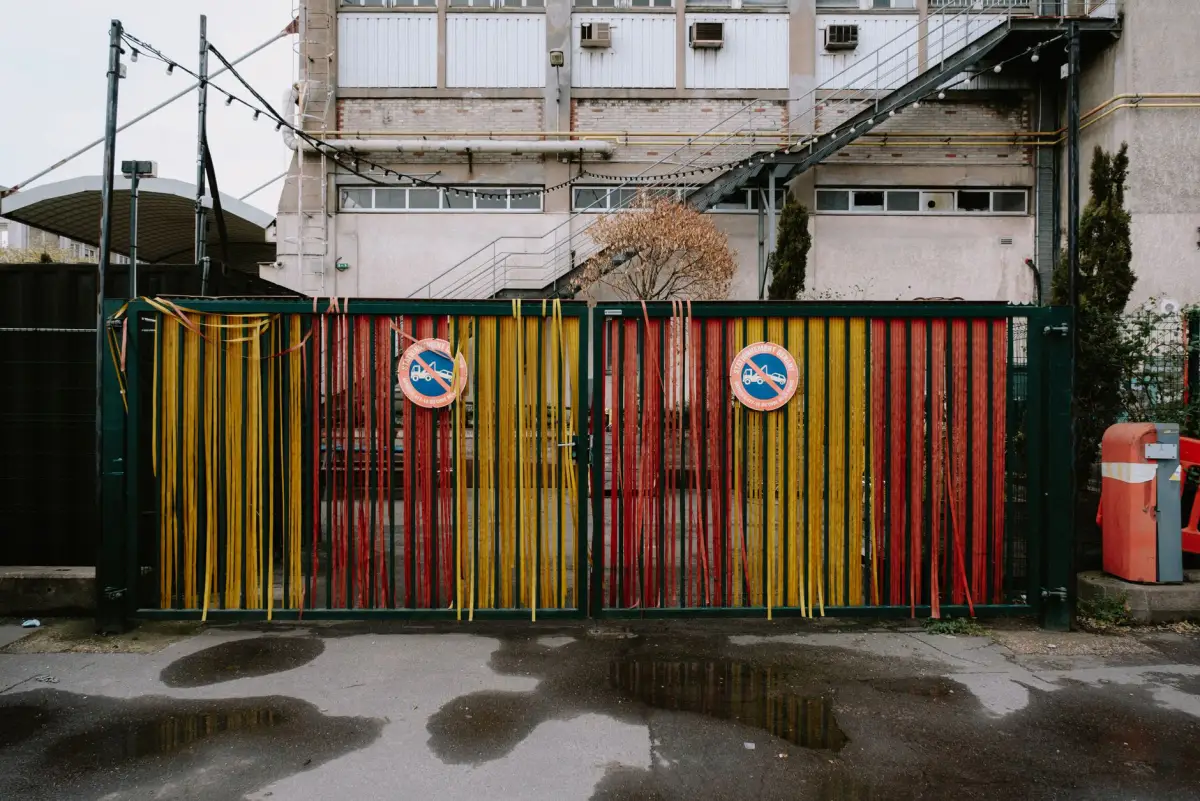
Commercial Security Gate Installation in Elgin, IL

Business & Facility Security Gates
For most businesses the honest objective is deterrence and control rather than resistance to a determined attack, and being clear about that saves a lot of money. What a well-designed business security gate does is remove easy access, make entry a deliberate and visible act, and record who came through. The design details that deliver it are specific: infill fixed so individual pickets can't be levered out, frame stock heavy enough that the leaf can't be flexed away from its post, latching that can't be reached from outside, and hinges that can't be lifted. Beyond the steel, the highest-value item is usually automation with auto-close, because a manual security gate is only secure when somebody closes it — and on a working site, heavy manual gates get left open all day and sometimes overnight. An operator removes the human step entirely, which changes the security posture more than a heavier leaf would.
Parking Lot Security Gates
Parking control is a different problem from perimeter security, and the two get conflated. A lot gate mostly needs to manage who parks there and to stop casual through-traffic, which means credentials and detection matter far more than the leaf. The recurring practical issues are all traffic-related: a gate slow enough to queue vehicles onto the road at shift change, auto-close timing that lets a second car follow the first, and exit detection that fails and traps everyone inside. Barrier arms are worth mentioning honestly here — for pure parking control they're faster, cheaper and easier to maintain than a gate, and they stop nobody who's determined. If the requirement is genuinely parking management rather than perimeter security, an arm plus good access control frequently does the job better than a gate for less money. If the lot needs to be secured overnight, that's a gate.
Warehouse & Industrial Security Gates
Warehouse and yard perimeters combine security with heavy vehicle traffic, and the vehicle side usually dominates the design. Openings get sized for semi turning paths, which is wider than the drive suggests, and the gate has to be positioned so trailers don't clip it on the swing — a gate struck repeatedly is a gate whose security value degrades every month. Cycle counts are high, so hardware is specified for wear and for individual serviceability. Where the yard holds equipment or stock visible from the road, sight lines become part of the design: a solid gate hides what's inside but also hides anyone working at it, which is not always the trade you want, and a tight-picket gate plus good lighting is frequently the better answer. See industrial gates for heavy-duty and high-cycle systems specifically.
Controlled-Access Commercial Gates
Controlled access means knowing and deciding who comes through, and on a commercial site the hard part is administration rather than hardware. Tenants change, staff leave, contractors finish. Any system built on keys or a shared code drifts into uselessness within a couple of years because there's no way to withdraw access from someone you can't identify. Individually revocable credentials — fobs or cards — with entry logging are the answer, and they only work if somebody owns the list and maintains it. That's a real, recurring operational commitment and it should be agreed before the system is specified, because a credential system nobody administers has recreated the key problem at higher cost. Layer an intercom over it for unanticipated visitors, and keep a code for occasional contractor access that can be changed when the contract ends. Full detail on gate access control systems.
Commercial Perimeter Security Gates
The gate is one element of a line, and it's worth being blunt about the others. A perimeter is only as strong as its easiest point, and on most commercial sites the easiest point is not the entrance — it's a section of fence behind a dumpster enclosure, an unlit rear corner, or a neighbouring property's boundary that offers a route in. Gates at secondary and service entrances routinely get less attention than the main one and are used more casually, which makes them the practical weak point. Lighting is the cheapest meaningful improvement available on almost any site, and camera coverage positioned to see faces rather than roofs is the second. None of this argues against a good gate; it argues for spending the budget in the order that actually reduces risk, which frequently means a competent gate plus lighting plus revocable credentials rather than an exceptional gate alone.
Signs Your Site Needs Commercial Security Gates
- The perimeter has a section that can be climbed or walked around, behind a dumpster enclosure or in an unlit corner
- The gate gets left open through the working day because closing it manually is nobody's job
- Credentials have accumulated and departed staff, tenants or contractors can't be removed individually
- Equipment, vehicles or stock in the yard are visible from the street
- A second vehicle regularly follows the first through the gate
- There's no record of who came through and when, only that the gate opened
- Secondary and service entrances get less attention than the main gate but see casual use
- Lighting at the entrance and along the fence line is poor after dark
How a Commercial Security Gate Gets Designed

- 1
Perimeter and risk walk
This happens before anything is specified, and it covers the whole boundary rather than the opening. Approach routes get traced — including from neighbouring properties and any public path or alley — and the easiest way in is identified honestly, because that's where the budget should start. Sight lines get assessed from the road and from inside, since a solid gate hides the yard and also hides anyone working at it. Lighting gets looked at after dark, which is when the gaps are visible and when almost nobody schedules a site visit. Secondary and service entrances get equal attention, since they're used casually and secured casually. Only after all of this does the conversation move to what the gate itself needs to be, because a specification written before this walk is a specification written for the wrong problem.
- 2
Threat definition and resistance specification
What the gate is meant to stop determines its build, and conflating deterrence with resistance produces either wasted money or false confidence. Once the objective is agreed, the design removes specific defeats: infill fixed so individual pickets can't be levered out, frame stock heavy enough that the leaf can't be flexed away from its post, latching shrouded or relocated beyond reach, hinges with non-removable pins or welded stops. Where the gate must genuinely lock rather than merely close, the lock is specified as its own component — a drop bolt, magnetic lock or deadlatch — because a drive mechanism holds a gate closed and was never designed to resist force. Height gets checked against zoning, and gap dimensions get cross-checked against ASTM F2200 where the gate is or may become automated.
- 3
Posts, footings and installation
A JULIE locate goes in before digging. Security gates are heavier than equivalent standard gates and the posts carry that plus any force applied to the leaf, so they're sized and footed accordingly, below Elgin's 42-inch frost depth. This matters more on a security gate than elsewhere: a heaved post doesn't just stop a gate latching, it opens a gap. Post mass is part of the resistance on a vehicle gate, since a leaf is only as anchored as what it hangs from. Where the gate ties into an existing fence line, the transition is assessed honestly — a heavy gate between two light fence posts relocates the weak point rather than removing it, and on a security installation that's the whole ballgame. Conduit for power, low-voltage and any camera runs goes in while the ground is open.
- 4
Access control, automation and commissioning
Entry hardware goes in once the barrier works. Credentials get issued individually rather than as a shared code, grouped by user type, and logging gets enabled where a record matters. Readers get sited at driver height and far enough back that a waiting vehicle isn't in traffic. Automation gets commissioned with auto-close timing set deliberately, since that setting is what makes the gate closed by default rather than merely closeable — and it's the single largest security improvement on most sites. Then safety is verified as on any automated gate: two independent means of entrapment protection per entrapment point per direction under UL 325, each device deliberately triggered in both directions, and ASTM F2200 construction items checked on the gate. Administrator access, the process for adding and removing users, and the outage fallback all get documented and handed to the site rather than left with the installer.
What Do Commercial Security Gates Cost in Elgin, IL?
- What the gate is genuinely meant to resist, which is the difference between deterrence and engineered resistance
- Frame stock, infill density and weld specification
- Latch shrouding, non-removable hinge hardware and any independent positive lock
- Post sizing and footing mass, which on a vehicle gate is a substantial share of the total
- Opening width driven by vehicle envelope, including turning path
- Automation and auto-close, which is what keeps the gate secured by default
- Credential system scale — how many users, whether logging is needed, and who administers it
- Lighting and camera provision, usually cheap relative to steel and often more effective
- Secondary and service entrances, which are frequently the real weak point and get left out of budgets
- Safety devices, one set per entrapment point per direction of travel
The most common way commercial security money gets wasted is concentrating it all at the main entrance. A well-built gate in a line with an unlit rear corner, a climbable section behind the dumpster enclosure, and fifteen years of unaccountable credentials has moved the weak point rather than removed it. Walking the perimeter after dark before writing the specification routinely reveals that a competent gate plus lighting plus revocable credentials does more, for less, than an exceptional gate on its own.
What to Look for in an Elgin Commercial Security Gate Contractor
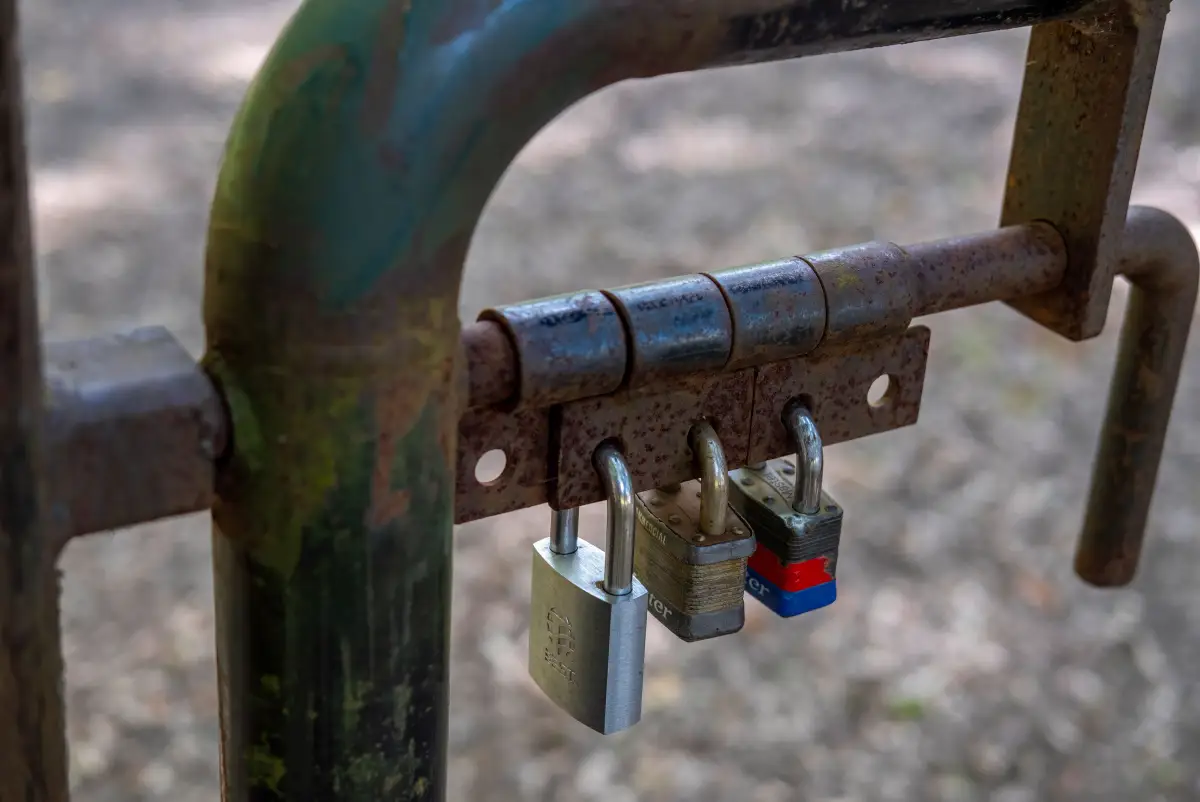
The Whole Perimeter Walked First
Including after dark, and including secondary entrances. A specification written before that walk is written for the wrong problem.
The Objective Stated Honestly
Deterrence, control, or engineered resistance are three different budgets. A contractor who won't distinguish them is selling the most expensive one.
The Lock Specified Separately From the Operator
A drive mechanism holds a gate closed; it isn't a lock and was never designed to resist force.
Auto-Close Treated as a Security Feature
A manual security gate is secure only when someone closes it, and on a working site that often doesn't happen. Auto-close changes the posture more than heavier steel does.
Credentials That Someone Will Administer
A revocable system nobody maintains becomes a key system within two years. Who owns the list should be agreed before the hardware is chosen.
Lighting Raised Alongside the Steel
It's cheaper than fabrication and frequently reduces risk more. A contractor who mentions it isn't losing a sale, they're being useful.
Residential & Commercial Commercial Security Gates
Residential
Managed residential sites — apartment complexes, gated communities — face the commercial version of this problem: high credential turnover, secondary pedestrian entrances used casually, and a perimeter longer than anyone inspects. The gate is usually the least of it. See security gates for single-property residential work.
Commercial
Business, retail, office and multi-tenant properties share the same order of priorities: perimeter integrity first, controlled and revocable access second, the gate's own resistance third. See commercial metal gates and industrial gates.
When a Commercial Security Gate Isn't the Right Call
- You need a barrier rated to stop a vehicle being driven through it. That's crash-rated engineered construction — a different product at a different price, and no ornamental or standard commercial gate should be sold as one.
- The fence line either side can be climbed or walked around. Fix the perimeter first, or the gate is expensive decoration.
- What you actually need is to manage parking rather than secure a boundary. A barrier arm plus access control does that better and cheaper.
- Nobody will administer the credential list. A revocable system that's never updated is the key problem again at higher cost.
- The property is outside Kane, Cook, DuPage, McHenry and Lake Counties.
Related Services
- Gate Access Control Systems in Elgin, IL
Revocable credentials, logging, intercoms and vehicle detection — the control layer.
- Commercial Metal Gates in Elgin, IL
The gate itself — vehicle envelope, heavy-gauge fabrication and configuration.
- Commercial Automatic Gates in Elgin, IL
Automation and auto-close, which is what keeps a security gate closed by default.
- Industrial & Heavy-Duty Gates in Elgin, IL
Warehouse, distribution and restricted-access systems at Class III and IV duty.
Serving Nearby Cities
Gate work across Kane, Cook, DuPage, McHenry & Lake Counties. Each city page covers the local permit requirements, footing depth and the configurations that come up most often there.
- South Elgin
- Streamwood
- Bartlett
- Carpentersville
- Hanover Park
- Hoffman Estates
- St. Charles
- Algonquin
- Schaumburg
- Lake in the Hills
- West Chicago
- Carol Stream
- Huntley
- Batavia
- Glendale Heights
- Palatine
- Crystal Lake
- Wheaton
- Arlington Heights
- Addison
- Lombard
- Mount Prospect
- Buffalo Grove
- Aurora
- Elmhurst
- Des Plaines
- McHenry
- Naperville
- Downers Grove
- Woodstock
Frequently Asked Questions
- Will a commercial security gate stop a vehicle?
- No, unless it's a crash-rated barrier engineered and footed for that purpose, which is a different product at a substantially different price. A standard commercial security gate removes casual access and makes entry a deliberate, visible act — genuinely valuable, and worth being clear about. Anyone offering an ornamental or standard commercial gate as a vehicle barrier is overselling it.
- What's the most cost-effective security improvement for a commercial site?
- Usually not the gate. On most sites it's lighting, followed by revocable credentials replacing keys and shared codes, followed by auto-close so the gate is actually shut. All three cost less than heavy fabrication and address the ways sites are actually entered. That's why the perimeter walk comes before the specification — it tends to redirect the budget.
- How do we control access for contractors and tenants who change?
- Individually revocable credentials — fobs or cards — rather than keys or a shared code, because that's the only way to remove one person's access without changing everyone's. Most systems log each use, which gives a record of who came through. The critical part is that someone has to own and maintain the list; a credential system that never removes departed users has recreated the key problem in electronic form.
- Should a commercial security gate be solid or open?
- It's a genuine trade rather than an obvious choice. A solid gate hides what's in the yard, which removes the display of anything valuable. It also hides anyone working at the gate from passing view, catches far more wind — which drives up hardware and operator cost — and blocks sight lines for cameras. A tight-picket gate plus good lighting is frequently the better answer, particularly where the yard is overlooked by a road.
- Does automating a gate make a site more secure?
- In practice, usually yes, but not because the operator adds strength. What it adds is auto-close, which means the gate is shut by default rather than when someone remembers. On working sites, heavy manual gates get left open through the day and sometimes overnight, so removing the human step changes the security posture substantially. Where the gate must actually lock, fit a proper lock independently of the operator.
- What about secondary and service entrances?
- They're frequently the real weak point, because they get less budget and more casual use — propped open during deliveries, secured with an old padlock, unlit after dark. Any security specification that covers only the main entrance is incomplete. Self-closing, self-latching hardware and a credential reader on a service gate often does more for the site than an upgrade at the front.
Learn More
- City of Elgin — Common Residential Permits — Which residential projects need a permit in Elgin and how the application is filed.
- UL Solutions — UL 325 External Entrapment Protection Devices — What counts as an entrapment protection device, and why operators built from 2016 onward refuse to run without a monitored one connected.
- DASMA — An Installer's Guide to ASTM F2200 — The construction requirements an automated gate has to meet: gap limits, bottom-edge protrusions, and how the gate has to behave if it leaves its hardware.
Get a Quote for Commercial Security Gates in Elgin, IL
Send over the opening you’re working with and get an on-site measurement and quote — no charge for the estimate, no obligation to book it.
Get My Free Estimate