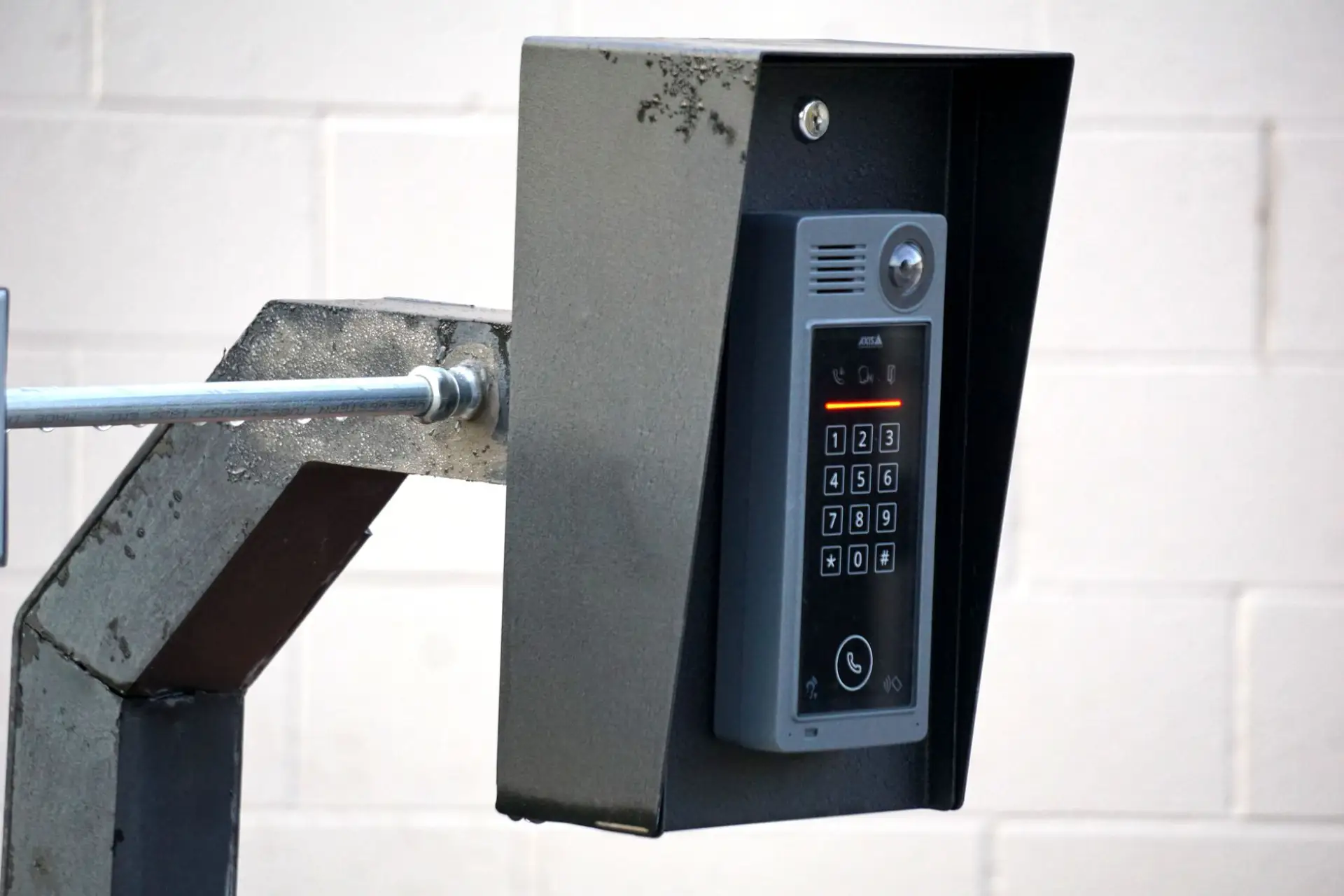
Gate Access Control Systems in Elgin, IL — Residential & Commercial Entry Systems
Who gets through, how they prove it, and whether you can take that access away later. The entry layer is a separate decision from the gate, and usually the more important one.
Elgin Elite Metal Gates is your local resource for gate access control systems, intercoms, keypads and vehicle detection throughout Elgin, Kane County and the Fox Valley. We work with qualified local gate and access-control specialists who start from how many people need access and how often that list changes.
Access control answers three questions the gate itself can't: who gets in, how they prove they should, and how you take that permission away afterward. The third one is where most systems quietly fail. Keys accumulate holders over the years — a contractor, a former tenant, a dog walker, someone's ex — and there's no way to withdraw one you can't account for. Credentials that can be individually revoked are the entire reason this layer exists.
The second thing worth separating is entry from exit. A gate that opens when a credential is presented still needs something to tell it a vehicle is leaving, whether that's a loop buried in the drive, an exit wand, or a button. Exit detection gets left out of quotes constantly, and the symptom is specific: the gate opens fine on the way in and traps you on the way out.
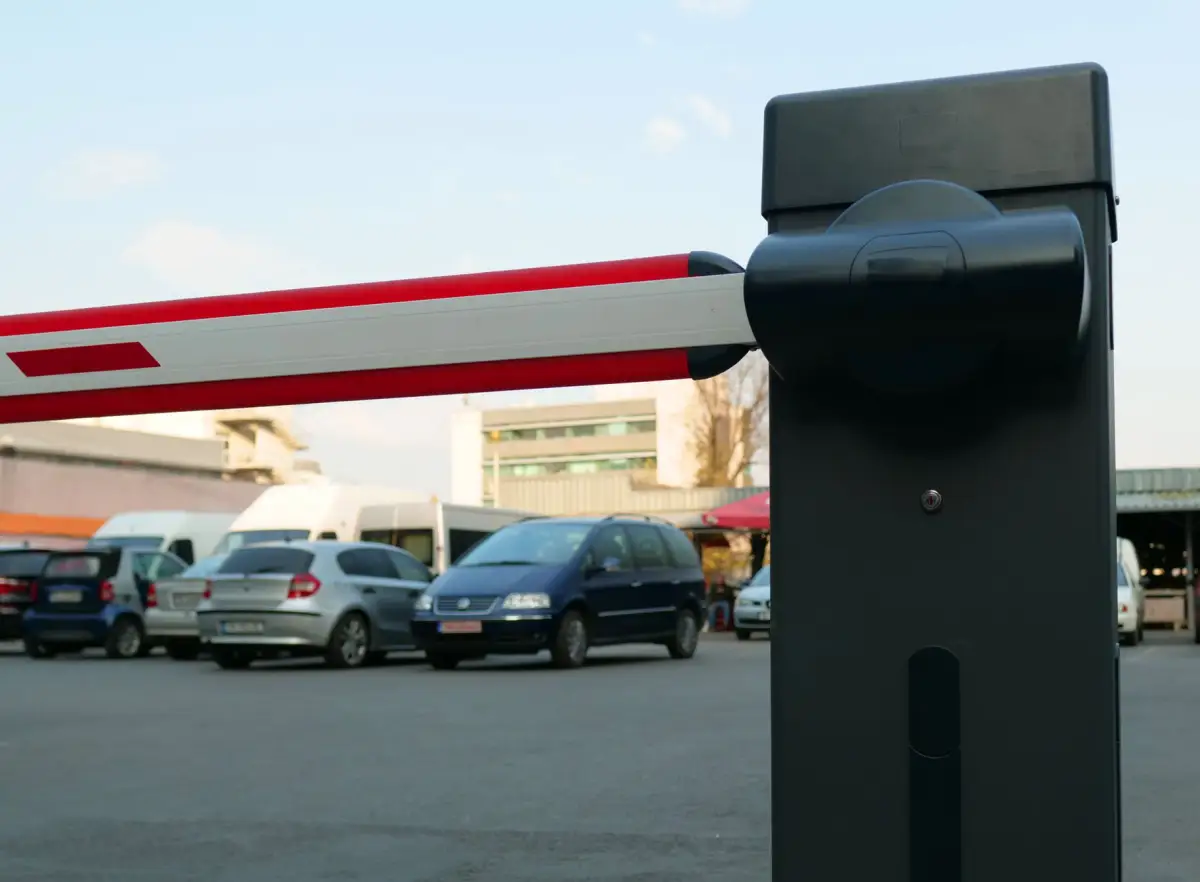
None of this is the barrier. A keypad on a gate that can be climbed or reached through is a logging system, not a security one. The gate is covered on security gates; this page is about everything that decides whether it opens.
What a Gate Access Control Systems Quote Covers
- A count of how many people need access and how often that list changes — the question that determines the whole design
- Credential strategy: what's issued to regular users, occasional users and one-time visitors
- Keypad, reader, intercom or app selection based on that strategy rather than on hardware preference
- Reader positioning at a height and distance a driver can reach without opening the car door
- Weather-rated enclosures, since entrance hardware sits exposed to everything the Fox Valley produces
- Exit detection — loop, exit wand or button — specified rather than assumed
- Low-voltage runs and conduit from the operator to every device, planned before any drive surface is patched
- Integration with the gate operator, including auto-close timing and safety device interaction
- Backup entry method for power outages and for when a credential fails
- Codes, credentials and administrator access documented and handed over rather than left with the installer
Gate Access Control Systems in Elgin, IL
Keypad Gate Entry Systems
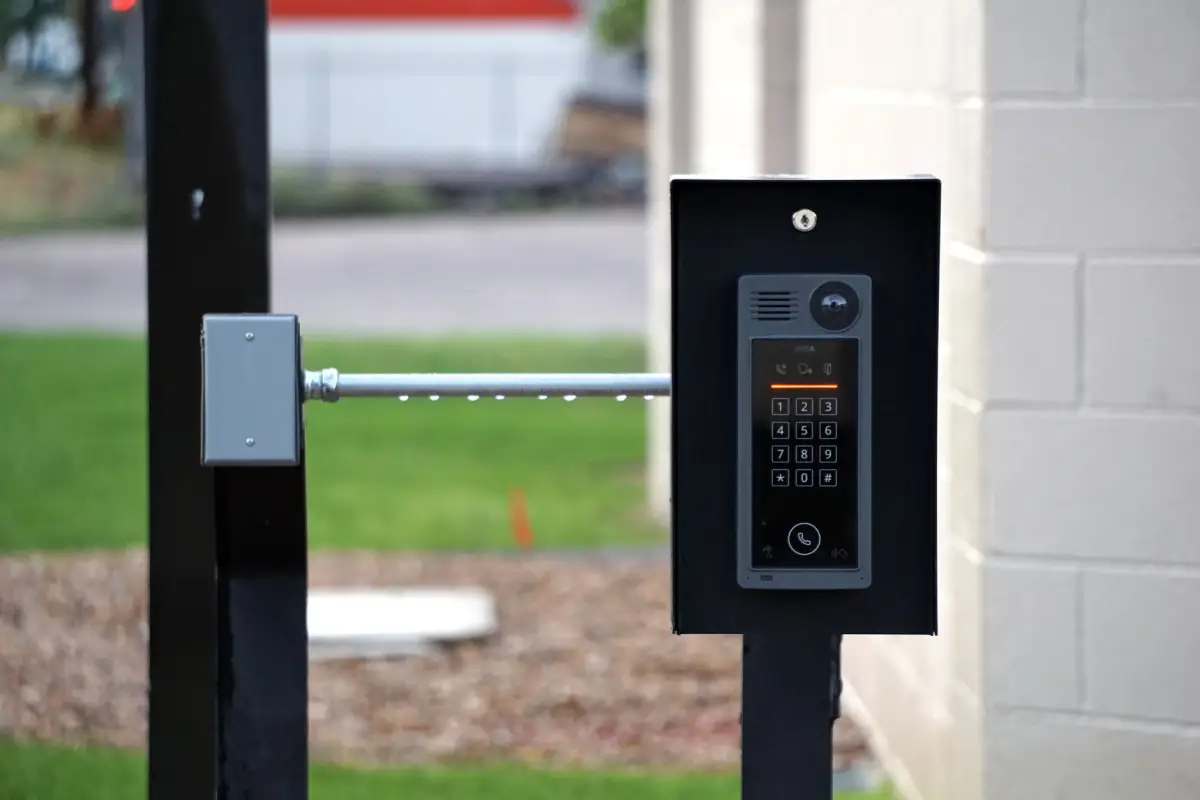
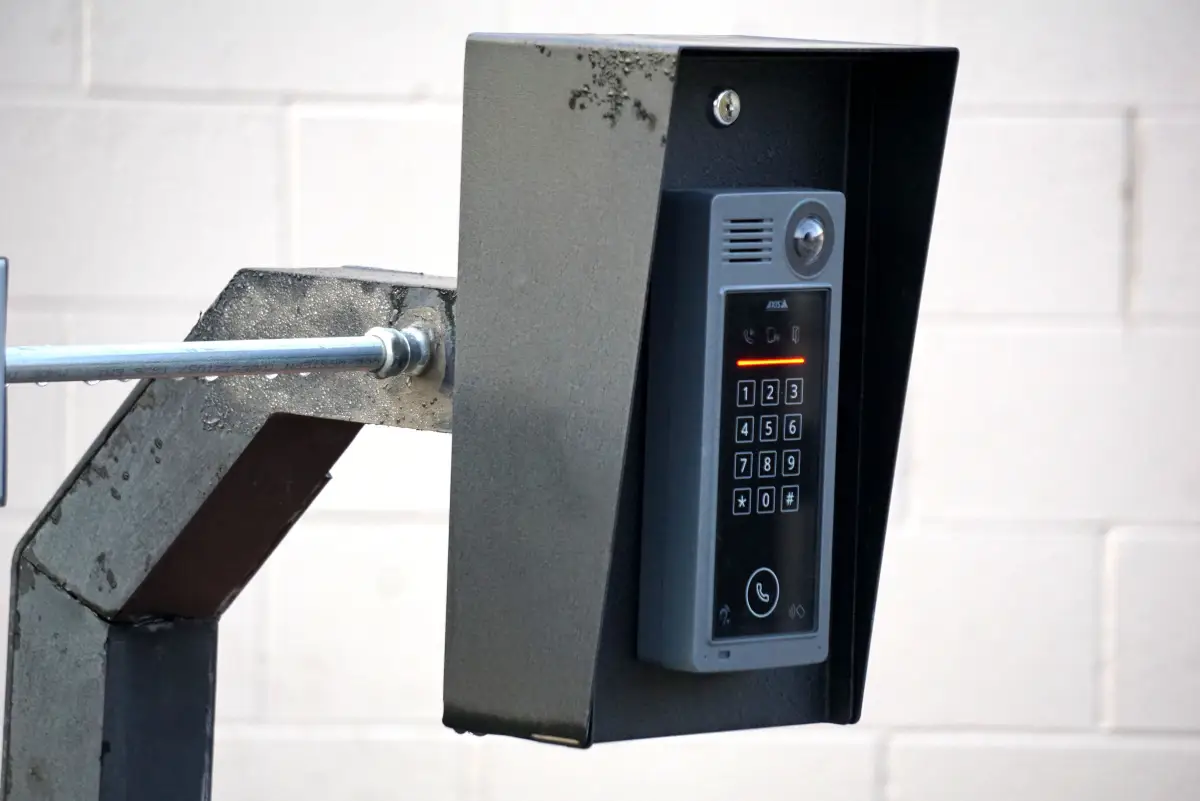
A keypad is the cheapest useful access control there is, and its strength is that it needs no hardware issued to anybody. You can give a landscaper a code over the phone, change it when the contract ends, and never think about collecting anything back. That's genuinely valuable on a property with occasional visitors. Its weakness is equally straightforward: codes get shared, written down, and watched being entered. A single code used by everyone is barely better than an unlocked gate after a few years. Better systems support multiple codes so each user or group gets their own and can be revoked individually, and some log which code was used and when — which turns a keypad into something closer to a credential system. The practical failures are almost all environmental. A keypad at the road takes direct weather, and water in a poorly sealed housing produces intermittent operation that's worse after rain. Backlit keys matter more than people expect on a winter evening.
Card & Key Fob Gate Access
Fobs and cards are the answer when the access list is longer than a household and changes over time — tenants, staff, members, contractors. Each credential is individually identifiable, so one can be deactivated without touching anyone else's, which is exactly what keys can't do. Most systems log every presentation, so you get a record of who came through and when rather than just knowing the gate opened. Two practical considerations. First, read range: a fob that has to be held an inch from the reader means winding a window down in February, while a longer-range credential can be read from inside the vehicle — the difference between a system people use as intended and one they defeat by propping the gate. Second, administration. A credential system is only as current as the list behind it, and a property that never removes departed users has recreated the key problem in electronic form. Someone has to own that list.
Telephone & Video Intercom Systems
Intercoms solve a different problem from credentials: they handle the people you didn't anticipate. A delivery, a visitor, a service call — nobody is going to issue a fob for a one-time arrival, so something has to let a person on the property make a judgement and open the gate. Audio-only intercoms do this adequately. Video does it considerably better, because seeing who is at the gate is a different quality of decision from hearing them. Telephone-entry systems dial out to a phone number, which means a call can be answered from anywhere rather than from a handset in the kitchen — useful at a house, essential at a property that isn't always occupied. Directory-based units at multi-tenant properties let a visitor scroll to a name and call that resident directly. The install detail that matters most is positioning: the unit needs to be at driver height, close enough to reach from a car window, angled so a camera catches a face rather than a silhouette against the sky.
Smartphone & Remote Gate Access
App-based control adds capabilities that older systems simply don't have. You can open the gate for someone while you're not on the property, issue a temporary credential that expires on its own, and review a log of when the gate opened and on whose authority. For a household with a cleaner, a dog walker and periodic deliveries, that combination is the practical answer to access management. Two cautions worth stating plainly. First, it depends on connectivity — a system reliant on a network connection needs a plan for when that connection is down, which is why a keypad or credential reader usually stays as a fallback rather than being replaced. Second, an app is a poor choice as the only method for a visitor, since nobody arriving once is going to install software. Smartphone control works best as a layer over a keypad and an intercom, not instead of them. Where it genuinely shines is at properties that aren't continuously occupied.
Vehicle Gate Access Control Systems
Vehicles bring requirements a walk-up system doesn't have, and this is where the most common design failures happen. Exit detection is first and most overlooked — something has to tell the gate a vehicle is leaving. An inductive loop cut into the drive surface detects the metal mass of a car and is the most reliable option; an exit wand is a simpler probe that detects motion near the gate; a button works but requires stopping and reaching. Loops can be broken by pavement movement or frost heave, which shows up as a gate that opens on arrival and won't open on departure. A second loop, the safety or shadow loop, holds the gate open while a vehicle is under it so it can't close on a car — worth having on any gate a vehicle passes through. Then there's timing: auto-close delay has to be long enough for one vehicle and short enough to prevent a second following through unnoticed. Where tailgating genuinely matters, the answer is anti-tailgating logic rather than a stronger gate.
Signs You Need Access Control on Your Gate
- Keys have circulated for years and nobody can account for all of them
- One code is shared by everyone, and has been for as long as anyone remembers
- You need to let deliveries, trades or cleaners in while nobody is on the property
- Somebody has left — a tenant, an employee, a contractor — and you can't withdraw their access
- You need to know who came through and when, not just that the gate opened
- The gate opens on arrival but there's no reliable way to open it on departure
- The keypad works intermittently and it's worse after rain, which points at water in the housing
- The gate closes too quickly behind one vehicle, or slowly enough that a second follows through
How Access Control Gets Designed and Installed
- 1
Access list and use assessment
The design comes from two numbers: how many people need access, and how often that list changes. A household of four with a monthly visitor and a twenty-unit property with rotating tenants need genuinely different systems, and hardware chosen before those numbers are known is hardware chosen for the wrong problem. Users get grouped by pattern rather than by importance — permanent users who need a credential, recurring users who need something revocable, one-time arrivals who need an intercom. Then the practical questions: is the property occupied during the day, does anyone need to grant access remotely, does anyone need a record of entries, and who is actually going to administer the list once it exists. That last one decides more than the hardware does. A credential system nobody maintains becomes a key system within a couple of years, with the same accumulation of holders nobody can account for.
- 2
Device selection and siting
Devices then get chosen against those groups, usually as a combination rather than a single product: a reader or keypad for regular users, a code for occasional ones, an intercom for visitors, and app control where remote access matters. Siting is where installations succeed or fail practically. A reader has to be at driver height and close enough to reach without opening the car door — get that wrong and people prop the gate rather than climb out in February. It also has to sit far enough back from the roadway that a waiting vehicle isn't in traffic while somebody enters a code. Camera angle on a video intercom gets set to catch a face rather than a silhouette against bright sky. Enclosures get specified for real weather exposure, since a poorly sealed housing at a Fox Valley entrance produces intermittent faults that are worse after rain and worst in a freeze-thaw cycle.
- 3
Wiring, loops and operator integration
A JULIE locate goes in before digging. Low-voltage runs go from the operator out to every device — reader, keypad, intercom — and back, and where those runs cross a finished driveway they mean saw-cutting and patching, which belongs on the quote rather than in a change order. Detection loops get cut into the drive surface, laid, and sealed; their position determines whether they'll actually detect a vehicle at the point it needs detecting. A safety or shadow loop under the gate's path holds it open while a vehicle is beneath it. Then everything gets integrated with the operator: which input triggers an open, how auto-close timing is set, and how the access system interacts with the safety devices. That last relationship matters — an access system must never be wired in a way that bypasses or overrides UL 325 entrapment protection, and a post-2016 operator will refuse to run if a monitored device is faulting regardless of what credential was presented.
- 4
Programming, testing and handover
Credentials get issued and grouped, codes get set per user or per group rather than one shared code, and any expiry or schedule rules get configured. Then everything is tested from the position it will actually be used from — reading a fob from inside a car rather than standing at the pedestal, entering a code with gloves on, calling the intercom from the gate and answering it from wherever it's meant to be answered. Exit detection gets tested by driving out, which is the only way to know a loop is positioned correctly. Auto-close timing gets set deliberately: long enough for one vehicle to clear, short enough that the gate isn't standing open. Then the part most often skipped — handover. Administrator credentials, the master code, the process for adding and removing a user, and the backup entry method for an outage all get documented and given to the owner rather than living in the installer's phone.
What Do Gate Access Control Systems Cost in Elgin, IL?
- How many users need individual credentials, and whether the system has to log entries
- Device mix — a keypad alone is a fraction of a video intercom plus reader plus app control
- Video versus audio intercom, and whether it's a directory unit for multiple tenants
- Telephone-entry or network connectivity, and any ongoing service that comes with it
- Vehicle detection: an inductive loop cut into the drive costs more than an exit wand or a button, and is more reliable
- A safety or shadow loop to hold the gate open while a vehicle is beneath it
- Low-voltage runs and conduit, particularly where the path crosses finished concrete or asphalt
- Pedestal or mounting hardware, and weather-rated enclosures for entrance exposure
- Integration work with an existing operator, which varies with how modern its control board is
- Ongoing administration, which is time rather than hardware but is the cost that determines whether the system stays useful
The expensive mistake in access control is buying capability nobody maintains. A credential system with logging, expiring guest passes and per-user revocation is genuinely powerful and completely wasted if no one owns the access list — within a couple of years it holds every user it has ever had, which is the key problem again with a screen on it. Before specifying the capable version, decide who administers it. A simpler system that stays current beats a sophisticated one that doesn't.
What to Look for in an Elgin Gate Access Control Installer
The Access List Discussed Before the Hardware
How many people, and how often that changes. Those two numbers determine the system. Hardware recommended before them is hardware recommended blind.
Exit Detection Specified, Not Assumed
Something has to open the gate for a departing vehicle. It's the single most commonly omitted item, and the omission is only discovered on the way out.
Readers Sited for a Driver, Not a Pedestrian
Reachable from the car, far enough back from the road that a waiting vehicle isn't in traffic. Get it wrong and people prop the gate open instead.
Weather-Rated Enclosures as Standard
Entrance hardware takes everything the Fox Valley produces. Intermittent faults that get worse after rain are a sealing problem, and they're preventable.
Safety Devices Never Bypassed
Access control triggers the gate; it must not override UL 325 entrapment protection. A post-2016 operator won't run with a monitored device faulting, and that's correct behaviour.
Administrator Access Handed Over
Master codes, the process for adding and removing users, and the outage fallback belong with the owner — documented, not in the installer's phone.
Residential & Commercial Gate Access Control Systems
Residential
Residential access control is usually a keypad at the road, a couple of credentials for the household, an intercom for visitors, and exit detection so nobody needs a remote to leave. App control earns its place where the property isn't always occupied or where cleaners, dog walkers and deliveries need letting in remotely. The value is in expiring or revocable access rather than in the hardware itself.
Commercial
Commercial systems are administration problems first. Tenant turnover, staff changes, contractor access and a record of who came through all point toward individually revocable credentials with logging, and toward someone whose job includes keeping the list current. See commercial security gates and commercial automatic gates.
When Access Control Isn't the Right Call
- The gate can be climbed, reached through, or lifted off its hinges. Access control on a defeatable barrier logs entries rather than preventing them — see security gates first.
- Nobody is going to administer the user list. A credential system that never removes departed users is the key problem again, at higher cost.
- You have three regular users and one visitor a month. A multi-code keypad does that job, and the sophisticated version is capability you'll pay for and not use.
- Your existing keypad works intermittently and it's worse after rain. That's water in the housing — a repair, not a new system.
- The property is outside Kane, Cook, DuPage, McHenry and Lake Counties.
Related Services
- Security Gates in Elgin, IL
The barrier itself — access control is only as good as what it's fitted to.
- Gate Opener Installation in Elgin, IL
The operator the access system triggers, including auto-close timing and safety integration.
- Gate Opener & Motor Repair in Elgin, IL
Keypad, remote, receiver and loop detector faults on an existing system.
- Automatic & Electric Gates in Elgin, IL
How automation and entry hardware fit together on a compliant installation.
Serving Nearby Cities
Gate work across Kane, Cook, DuPage, McHenry & Lake Counties. Each city page covers the local permit requirements, footing depth and the configurations that come up most often there.
- South Elgin
- Streamwood
- Bartlett
- Carpentersville
- Hanover Park
- Hoffman Estates
- St. Charles
- Algonquin
- Schaumburg
- Lake in the Hills
- West Chicago
- Carol Stream
- Huntley
- Batavia
- Glendale Heights
- Palatine
- Crystal Lake
- Wheaton
- Arlington Heights
- Addison
- Lombard
- Mount Prospect
- Buffalo Grove
- Aurora
- Elmhurst
- Des Plaines
- McHenry
- Naperville
- Downers Grove
- Woodstock
Frequently Asked Questions
- What's the best way to control access to a gate?
- It depends entirely on how many people need access and how often that list changes. A household with a handful of regular users is well served by a multi-code keypad and an intercom. A property with tenants, staff or rotating contractors needs individually revocable credentials — fobs or cards — because that's the only way to remove one person's access without changing everyone's. Most properties end up with a combination rather than a single method: credentials for regular users, codes for occasional ones, an intercom for visitors.
- Why won't my gate open when I'm leaving?
- That's exit detection, and it's separate from whatever lets you in. Something has to tell the gate a vehicle is departing — an inductive loop cut into the drive, an exit wand, or a button. Loops get broken by pavement movement or frost heave, and detector sensitivity can drift so a smaller vehicle no longer registers. The symptom is distinctive: entry works perfectly and exit doesn't. It's also, frequently, an item that was simply never installed.
- Are keypads or key fobs better for a gate?
- They solve different problems. Keypads need no hardware issued, so you can give a contractor a code over the phone and change it later — good for occasional access. Fobs are individually identifiable, so one can be deactivated without affecting anyone else, and most systems log every use — good for a list that changes. Codes get shared and watched being entered; fobs get lost and need administering. A property with both regular and occasional users usually wants both.
- Can I open my gate from my phone?
- Yes, and it adds three genuinely useful things: opening the gate for someone while you're elsewhere, issuing temporary access that expires on its own, and a log of when the gate opened and on whose credential. Two caveats. It depends on a network connection, so a keypad or reader should stay as a fallback rather than being removed. And it's a poor primary method for visitors, since nobody arriving once will install an app — that's what an intercom is for.
- What is a safety loop and do I need one?
- A safety or shadow loop is a detection loop positioned under the gate's path that holds the gate open while a vehicle is beneath it, so it can't close on a car. On any gate a vehicle passes through it's worth having. It's distinct from the exit loop, which detects a departing vehicle and triggers an open, and from the operator's own entrapment protection under UL 325 — a safety loop supplements those devices rather than replacing them.
- Why does my keypad work sometimes and not others?
- Intermittent operation that's noticeably worse after rain is almost always water in the housing. Entrance hardware sits fully exposed, and a poorly sealed enclosure lets moisture into the board — which then behaves erratically until it dries, and eventually stops. Freeze-thaw cycles accelerate it. The fix is usually a properly weather-rated enclosure rather than a new keypad, though by the time the symptom is regular the board is often already damaged.
Learn More
- UL Solutions — UL 325 External Entrapment Protection Devices — What counts as an entrapment protection device, and why operators built from 2016 onward refuse to run without a monitored one connected.
- DASMA — An Installer's Guide to ASTM F2200 — The construction requirements an automated gate has to meet: gap limits, bottom-edge protrusions, and how the gate has to behave if it leaves its hardware.
- City of Elgin — Common Residential Permits — Which residential projects need a permit in Elgin and how the application is filed.
Get a Quote for Gate Access Control Systems in Elgin, IL
Send over the opening you’re working with and get an on-site measurement and quote — no charge for the estimate, no obligation to book it.
Get My Free Estimate