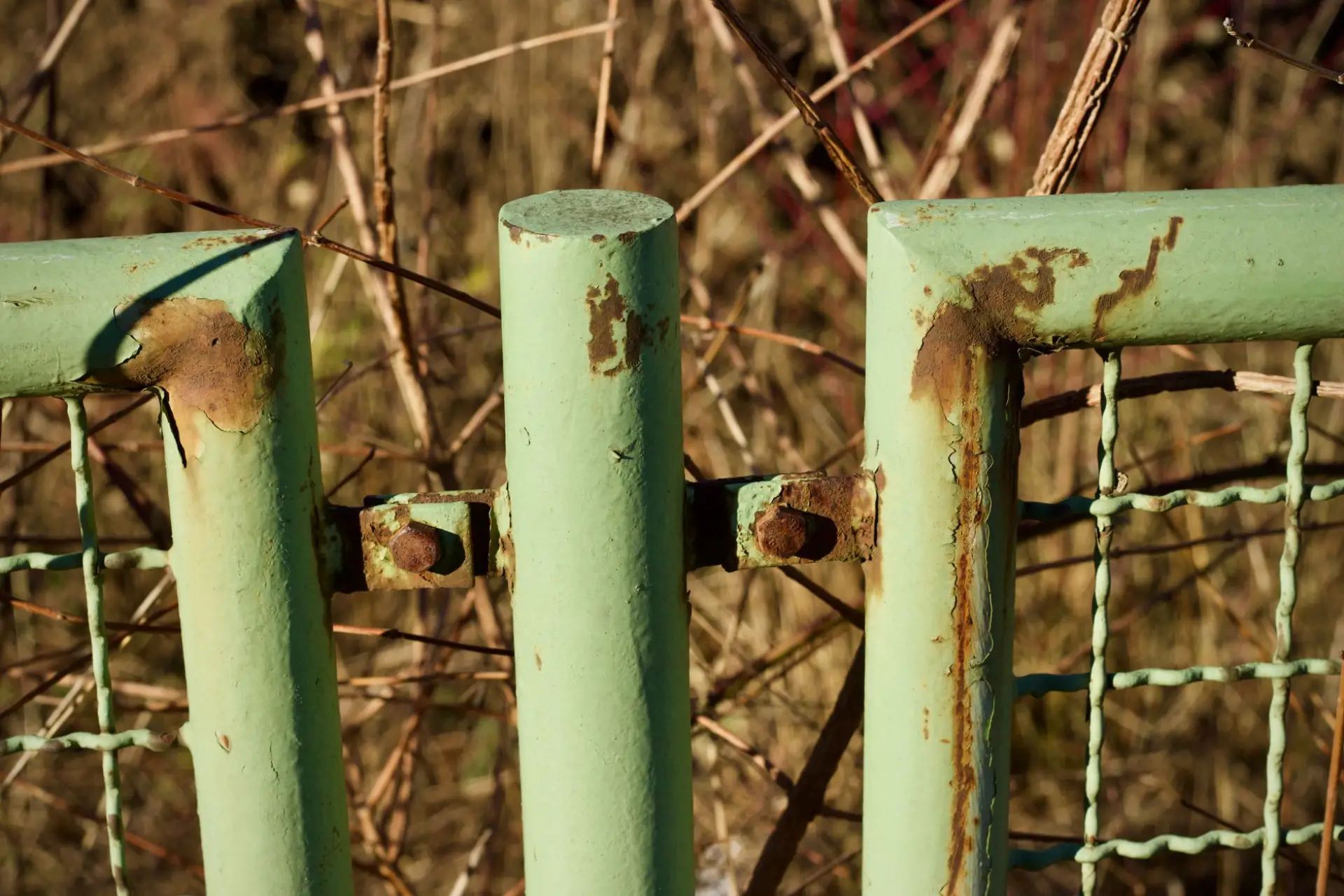
Metal Gate Repair in Elgin, IL — Residential & Commercial Gate Repair Specialists
Sagging leaves, gates off track, worn rollers, bent frames and latches that no longer line up. The mechanical and structural side of gate failure, diagnosed before it's quoted.
Elgin Elite Metal Gates is your local resource for metal gate repair, welding and hardware replacement throughout Elgin, Kane County and the Fox Valley. We work with experienced fabricators and installers who diagnose why a gate stopped working before quoting what to do about it.
Almost every gate repair traces back to one of three things: the gate has moved, the post has moved, or a wearing part has worn out. Telling them apart is most of the job, because they cost very differently and fixing the wrong one means doing it again in a year.
The single most common cause in this area is the post. Elgin's frost depth is 42 inches, and a footing that didn't get below it gets lifted a fraction with each freeze-thaw cycle. Nothing about the gate has changed, but the geometry it hangs in has, so it stops meeting its latch. Owners describe this as the gate sagging; the gate is usually fine.
This page covers the mechanical and structural side: frames, hinges, rollers, tracks, latches and welds. If the gate is physically sound and the problem is that a motor hums, stalls, or won't respond, that's gate opener and motor repair instead — the diagnosis and the parts are different.
What a Metal Gate Repair Quote Covers
- On-site diagnosis that establishes whether the gate moved, the post moved, or a part wore out — before any parts are quoted
- Frame straightening, re-squaring and re-welding where a leaf has racked
- Diagonal brace or internal cable tensioning added where sag will otherwise return
- Hinge replacement sized above the leaf weight rather than matched to whatever failed
- Roller, guide roller and end stop replacement on sliding gates
- Track clearing, realignment and drainage correction where a ground track is holding water
- Post resetting with a new footing below Elgin's 42-inch frost depth where heave is the cause
- Latch, strike, drop rod and cane bolt realignment set to where the gate actually rests
- Weld repair with the finish made good afterward, so the repair isn't the next rust point
- An honest repair-versus-replace opinion where the frame is too far gone to be worth saving
Metal Gate Repair in Elgin, IL

Sliding Gate Repair
Sliding gate faults are mostly about the running path. A gate that came off track has usually done so for one of three reasons: a roller seized or wore enough to let the wheel climb out of the channel, debris in the track lifted it, or a guide roller failed and let the leaf lean far enough to jump. Don't keep cycling a derailed gate — running it damages the rollers and can bend the leaf, turning a hardware swap into a fabrication job. Short of derailing, the common complaints are a gate dragging, binding at one point in its run, or getting progressively harder to push. Those point at worn rollers, a track packed with grit and road salt, or a rack drifted out of parallel with its pinion. Winter makes all of it worse here, because refrozen meltwater in a ground-level V-track will stop a gate outright — which is exactly why cantilever systems, carrying the leaf on post-mounted rollers with nothing touching the ground, get recommended in this climate. If the gate moves freely by hand but the operator won't drive it, the fault is on the opener side.
Swing Gate Repair
The classic swing gate complaint is a driveway gate sagging — the latch corner has dropped and the gate needs lifting to close. There are two different causes and they need different work. If the gap between gate and post is wedge-shaped, narrower at the top, the leaf has racked: the frame has gone from a rectangle to a parallelogram under its own weight, usually because it was built without adequate bracing or with frame stock too light for the span. That's straightened, re-squared and braced, or the sag comes straight back. If instead the whole gate leans and the gap stays even, the post has moved — nearly always frost heave from a footing above 42 inches — and the fix is resetting the post properly rather than touching the gate at all. A third possibility on any older gate is simple hinge wear, where play at the pin has become droop at the free end. Checking all three before quoting is the difference between a repair that lasts and a repeat visit.
Gate Hinge, Roller & Track Repair
These are the wearing parts, and they nearly always announce themselves before failing. Hinges develop play first — grab the free end of a closed gate and lift, and any movement at the hinge is wear that will become sag. Replacement hinges get rated above the leaf weight rather than matched to what was there, since the original spec being marginal is often why they wore out. Rollers on a slide announce themselves by noise: a gate getting louder is a gate with a roller starting to seize, and replacing it before it fails prevents the derailment that follows. Tracks need clearing and, more importantly, draining — standing water in a ground channel that freezes is what turns a working gate into a stuck one every January. Where a track holds water because the bed under it has settled, clearing it is temporary and correcting the drainage is the actual repair.
Bent & Damaged Metal Gate Repair
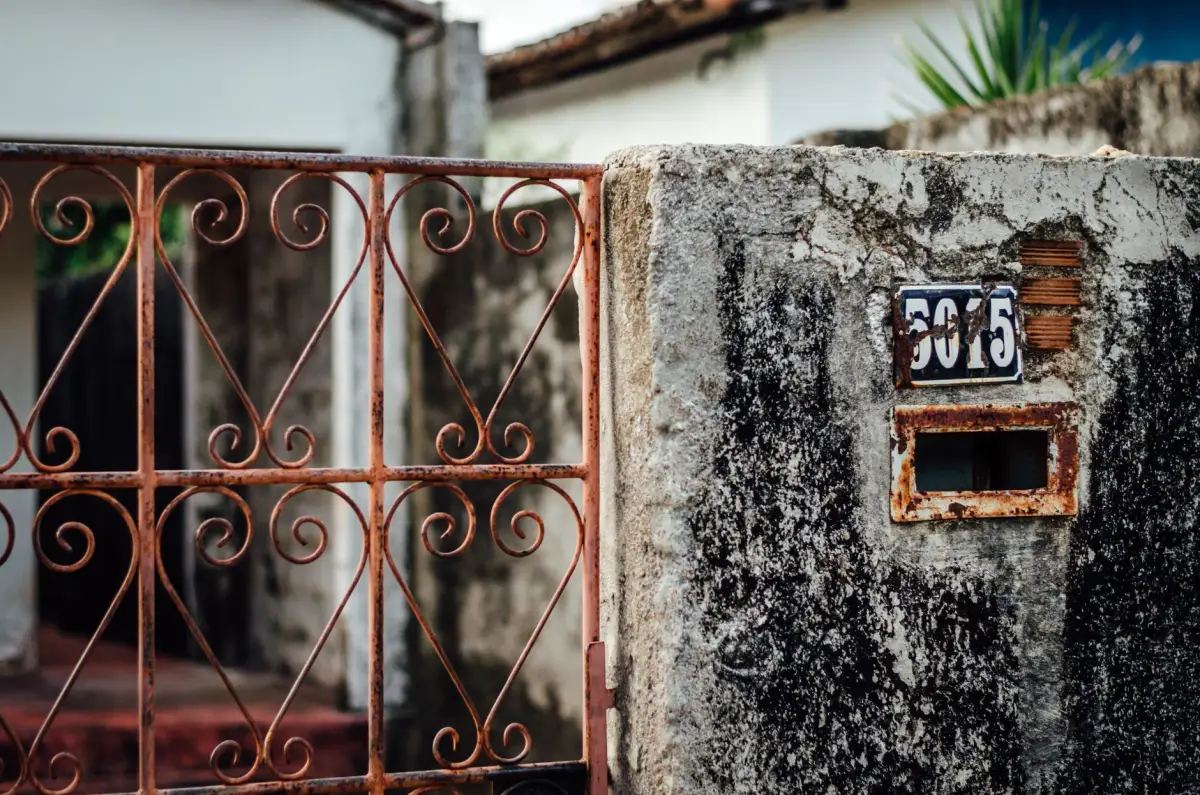
Impact damage is common on driveway gates — a delivery truck mirror, a reversing bumper, a plough blade in winter. Steel is repairable in a way aluminum largely isn't: a bent steel frame member can be straightened or cut out and replaced, whereas a dented aluminum extrusion usually gets swapped. Either way the finish has to be made good afterward, and this is the step most often skipped. A weld repair left bare is the next rust point, because the heat-affected zone is exactly where road salt starts working. Corrosion damage is the other category here, and it's where a repair-versus-replace judgement gets made honestly: surface rust bleeding from a seam is cosmetic and treatable, but a frame that's perforated at the bottom rail or where the pickets meet it has lost section, and welding new steel to thin steel is a temporary answer. When a gate reaches that point, replacement with a properly galvanized-then-coated gate is the cheaper decision over ten years.
Gate Alignment, Latch & Hardware Repair
A gate that won't latch is the most common call and the most frequently misdiagnosed, because the latch is rarely the problem — it's the messenger. Something has changed the geometry, and the latch is where you notice. Work backward: does the gate close fully and just miss the strike, or does it bind before it gets there? Is the gap even top to bottom? On a bi-parting pair, does each leaf close correctly on its own? A double gate that won't latch usually has a bent or worn drop rod, a centre stop lifted by frost, or one leaf racked enough that the two no longer meet square. Only after those are ruled out does the latch or strike itself get adjusted, and then it gets set to where the gate actually rests rather than where it theoretically should. Realigning a latch to compensate for a heaved post is a repair that lasts until the next thaw.
Signs Your Gate Needs Repair Now
- The gate has to be lifted to latch, which means the leaf has racked or a hinge has worn
- It won't latch at all, or a double gate no longer meets square in the middle
- A sliding gate came off track, or jumps at the same point in its run
- The gate is getting noisier, which on a slide almost always means a roller starting to seize
- It drags on the ground or the drive where it used to clear, often frost movement rather than the gate
- The whole gate leans, with an even gap top to bottom — that's the post, not the leaf
- Rust is bleeding out of a weld seam, or the bottom rail has soft spots
- It binds partway through travel, which will destroy an operator if the gate is automated
How Gate Repair Works
- 1
Diagnosis before parts
The visit starts by working the gate by hand through its full travel, because that's where the fault reveals itself. A gate that binds at one specific point has a different problem from one that's uniformly stiff. The gap between gate and post gets checked top to bottom: wedge-shaped means the leaf has racked, even means the post has moved. Hinges get lifted at the free end to feel for play. On a slide, the run gets walked and the rollers listened to. Post plumb gets checked against vertical, since frost heave is the single most common underlying cause in Elgin and it presents as a dozen different symptoms. Crucially, if the gate is automated, the operator gets disconnected and the gate worked manually first — otherwise a binding gate and a struggling motor look identical, and the wrong one gets replaced.
- 2
Structural work: straightening, bracing, welding
Where the leaf has racked, it gets pulled back square and then given a reason to stay that way — a diagonal brace running from the bottom hinge corner to the top latch corner, or an internal tensioned cable doing the same job less visibly. Straightening without bracing is why sag returns within a season, and it's the shortcut that makes a cheap quote cheap. Impact damage gets straightened where the steel allows it and cut out and replaced where it doesn't. Corroded sections get assessed honestly: welding new steel onto a perforated bottom rail buys a couple of years at best, and saying so is more useful than doing it. All weld repairs get their finish made good afterward — ground back, primed with a zinc-rich primer and coated — because a bare weld in a Fox Valley winter is where the next failure starts.
- 3
Hardware replacement and post correction
Worn hinges get replaced with hinges rated above the leaf weight, not matched to what failed, since a marginal original spec is often the reason they wore. Rollers, guide rollers and end stops on a slide get replaced as a set where several are worn, because a new roller running alongside three tired ones simply moves the load. Where diagnosis pointed at the post, the fix is the post: it gets dug out and reset on a footing below Elgin's 42-inch frost depth, with a JULIE locate placed first. That's more disruptive and more expensive than adjusting a latch, and it's also the only version of the repair that survives the next winter. Where a masonry pier has failed or was never structural to begin with, the honest answer is usually a new steel post rather than an attempt to anchor into decorative brick.
- 4
Realignment, testing and finish
The gate gets rehung or reset and swung or run through its full travel, checked for clearance everywhere rather than only at the closed position. Latch, strike, drop rod and cane bolt get set last, aligned to where the gate now actually rests. On a bi-parting pair the passive leaf gets pinned first and the active leaf aligned to it. Where the gate is automated, the operator is reconnected only once the gate moves freely by hand, and then travel limits and obstruction sensitivity get reset — a repaired gate has different resistance from the one the operator was tuned to, and leaving the old settings is how a repaired gate starts nuisance-reversing. Safety devices get retriggered and verified in both directions of travel. Finally, any bare metal from the repair gets coated, so the repair isn't the site of the next problem.
What Does Metal Gate Repair Cost in Elgin, IL?
- Which of the three causes it actually is — a worn part, a racked leaf, or a heaved post, in ascending order of cost
- Whether the leaf needs straightening and bracing or just hardware
- Hinge, roller or track hardware, and whether parts are replaced individually or as a set
- Post resetting, which means excavation, a new footing below 42 inches, and cure time before the gate can be rehung
- Weld repair extent, and the finish work needed afterward so the repair doesn't become the next rust point
- Whether the gate is automated, since the operator has to be disconnected, then retuned and safety-tested afterward
- Access and site conditions — a narrow east-side drive is harder to work than an open suburban approach
- Whether the frame has lost section to corrosion, which shifts the conversation to replacement
The cheapest quote on a sagging gate is usually the one that straightens the leaf and doesn't brace it, or realigns a latch without asking why the alignment changed. Both produce a gate that works on the day and fails again within a season — and the second repair costs more than doing it properly would have, because by then the frame has racked further. When comparing repair quotes, the question worth asking is what's being done to stop the same thing happening again, not just what's being fixed.
What to Look for in an Elgin Gate Repair Company
The Gate Gets Worked by Hand First
On an automated gate, the operator comes off before anything is diagnosed. Otherwise a binding gate and a failing motor look the same and the wrong part gets replaced.
The Gap Gets Checked Top to Bottom
Wedge-shaped means the leaf racked. Even means the post moved. It takes ten seconds and it determines the entire repair.
Sag Gets Braced, Not Just Straightened
A leaf pulled back square with no brace added will rack again. That's the difference between a repair and a postponement.
Post Heave Named as the Cause When It Is
Elgin's frost depth is 42 inches, and a shallow footing is the most common underlying cause here. Adjusting a latch around a heaved post lasts until the next thaw.
Welds Coated Afterward
A bare weld seam is where road salt starts. A repair that leaves bare metal has scheduled the next repair.
An Honest Repair-Versus-Replace Answer
A frame that's perforated at the bottom rail has lost section. Welding new steel to thin steel is temporary, and someone should say so.
Residential & Commercial Metal Gate Repair
Residential
Residential repairs in Elgin skew heavily toward frost-related post movement and hinge wear on gates that have been in place a decade or more. On the older east-side lots, masonry piers are a recurring finding — a gate hung off a decorative brick pier with no steel in it will eventually loosen the pier rather than the hinge, and the repair is a new post rather than new hardware.
Commercial
Commercial gate repair is driven by cycle count, which wears rollers, hinges and tracks far faster than residential use does, and by the cost of downtime when a gate blocks a loading dock or a tenant lot. Scheduled inspection is usually cheaper than reactive repair at that duty. See commercial gate repair and maintenance.
When Gate Repair Isn't the Right Call
- The gate moves freely by hand and the problem is the motor, the remote, the keypad or the sensors. That's gate opener and motor repair — different diagnosis, different parts.
- The frame has perforated at the bottom rail or where the pickets meet it. That's lost section, and welding new steel to thin steel is a temporary answer — replacement is the cheaper decision over ten years.
- You want the latch realigned and nothing else, on a gate whose post has clearly heaved. It'll work until the next thaw, and that's not a repair worth paying for.
- The gate is a stock big-box panel that's bent beyond straightening. Replacement hardware costs more than the gate did.
- The property is outside Kane, Cook, DuPage, McHenry and Lake Counties.
Related Services
- Gate Opener & Motor Repair in Elgin, IL
Motors, operators, sensors, remotes and keypads — the electrical side of a gate that won't move.
- Custom Metal Gates in Elgin, IL
Replacement when a frame has lost too much section to be worth repairing.
- Sliding Gates in Elgin, IL
Cantilever versus V-track, and why ground tracks cause most winter slide faults.
- Swing Gates in Elgin, IL
Hinges, bracing and the design decisions that prevent sag in the first place.
Serving Nearby Cities
Gate work across Kane, Cook, DuPage, McHenry & Lake Counties. Each city page covers the local permit requirements, footing depth and the configurations that come up most often there.
- South Elgin
- Streamwood
- Bartlett
- Carpentersville
- Hanover Park
- Hoffman Estates
- St. Charles
- Algonquin
- Schaumburg
- Lake in the Hills
- West Chicago
- Carol Stream
- Huntley
- Batavia
- Glendale Heights
- Palatine
- Crystal Lake
- Wheaton
- Arlington Heights
- Addison
- Lombard
- Mount Prospect
- Buffalo Grove
- Aurora
- Elmhurst
- Des Plaines
- McHenry
- Naperville
- Downers Grove
- Woodstock
Frequently Asked Questions
- Why is my metal gate sagging?
- Check the gap between the gate and the post. If it's wedge-shaped — tighter at the top, wider at the bottom — the leaf has racked, meaning the frame has gone out of square under its own weight. That's a bracing and straightening job. If the gap is even and the whole gate leans, the post has moved, which in Elgin nearly always means a footing above the 42-inch frost depth being lifted by freeze-thaw cycles. Those are different repairs at very different prices, so the diagnosis matters more than the symptom.
- My sliding gate came off track — can it be fixed?
- Usually yes, and usually it's a roller. A wheel that seized or wore enough to climb out of the channel, debris in the track that lifted it, or a failed guide roller that let the leaf lean far enough to jump. Stop cycling it in the meantime — running a derailed gate damages rollers and can bend the leaf, which turns a parts swap into a fabrication job. It's also worth checking post plumb, since a heaved footing shifts the whole roller path out of alignment.
- Why won't my gate latch anymore?
- The latch is almost never the actual problem — it's where you notice that something else changed. Either the leaf has racked and dropped at the latch corner, a hinge has worn enough to let the gate droop, or the post has moved. On a double gate, add a bent drop rod, a frost-heaved centre stop, or one leaf no longer meeting the other square. Realigning the latch without finding the cause works until the geometry shifts again, which in this climate means until spring.
- Is it worth repairing a rusted gate?
- Depends whether it's surface rust or lost section. Rust bleeding out of a weld seam is cosmetic and treatable — the seam gets cleaned back, primed with a zinc-rich primer and recoated. A bottom rail with soft spots or perforation has lost structural section, and welding new steel onto thin steel buys a couple of years at best. At that point replacement with a properly galvanized-then-powder-coated gate is the cheaper decision measured over a decade.
- My gate stopped working — is that a gate problem or a motor problem?
- Disconnect the operator using its manual release and push the gate by hand. If it moves freely through its whole travel, the gate is fine and the fault is electrical or mechanical in the operator — see [gate opener repair](/services/gate-opener-repair). If it binds, drags or won't move, the gate is the problem and the operator has been fighting it, possibly for months. This single test saves more misdirected repair spend than anything else.
- Can a heaved gate post be fixed without replacing it?
- Not durably. Once a footing has been lifted by frost, it will keep moving each winter, so anything that adjusts the gate around the new position is temporary. The lasting repair is digging the post out and resetting it on a footing below the 42-inch frost depth. It's more disruptive and costs more than a latch adjustment, and it's the only version that's still working after the next thaw.
Learn More
- JULIE — Illinois One-Call Utility Locate — The free locate request that has to go in before anyone digs a post hole in Illinois.
- American Galvanizers Association — Duplex Systems — Why hot-dip galvanizing under powder coat outlasts either finish on its own, particularly where road salt is in play.
- City of Elgin — Fence Permit Quick Guide — Elgin's permit requirements, street-yard height limits, and the Certificate of Appropriateness rule for historic-district properties.
Get a Quote for Metal Gate Repair in Elgin, IL
Send over the opening you’re working with and get an on-site measurement and quote — no charge for the estimate, no obligation to book it.
Get My Free Estimate