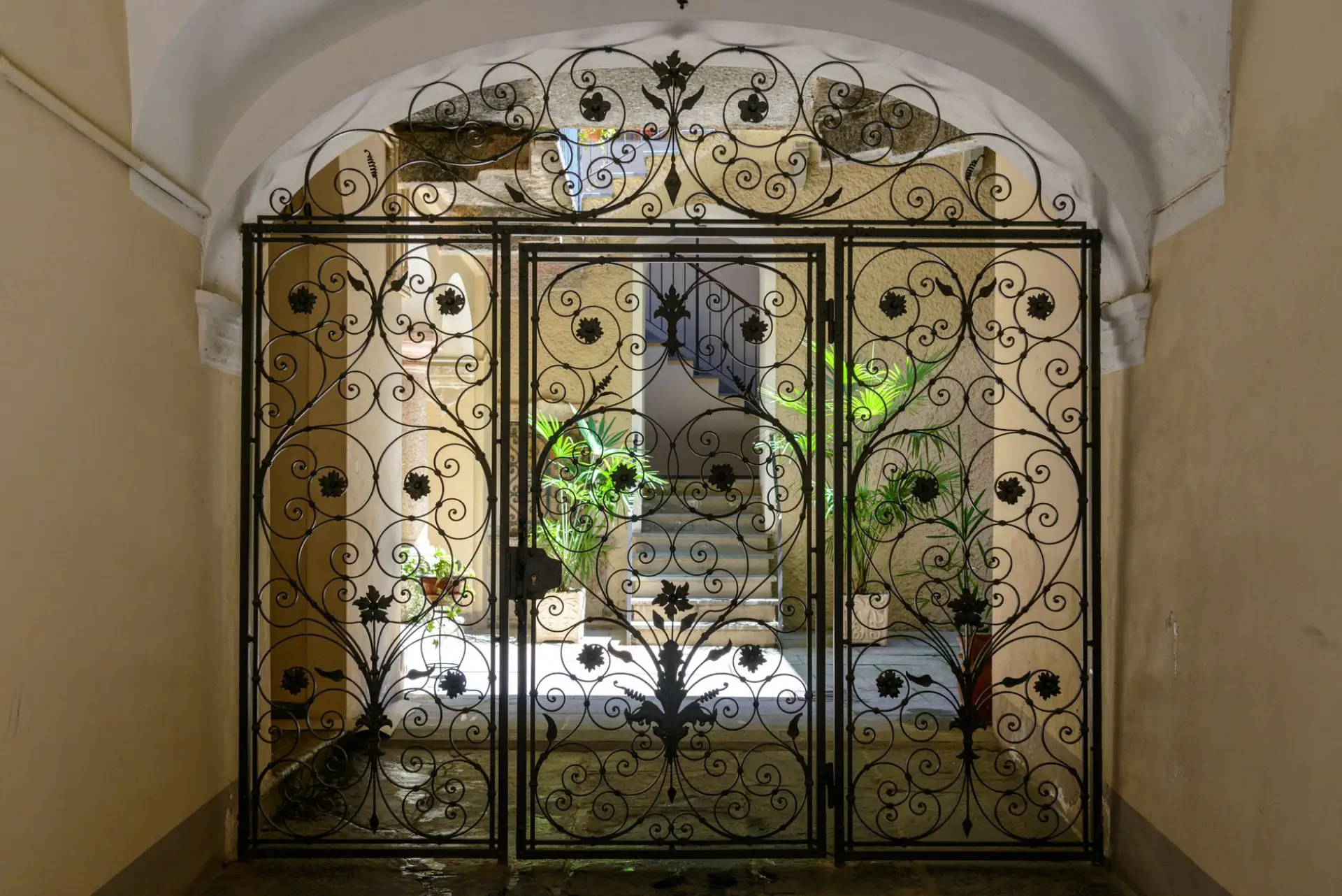
Custom Metal Gates in Elgin, IL — Residential & Commercial Gate Fabrication
Gates built to the opening you actually have: measured on site, welded to size, and finished to survive road salt. Steel, aluminum and ornamental iron, for homes and businesses across the Fox Valley.
Elgin Elite Metal Gates is your local resource for custom metal gates, ornamental ironwork and gate operators throughout Elgin, Kane County and the Fox Valley. We work with experienced fabricators who cut and weld to the opening on your property instead of trimming a catalog panel until it more or less fits.
A custom gate starts with three numbers: the clear opening, the fall across it, and the weight the posts will have to carry for the next twenty years. Everything else — picket spacing, frame stock, whether the leaf swings or slides — follows from those. A 12-foot drive with a 4-inch drop toward the street is a different gate than a 12-foot drive that's dead level, even though a catalog would sell you the same panel for both.
Material comes next, and it is the decision that most affects what the gate costs and how it ages. Steel, aluminum and ornamental iron all make good gates in northern Illinois; they fail differently. What actually kills a gate here is not weather in the abstract, it's the road salt that comes off the drive every February and finds bare steel at the weld seams first. That is the argument for hot-dip galvanizing under powder coat rather than powder coat straight over mild steel, and it is a mechanism, not a sales line.
The other number that matters is 42. Elgin sits in a 42-inch frost depth zone, so a gate post footing that stops short of that is a gate that stops latching after its first hard winter — the post heaves, the leaf goes out of square with the strike, and the fix is digging the post back out. Getting the footing right the first time is cheaper than any repair.
What a Custom Metal Gates Quote Covers
- On-site measurement of the clear opening, the fall across it, and the post locations — before any price is quoted
- A drawing or elevation showing picket spacing, rail placement, finial and scroll detail, and overall proportions, approved before anything is cut
- Material specification in writing: tube wall thickness, picket stock, and whether decorative components are cast or forged
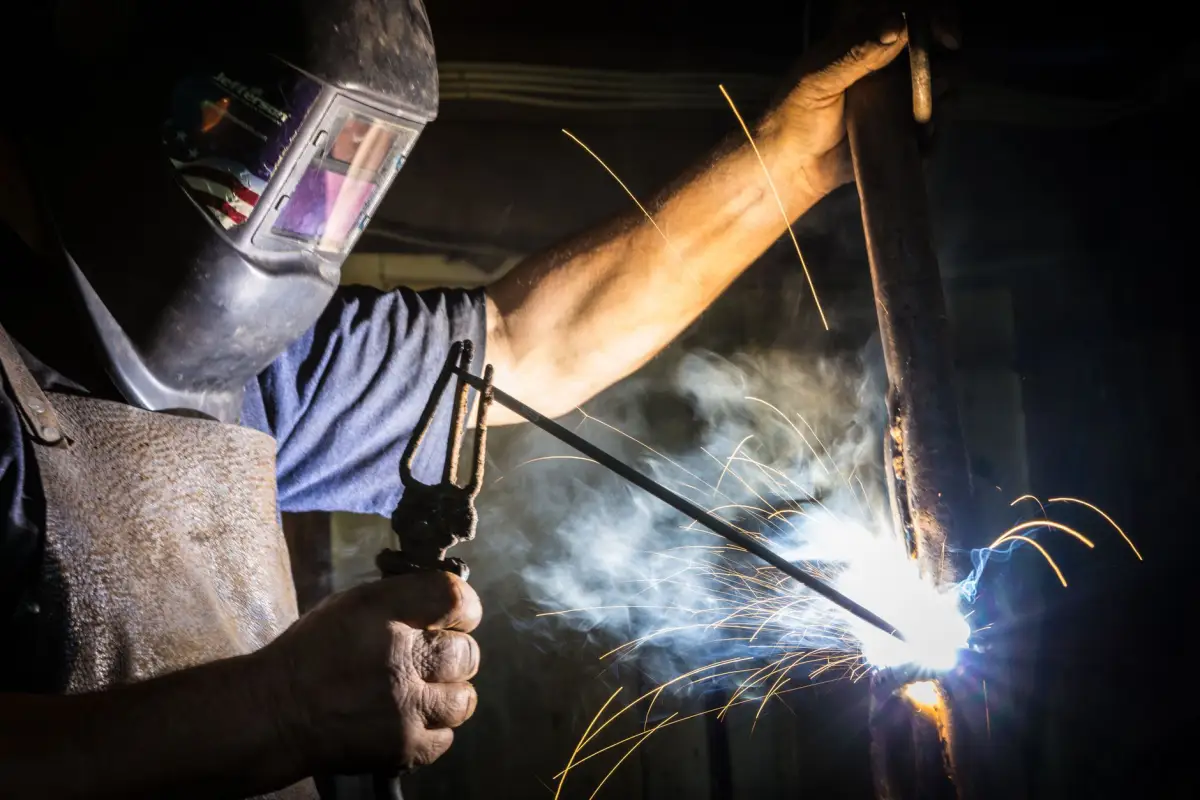
- Fabrication with welds ground and dressed at the joints that will be visible from the street
- Finish system specified by exposure — hot-dip galvanizing, zinc-rich primer, and TGIC polyester powder coat where salt spray is a factor
- Post footings dug below Elgin's 42-inch frost depth, with a JULIE utility locate placed before anyone digs
- Hinges, latch, drop rod or cane bolt sized to the leaf weight rather than to the catalog default
- Conduit and stub-ups roughed in now if an operator is going on the gate later, even if it isn't in this phase
- Permit guidance for Elgin, including the Certificate of Appropriateness step if the property sits in a historic district
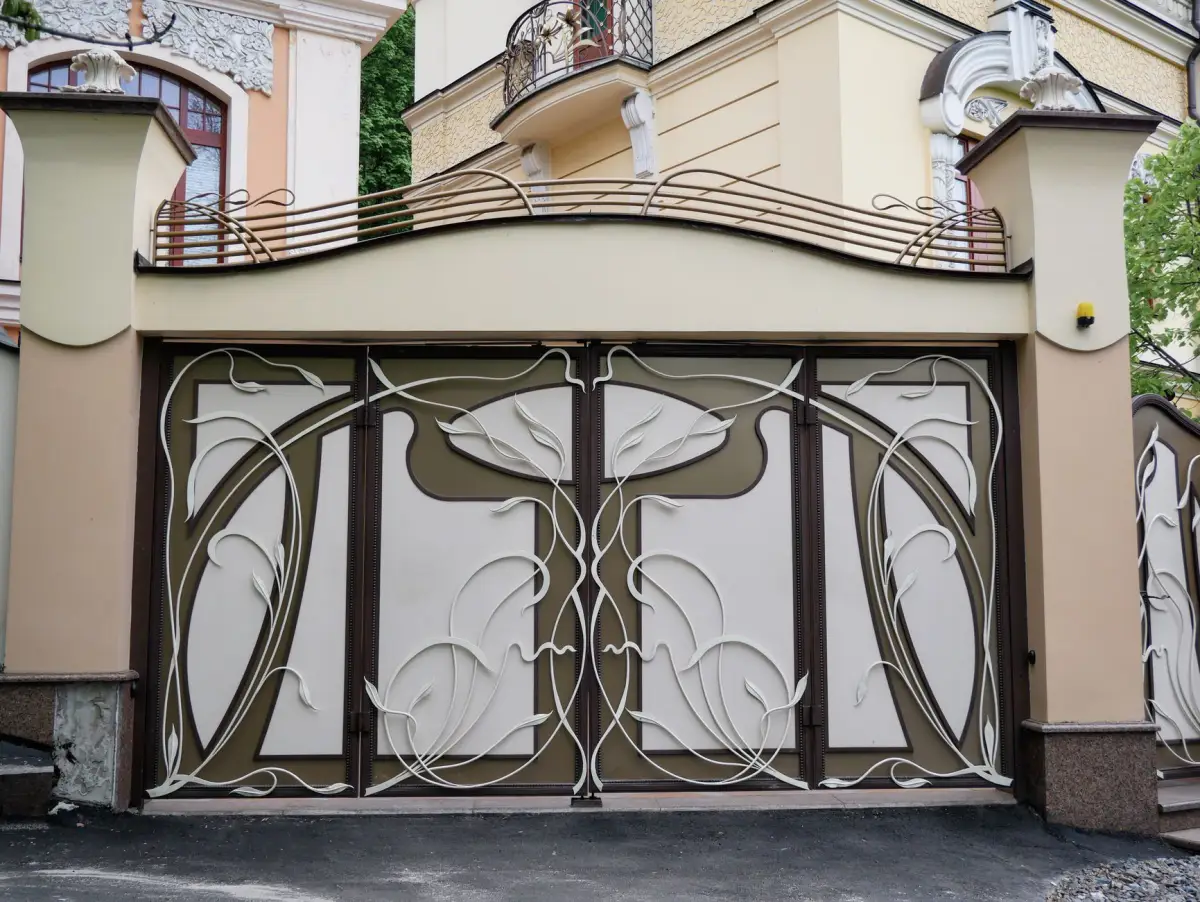
Custom Metal Gate Design & Installation in Elgin, IL
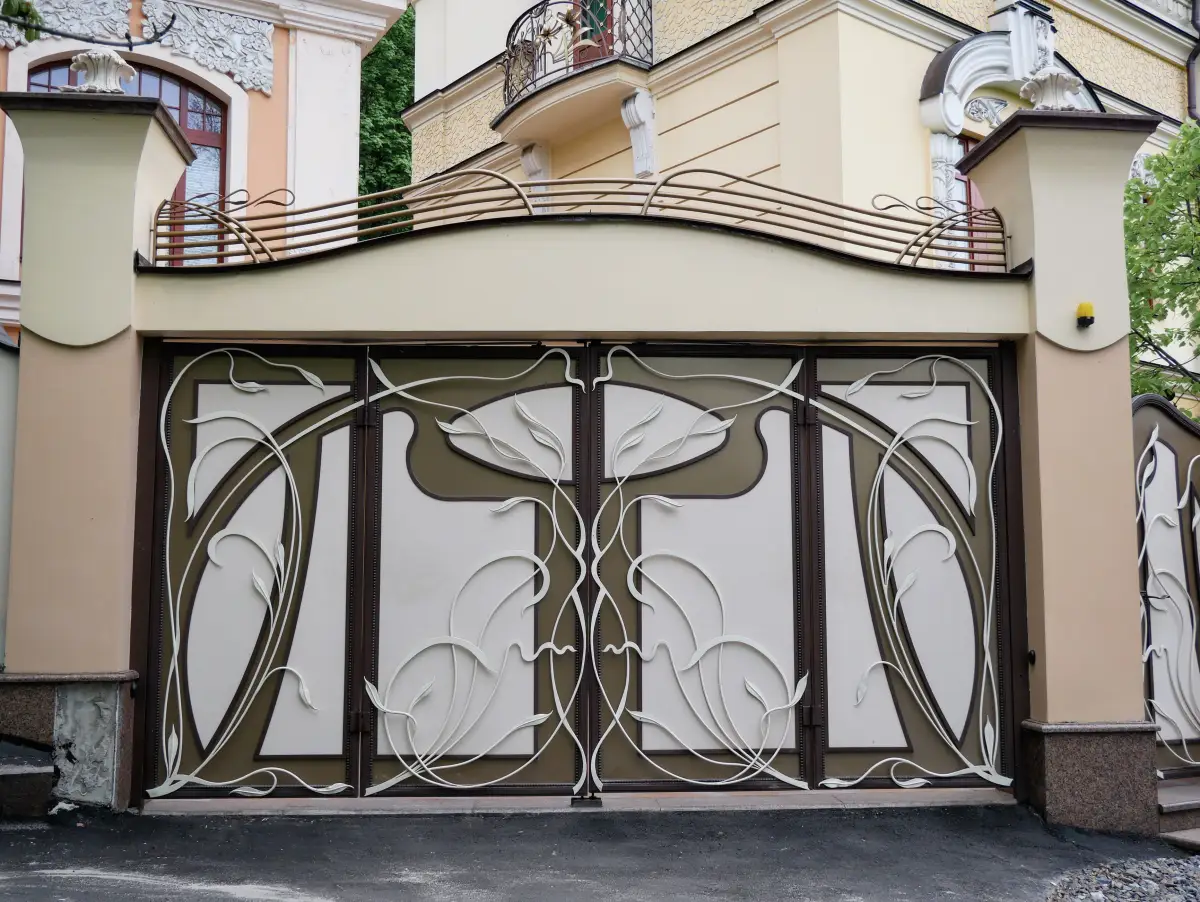
Custom Wrought Iron Gates
Start with the naming problem, because nobody else will. True wrought iron — the low-carbon, slag-streaked stuff that was hand-worked at a forge — hasn't been produced commercially in any volume for roughly a century. What the market sells as a wrought iron gate is mild steel, usually with cast decorative components bolted or welded on. That is a perfectly good gate. It is only a problem if someone is charging wrought-iron money for it and calling it something it isn't. What you are really choosing between is solid bar stock and hollow tube: solid pickets are heavier, hit harder, and cost more, but they take a hundred years of knocks without denting. Forged scrolls and collars, worked hot and hammered, look different up close than cast ones pulled from a mold — the tool marks aren't uniform. If the gate faces the street on a house people walk past, that difference is visible. If it faces a side yard, it isn't worth paying for. See wrought iron gates for the full breakdown.
Custom Steel Gates
Steel is the default for a reason: it is strong, weldable, repairable, and cheap relative to what it does. A steel gate takes a hit from a delivery truck mirror and gets straightened; an aluminum one in the same spot gets replaced. The tradeoff is corrosion. Bare mild steel rusts, and in Elgin it rusts fastest at the weld seams, where the heat-affected zone and any leftover flux give salt somewhere to start. Surface rust bleeding out of a seam two winters after install is almost always a finish failure, not a steel failure. The fix is a duplex system — hot-dip galvanize the fabricated frame, then powder coat over it — so there's a sacrificial zinc layer under the color instead of nothing. Wall thickness matters as much as the finish: a 2-inch square tube frame in 11-gauge behaves very differently from the same profile in 16-gauge once you hang 300 pounds of picket off it and let it swing four times a day for a decade.
Custom Aluminum Gates
Aluminum's argument is weight, and weight is not a cosmetic concern — it decides your hardware. A long leaf in aluminum can run an operator a whole duty class lighter than the same leaf in steel, which shows up in the operator price, the hinge spec, and how hard the gate is to push by hand when the power is out. Aluminum also doesn't rust, which makes it the sane choice on a gate that sits at the bottom of a sloped drive where salt-laden meltwater collects all winter. What you give up is impact resistance and repairability. Aluminum dents rather than bends, and a dented extrusion generally gets swapped rather than straightened. Welded aluminum also demands a fabricator who actually welds aluminum — it isn't the same process as steel, and a shop that treats it as though it were leaves porous, ugly joints. Ask to see aluminum work before committing to it.
Decorative & Ornamental Metal Gates
Ornamental work is where a gate stops being a barrier and starts being the thing people see from the sidewalk. The vocabulary is worth knowing before you shop, because it's how quotes differ: pickets and rails make the frame, finials cap the pickets, collars wrap where bars cross, and scrolls and hammered spheres fill the panel. Cast components are poured into a mold and are consistent and cheaper. Forged components are worked hot and vary slightly from one to the next, which is either the appeal or the flaw depending on the house. Picket spacing is not purely aesthetic either — spacing that reads well from the street may not be spacing you want if a small dog lives behind the gate. And if the gate is going to be automated later, ornamental infill adds both weight and wind load, both of which push the operator up a size. Decide the decoration and the automation together, not in that order.
Modern & Traditional Metal Gate Designs
The split in Elgin is close to geographic. East of the Fox River, in and around the Gifford Park and Spring–Douglas historic districts, a gate usually has to answer to ironwork already standing — on the house, on the neighbor's fence, sometimes on a stone pier the gate is hanging off. There, matching means pattern, picket spacing and finial style, not just color, and the city's Certificate of Appropriateness process means the design gets reviewed before it gets built. West-side subdivisions carry no such constraint, and that's where modern work goes: horizontal slat infill, plate panels with laser-cut patterns, minimal or no finials, flat top rails. Modern designs tend to be heavier than they look because solid infill catches wind like a sail, which again drives hardware. Neither style is harder to build. They just fail at different points if the fabricator treats them as interchangeable.
Which Gate Configuration Fits Your Opening
- Your drive is level or falls away from the house, with room for a leaf to arc inward — a swing gate is the cheaper, simpler build
- The drive rises toward the house, or a car has to stop right at the gate on a short apron — a swing gate will hit the grade or the bumper, and a sliding gate is the answer
- The opening is wider than about 12 feet — a single leaf that long sags under its own weight, so the choice is a bi-parting pair or a slide
- There's a stone pier, an existing fence line, or ironwork on the house the gate has to visually agree with
- You want the gate automated now or later — that decision changes the frame, the hinge spec and the conduit before fabrication, not after
- You need a walk-through entrance separate from the vehicle opening — see pedestrian gates
- The property sits in one of Elgin's historic districts, where street-yard fencing is capped at 42 inches and 50% open and the design needs a Certificate of Appropriateness
How a Custom Gate Gets Built
- 1
Site measurement and survey
Nothing gets priced from a photo. The visit records the clear opening between the posts, the fall across that opening, and how the drive slopes in the arc a swing leaf would travel — a 3-inch rise over a 6-foot arc is the difference between a gate that opens and a gate that grinds into the asphalt every January. Post positions get checked against the property line and against setback rules, since anything adjoining a street counts as a front yard under Elgin's zoning and carries tighter height limits than a side or rear yard. Existing piers or fence posts get evaluated for whether they can carry a gate at all; a decorative brick pier built to hold up a lamp will not hold a 400-pound leaf without steel inside it. If the property is in a subdivision, private covenants get checked too — the city doesn't enforce them, but the homeowners association does, and it supersedes what zoning would otherwise allow.
- 2
Design, drawing and material spec
The drawing is where the money gets decided, so it comes before anything is cut. It fixes picket spacing, rail heights, the overall proportion of infill to open space, and where the decorative components land. Alongside it comes a written material spec: frame tube size and wall thickness, picket stock and whether it's solid or hollow, and whether scrolls and collars are cast or forged. This is the document worth reading closely, because two quotes for the same gate can differ by thousands purely on wall thickness and solid-versus-tube, and neither will look different in a rendering. If the gate is going to be automated, the operator gets selected at this stage rather than after — leaf weight, length and wind load determine the operator class, and picking the gate first and the operator second is how properties end up with a motor that runs at the edge of its duty cycle and burns out early.
- 3
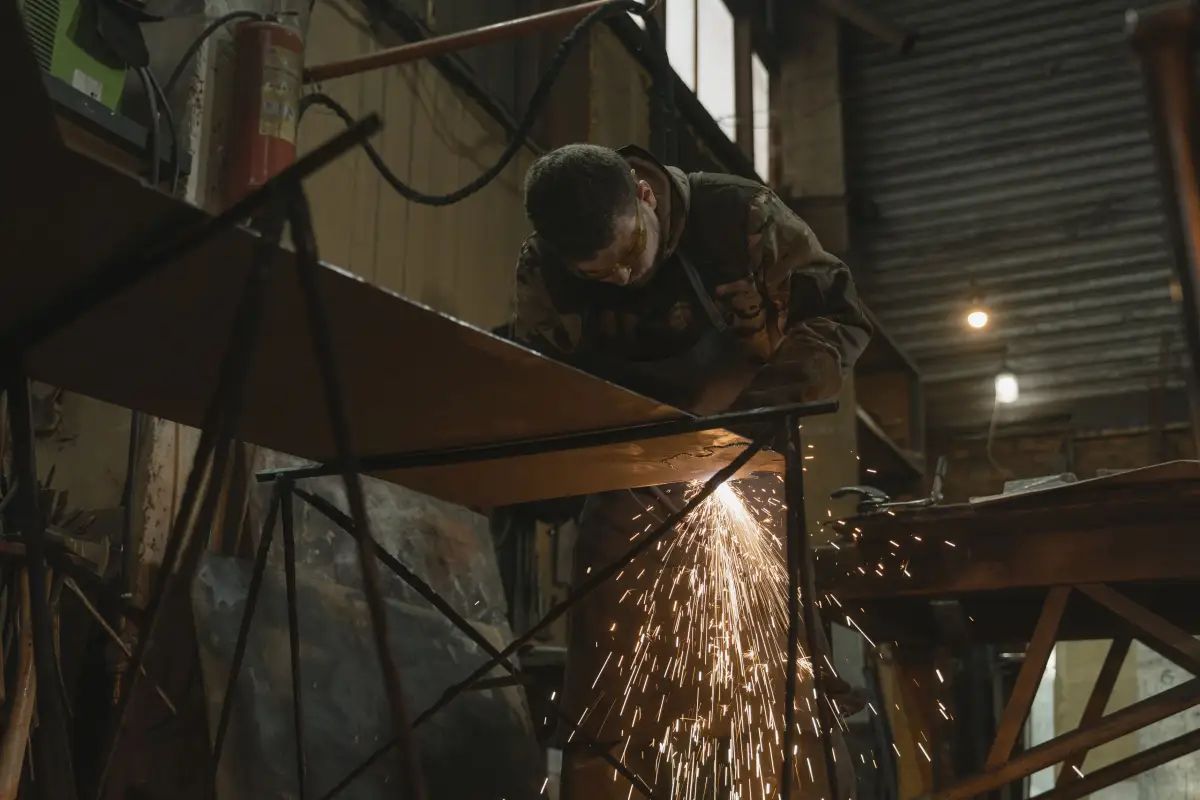
Fabrication and finish
The frame is cut and squared first, then the infill goes in, then decorative components. Welds on faces that will be seen from the street get ground and dressed; welds inside the frame usually don't need to be. The finish sequence is where longevity is won or lost. Powder coat sprayed straight onto mild steel looks identical on delivery day to a properly prepared gate and fails years earlier, because the first chip lets moisture under the film with nothing beneath it. A duplex system — hot-dip galvanizing first, then a zinc-rich primer and a TGIC polyester powder coat rated for exterior UV — puts a sacrificial layer between the salt and the steel. For a gate at the foot of a drive that gets salted every winter, this is the single highest-value upgrade on the quote, and it is often the line item that gets cut to win a bid.
- 4
Post setting and installation
A JULIE locate goes in before anyone digs; it is free, legally required in Illinois, and takes a couple of business days, so it drives the schedule more than the fabrication does. Post holes go below Elgin's 42-inch frost depth — not to it, below it — because a footing that ends inside the frost zone gets lifted by the freeze-thaw cycle a few degrees at a time until the gate no longer meets its strike. Posts get set plumb in concrete and left to cure before any weight is hung on them; hanging a leaf on green concrete is how a gate ends up leaning within a season. The leaf goes on, gets shimmed square, and the latch or drop rod gets set last so it's aligned to where the gate actually rests rather than where it theoretically should. Final inspection with the city closes out the permit.
What Do Custom Metal Gates Cost in Elgin, IL?
- Clear opening width — and whether it's spanned by one leaf, a bi-parting pair, or a slide, since each carries different frame and hardware requirements
- Material and stock: solid bar versus hollow tube, and frame wall thickness, which two visually identical quotes can differ on substantially
- Finish system — powder coat alone versus hot-dip galvanizing under powder coat, the line item most often cut to win a bid
- Ornamental content: quantity of scrolls, collars and finials, and whether they're cast or forged
- Post and footing work — how many posts, whether existing piers can be reused, and what's under the drive where the holes have to go
- Automation, now or later: operator class, conduit runs, trenching from the power source, and access control hardware
- Site access and grade — a sloped, narrow east-side drive costs more to work than a flat suburban approach
- Permit and, in a historic district, the Certificate of Appropriateness review
The most expensive version of this project is the one that gets automated as an afterthought. Retrofitting an operator onto a gate that was fabricated without it in mind frequently means a new hinge set, a heavier frame, trenching under a finished drive, and sometimes a new leaf — because the original was built to be pushed by hand, not cycled by a motor several times a day. If automation is even a possibility down the road, say so at the measurement stage. Roughing in conduit and specifying the frame for it costs comparatively little during fabrication and quite a lot afterward.
What to Look for in an Elgin Gate Fabricator
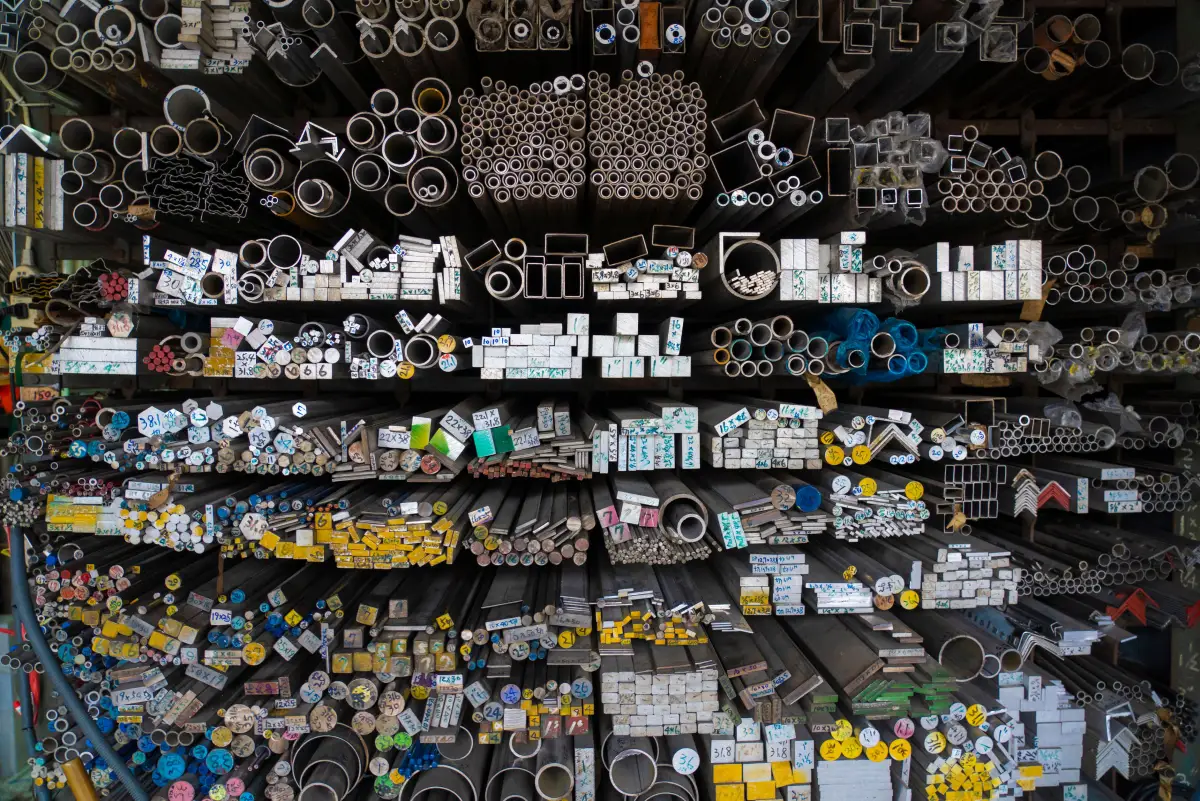
A Written Material Spec, Not Just a Picture
Ask for tube wall thickness, picket stock, and cast-versus-forged in writing. A quote that only shows a rendering is a quote you can't compare to any other quote.
Footings Below 42 Inches
Elgin's frost depth is 42 inches. Any quote that's vague about how deep the post holes go is vague about the thing most likely to fail first.
A Straight Answer on Finish
Hot-dip galvanizing under powder coat costs more up front and is the reason a gate still looks right after ten winters of road salt. A fabricator who talks you out of it should be able to say why.
Fixed Quotes, Decided On-Site
The opening gets measured, the grade gets checked, and the number gets set before fabrication starts — not adjusted once the posts are already in the ground.
Operator Sizing Discussed Before Fabrication
Leaf weight and wind load determine the operator class. A shop that asks about automation before cutting steel is a shop that has done this before.
Historic District Experience
Properties near Gifford Park and Spring–Douglas need a Certificate of Appropriateness, and the design gets reviewed on pattern and proportion. That process goes faster with someone who has been through it.
Residential & Commercial Custom Metal Gates
Residential
Most residential work here is a driveway entrance, a matching walk gate, and occasionally a courtyard or garden gate to tie the two together. The east-side neighborhoods bring narrow drives, stone piers and existing ironwork to match; the newer west-side subdivisions bring long straight approaches, wider openings and covenant restrictions that are stricter than the city's. Both benefit from deciding on automation up front, because the frame and hinges get specified differently either way.
Commercial
Commercial openings are sized by the largest vehicle that has to clear them, not by the width of the drive — a box truck needs turning room a sedan doesn't. Cycle count is the other difference: a gate that opens four times a day and a gate that opens sixty times a day are the same gate with very different hardware behind them. See commercial metal gates for heavier fabrication and industrial gates for high-cycle and heavy-duty work.
Who Shouldn't Order a Custom Gate
- The opening is a standard width on flat ground and you want a plain gate — a stock panel from a big-box store, hung well, is genuinely the right call and will cost a fraction of custom fabrication.
- The budget is set for aluminum but the expectation is forged steel with hand-worked scrollwork. Those are different price tiers, and a fabricator who tells you otherwise is planning to substitute cast for forged and hope you don't look closely.
- Your existing gate is sound and the actual problem is that it won't move — that's gate opener repair or metal gate repair, not a new gate.
- You want to hire a specific fabricator directly and just need someone to hand off the drawing. This site connects homeowners with the professionals who do the work; it isn't a drafting service.
- The property is outside Kane, Cook, DuPage, McHenry and Lake Counties.
Related Services
- Driveway Gates in Elgin, IL
Vehicle openings specifically — approach, apron length and the grade problems that decide swing versus slide.
- Wrought Iron Gates in Elgin, IL
Ornamental iron in depth, including matching existing ironwork in Elgin's historic districts.
- Automatic & Electric Gates in Elgin, IL
What changes about the gate itself once a motor is going to cycle it several times a day.
- Pedestrian Gates in Elgin, IL
Walk-through entrances, side yard gates and matching courtyard work.
Serving Nearby Cities
Gate work across Kane, Cook, DuPage, McHenry & Lake Counties. Each city page covers the local permit requirements, footing depth and the configurations that come up most often there.
- South Elgin
- Streamwood
- Bartlett
- Carpentersville
- Hanover Park
- Hoffman Estates
- St. Charles
- Algonquin
- Schaumburg
- Lake in the Hills
- West Chicago
- Carol Stream
- Huntley
- Batavia
- Glendale Heights
- Palatine
- Crystal Lake
- Wheaton
- Arlington Heights
- Addison
- Lombard
- Mount Prospect
- Buffalo Grove
- Aurora
- Elmhurst
- Des Plaines
- McHenry
- Naperville
- Downers Grove
- Woodstock
Frequently Asked Questions
- How much does a custom metal gate cost in Elgin?
- There's no honest single number, because the same 12-foot opening can be quoted at wildly different prices depending on frame wall thickness, solid versus tube pickets, finish system and whether it's automated. What's worth doing is getting the material spec in writing on every quote you collect, so you're comparing the same gate. A quote that's cheaper purely because it's powder coat over bare steel instead of galvanized-then-coated isn't cheaper, it's shorter-lived.
- Is wrought iron actually better than steel?
- It's not really a live comparison. True wrought iron hasn't been produced commercially in volume for about a century, so what's sold as a wrought iron gate is mild steel with cast or forged decorative work. The real decision is solid bar versus hollow tube and forged versus cast components. Solid and forged cost more, weigh more, and hold up better to knocks over decades.
- Do I need a permit for a gate in Elgin?
- Fence and gate work in Elgin requires a building permit, and no work can start before it's issued. If the property is in a historic district, a Certificate of Appropriateness is required on top of the permit, and street-yard fencing there is capped at 42 inches and 50% open. Many subdivisions also carry private covenants that are stricter than city zoning; the city doesn't enforce those, but the homeowners association does, so check before designing.
- How deep do gate posts need to go in Elgin?
- Below the 42-inch frost depth. A footing that stops inside the frost zone gets lifted a little more each freeze-thaw cycle, and the symptom shows up as a gate that gradually stops meeting its latch. Correcting it means digging the post back out, which is why footing depth is worth confirming in writing rather than assuming.
- How long does a custom gate take?
- The fabrication itself is rarely the long pole. Permit review, a Certificate of Appropriateness if the property is in a historic district, the JULIE utility locate before digging, and concrete cure time before any weight goes on the posts all sit on the critical path. Ask for the schedule broken into those stages rather than a single lead-time figure, since that's where the variation actually lives.
- Can a custom gate be automated later?
- Yes, but it's substantially cheaper to plan for it now. Leaf weight, hinge spec and frame stiffness all change when a motor is cycling the gate instead of a person pushing it, and conduit run under a finished driveway costs far more than conduit run before the drive is patched. Even if automation isn't in this budget, having the gate specified for it and the conduit stubbed in is the cheap insurance. See [gate opener installation](/services/gate-opener-installation).
Learn More
- City of Elgin — Fence Permit Quick Guide — Elgin's permit requirements, street-yard height limits, and the Certificate of Appropriateness rule for historic-district properties.
- American Galvanizers Association — Duplex Systems — Why hot-dip galvanizing under powder coat outlasts either finish on its own, particularly where road salt is in play.
- JULIE — Illinois One-Call Utility Locate — The free locate request that has to go in before anyone digs a post hole in Illinois.
Get a Quote for Custom Metal Gates in Elgin, IL
Send over the opening you’re working with and get an on-site measurement and quote — no charge for the estimate, no obligation to book it.
Get My Free Estimate