
Security Gates in Elgin, IL — Residential & Commercial Security Gate Specialists
A security gate is a gate designed to stop assuming cooperation: heavier frame, tighter infill, hardware that can't be reached, lifted or flexed past.
Elgin Elite Metal Gates is your local resource for security gates, controlled-entry systems and heavy-duty gate fabrication across Elgin, Kane County and the Fox Valley. We work with trusted ornamental iron specialists who build to a threat model rather than to a label.
Most gates sold as security gates are ordinary gates with a lock. The difference that matters is design intent: a security gate assumes someone will try to get past it and removes the easy ways. That's a short and specific list — reaching through to the latch, lifting the leaf off its hinges, flexing the frame away from the post, and climbing.
Each of those has a fabrication answer. Picket spacing tightens so nothing reaches the latch. The latch gets shrouded or relocated out of reach. Hinges get non-removable pins or welded stops. Frame stock goes heavier so the leaf can't be levered. Height goes up to whatever zoning permits — and in Elgin that's the constraint worth checking first, because street-yard limits are low enough that a genuinely tall front gate may not be permitted at all.
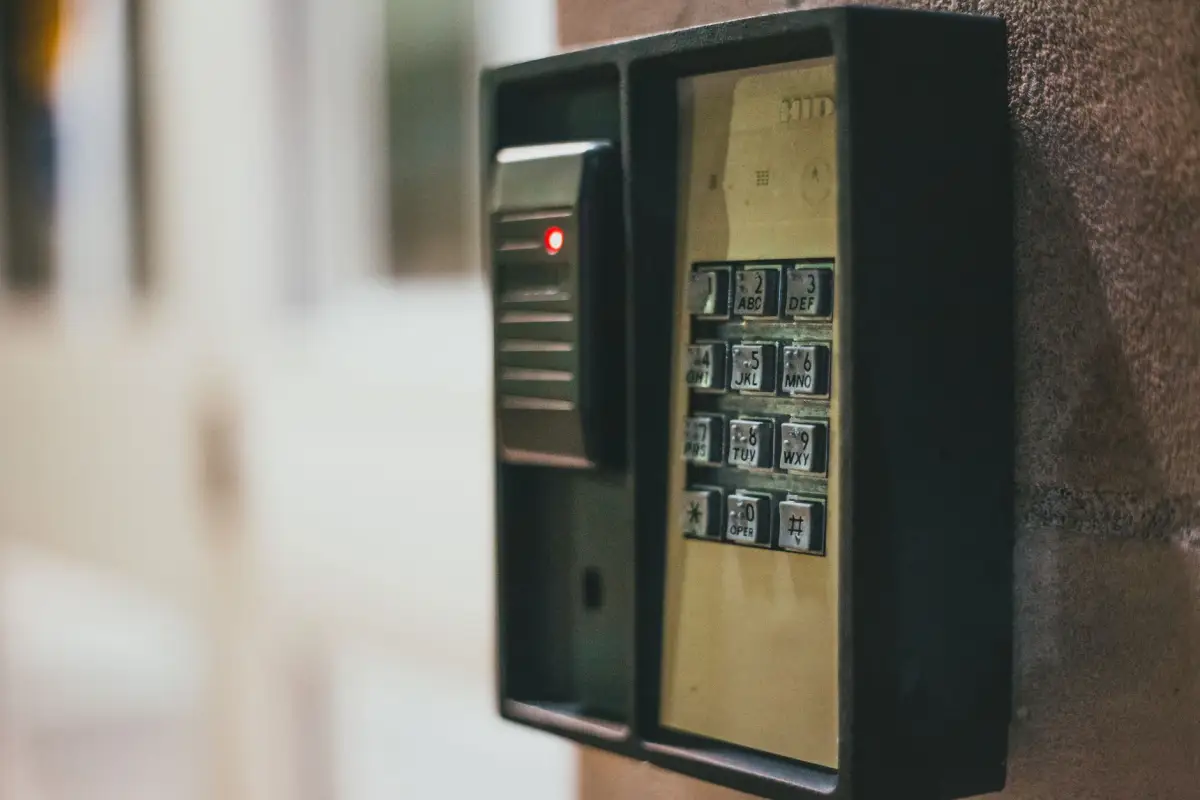
What a security gate is not is an access control system. Keypads, card readers, intercoms and vehicle detection are a separate layer with its own decisions, covered on gate access control systems. This page is about the barrier.
What a Security Gates Quote Covers
- A frank conversation about what the gate is actually meant to stop, since the answer changes the design
- Frame and infill spec written for resistance — heavier tube stock, tightened picket spacing, and infill that can't be levered out
- Latch shrouding or relocation so it can't be reached from the outside
- Non-removable hinge pins or welded stops so the leaf can't be lifted off
- Post sizing and footings below Elgin's 42-inch frost depth, sized for the heavier leaf
- Height checked against Elgin's street-yard limits and any historic-district restriction before design
- Sight-line and lighting considerations, since a gate nobody can see past is also a gate nobody can see through
- Controlled entry hardware where entry needs managing rather than just locking
- UL 325 safety devices and ASTM F2200 construction compliance where the gate is automated
Security Gate Installation in Elgin, IL
Residential Security Gates
On a house, the honest starting point is what the gate is for. A gate that deters opportunists, marks a boundary and stops a vehicle rolling in is a very different build from one meant to resist a determined attempt, and most homeowners want the former at the price of the former. What separates a residential security gate from an ordinary one is a short list: infill tight enough that nobody reaches through to the latch, a frame stiff enough that the leaf can't be flexed away from the post, and hinges that can't be lifted. Height is the constraint people don't expect. Elgin caps street-yard fencing at 3 feet solid or 4 feet at 40% open, and 42 inches at 50% open in a historic district — so a tall, solid front gate frequently isn't permitted regardless of budget. Side and rear yards allow 6 feet, which is where most of the real security value ends up living.
Driveway Security Gates
A vehicle gate has a different failure mode from a walk gate: the threat isn't someone climbing it, it's someone driving through it or tailgating a legitimate entry. Resisting a vehicle is a structural problem that goes well beyond the leaf — it involves post sizing, footing depth and mass, and it's genuinely expensive to do properly. Most residential driveway security gates are not vehicle barriers and shouldn't be sold as such. What they do well is remove casual access, and the design details that matter are the ones that stop the gate being defeated without a vehicle: infill that can't be lifted or levered out, latching that engages positively rather than resting on a catch, and a bottom rail low enough that nobody rolls under. Tailgating is an access control problem rather than a gate problem — vehicle detection and timed closing are what address it, see gate access control systems.
Automated Security Gates
Automation improves security in one specific way that's easy to miss: an automated gate is closed by default. A manual security gate is only secure when somebody bothers to close and lock it, and in practice a heavy manual gate gets left open during the day and sometimes overnight. An operator with a timed auto-close removes the human step entirely. What automation does not do is make the barrier stronger — the operator holds the gate closed, but a drive mechanism is not a lock, and a security gate that relies on the operator to resist force is relying on the wrong component. Where the gate genuinely needs to be secured, a positive lock, magnetic lock or drop bolt gets fitted independently of the operator. Safety obligations apply exactly as they do on any automated gate: UL 325 requires two independent means of entrapment protection at each entrapment point in each direction, and post-2016 operators won't run without a monitored device connected.
Pedestrian Security Gates
The walk gate is usually the weakest point in a secured perimeter, because it's the one that gets used constantly and therefore the one that gets propped, left ajar, or fitted with a latch chosen for convenience. Making it secure is mostly about removing the easy defeats. Picket spacing tightens so a hand can't reach the latch — and the same tightening that does this is worth checking against ASTM F2200's gap limits if the gate is anywhere near an automated system. The latch gets shrouded or moved. Hinge pins get welded or replaced with non-removable types. Self-closing and self-latching hardware means the gate returns to a secured state without anyone deciding to secure it, which is the single highest-value upgrade on a walk gate that people actually use. Beyond that, a keypad or fob reader means entry without keys in circulation. See pedestrian gates.
Security Gate Entry Systems
The gate is the barrier; how people get through it is a separate system, and conflating the two is how properties end up with a heavy gate and a weak entry method. Broadly the options are a key, a code, a credential, or a person deciding remotely. Keys are simple and their weakness is circulation — every contractor, tenant or family member who has ever had one may still have one. Codes remove the hardware problem but get shared. Fobs and cards can be individually revoked, which is the real advantage. Intercoms, particularly video, let somebody make a judgement before opening. Most properties end up with a combination: a credential for regular users, a code for occasional ones, and an intercom for visitors. Which combination is right depends on how many people need access and how often that list changes — the full breakdown is on gate access control systems.
Signs You Need a Security Gate Rather Than a Standard One
- Your current gate can be opened by reaching through the pickets to the latch
- The leaf can be lifted off its hinges without tools
- The gate gets left open during the day because closing it manually is a chore
- There's equipment, vehicles or materials on the property that are visible from the street
- Keys have been handed out over the years and nobody can account for all of them
- The property backs onto an alley, a path or open ground with easy approach
- You need to know who came through and when, not just that the gate was shut
How a Security Gate Gets Designed and Installed
- 1
Threat and perimeter assessment
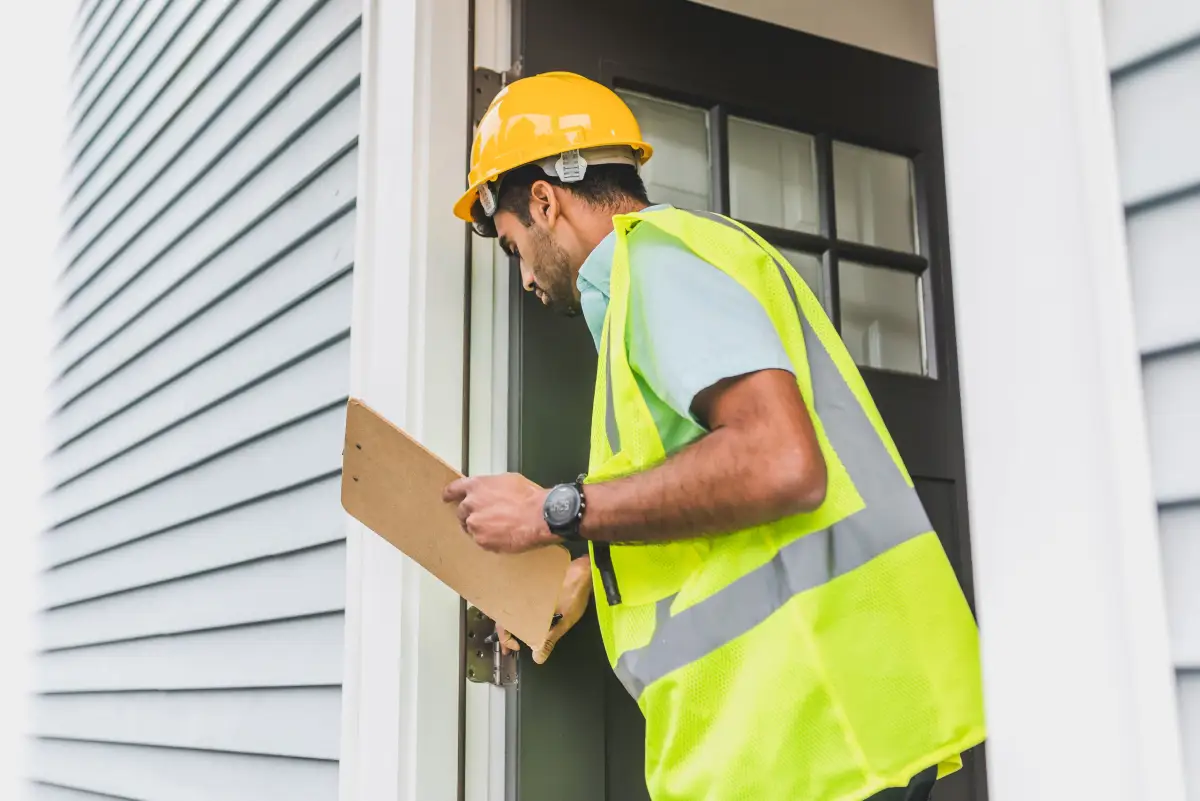
This starts with an uncomfortable but necessary question: what is the gate for? Deterring opportunists, stopping casual entry, controlling who comes and goes, or resisting a determined attempt — these are four different budgets and four different builds, and conflating them produces either wasted money or false confidence. The perimeter gets walked, because a strong gate in a weak fence line is decoration. Approach routes get looked at, along with sight lines and lighting; a solid gate that blocks all view also blocks anyone from seeing what's happening behind it, which is not always the trade you want. Height gets checked against Elgin's zoning at this stage rather than after a design exists, since street-yard limits of 3 feet solid or 4 feet at 40% open — and 42 inches at 50% open in a historic district — frequently rule out what people had in mind for a front entrance.
- 2
Resistance design
The design then removes specific defeats rather than adding a general sense of strength. Picket spacing gets set so a hand can't reach the latch from outside — and cross-checked against ASTM F2200's 2.25-inch gap limit where the gate is or may become automated. The latch gets shrouded, recessed or relocated. Hinges get non-removable pins or welded stops so the leaf can't be lifted clear. Frame stock steps up in wall thickness so the leaf can't be flexed away from its post, and infill is fixed so individual pickets can't be levered out. Where the gate needs to be genuinely locked rather than merely closed, the lock is specified as its own component — a drop bolt, magnetic lock or deadlatch — rather than relying on an operator's drive mechanism, which is not a lock and was never designed to be one.
- 3
Posts, footings and installation
A JULIE locate goes in before digging. A security gate is heavier than the equivalent standard gate, so posts get sized and footed for that additional load, below Elgin's 42-inch frost depth. This matters more here than elsewhere, because a heaved post on a security gate doesn't just stop it latching — it opens a gap. Post mass is also part of the resistance on a driveway gate, since a leaf is only as anchored as what it's hung from. Where the gate ties into an existing fence line, the transition gets looked at honestly: a heavy gate hung between two light fence posts moves the weak point rather than removing it. Masonry piers get checked for whether they contain steel; a decorative pier is not an anchor no matter how substantial it looks.
- 4
Entry system, automation and testing
Entry hardware goes in after the barrier works. Keypads, fob readers or intercoms get positioned where a driver can reach them without opening the car door and where they aren't the first thing exposed to weather off the road. Where the gate is automated, everything that applies to any automated gate applies here: operator sized to leaf weight, length, cycle count and wind load, two independent means of entrapment protection at each entrapment point in each direction as UL 325 requires, and monitored devices that post-2016 operators will refuse to run without. Auto-close timing gets set deliberately, since it's the setting that decides whether the gate is actually closed most of the time or merely capable of being. Then each device gets triggered and verified, credentials get issued and documented, and the manual release gets demonstrated.
What Do Security Gates Cost in Elgin, IL?
- What the gate is genuinely meant to resist — deterrence, casual entry, or a determined attempt are three different budgets
- Frame stock and wall thickness, which is where most of the resistance actually comes from
- Infill density and fixing method, since tighter spacing means more material and more welding
- Latch shrouding, non-removable hinge hardware and any independent lock
- Post sizing and footing mass, which on a vehicle gate is a substantial share of the cost
- Height, within whatever Elgin's street-yard or historic-district limits permit
- Automation and auto-close, which is what keeps the gate closed by default rather than when someone remembers
- Access control: keypad, fob reader, intercom, or a combination
- Lighting and sight lines, which are cheap relative to steel and often more effective
The most common way money gets wasted on a security gate is spending it all on the gate. A heavy, well-detailed leaf hung in a fence line that can be stepped over, or secured with a key that has been copied repeatedly over fifteen years, has moved the weak point rather than removed it. Walking the whole perimeter before specifying the gate frequently reveals that a modest gate plus better lighting plus revocable credentials does more than an expensive gate on its own — and costs less.
What to Look for in an Elgin Security Gate Company
The Threat Question Asked Directly
What the gate is meant to stop determines the build. An installer who quotes a security gate without asking is selling a heavier gate, not a security one.
The Whole Perimeter Considered
A strong gate in a weak fence line is decoration. The walk should cover approach routes, sight lines and lighting, not just the opening.
Specific Defeats Designed Out
Reaching the latch, lifting the leaf, flexing the frame, levering out infill. These are the four, and each has a named answer in the spec.
The Lock Specified Separately From the Operator
A drive mechanism holds a gate closed; it isn't a lock. Where the gate must be secured, the lock is its own component.
Height Checked Against Zoning First
Elgin's street-yard limits are low, and a historic district is lower still. Better to know before the design than after the permit is refused.
Credentials That Can Be Revoked
Keys accumulate holders. Fobs and codes can be individually withdrawn, which is what actually keeps an access list current.
Residential & Commercial Security Gates
Residential
Residential security work in Elgin is usually a combination: a driveway gate that closes on a timer so it isn't left open all day, a side yard walk gate that self-latches, and revocable credentials instead of keys that have been circulating for years. Height is the recurring disappointment — street-yard limits mean a front gate can't be as tall as most people picture, so the meaningful security usually ends up at the side and rear where 6 feet is permitted.
Commercial
Commercial security gates are specified around vehicle access, controlled entry and knowing who came through. Cycle counts are high, downtime is expensive, and the entry system usually matters more than the leaf. See commercial security gates and industrial gates.
When a Security Gate Isn't the Right Call
- You want a vehicle barrier that will stop a car being driven through it. That's a crash-rated structure with engineered footings, and it's a different order of cost — don't let anyone sell you an ornamental gate as one.
- The fence line either side of the gate can be stepped over. Fix the perimeter first, or the gate is decoration.
- What you actually want is to know who's at the gate and let them in remotely. That's access control, and it can go on the gate you already have.
- You want a tall solid gate across a front entrance in a historic district. Elgin caps street-yard fencing there at 42 inches and 50% open, and the design goes through a Certificate of Appropriateness review.
- The property is outside Kane, Cook, DuPage, McHenry and Lake Counties.
Related Services
- Gate Access Control Systems in Elgin, IL
Keypads, card and fob readers, intercoms and vehicle detection — the entry layer, not the barrier.
- Automatic & Electric Gates in Elgin, IL
Automation and auto-close, which is what keeps a security gate closed by default.
- Pedestrian Gates in Elgin, IL
The walk gate, usually the weakest point in a secured perimeter.
- Commercial Security Gates in Elgin, IL
Business, parking lot and facility perimeter work at commercial duty cycles.
Serving Nearby Cities
Gate work across Kane, Cook, DuPage, McHenry & Lake Counties. Each city page covers the local permit requirements, footing depth and the configurations that come up most often there.
- South Elgin
- Streamwood
- Bartlett
- Carpentersville
- Hanover Park
- Hoffman Estates
- St. Charles
- Algonquin
- Schaumburg
- Lake in the Hills
- West Chicago
- Carol Stream
- Huntley
- Batavia
- Glendale Heights
- Palatine
- Crystal Lake
- Wheaton
- Arlington Heights
- Addison
- Lombard
- Mount Prospect
- Buffalo Grove
- Aurora
- Elmhurst
- Des Plaines
- McHenry
- Naperville
- Downers Grove
- Woodstock
Frequently Asked Questions
- What makes a gate a security gate rather than just a gate?
- Design intent, expressed as four specific things: infill tight enough that nobody can reach through to the latch, a latch shrouded or relocated so it can't be operated from outside, hinges with non-removable pins or welded stops so the leaf can't be lifted off, and frame stock heavy enough that the gate can't be flexed away from its post. A gate with a padlock on it isn't a security gate; a gate where each of those four defeats has been designed out is.
- Will a security gate stop a vehicle?
- Almost certainly not, and anyone telling you otherwise about a standard ornamental gate is overselling. Stopping a vehicle is a structural problem involving crash-rated construction, heavily engineered footings and substantial mass — a different product at a different price. What a good driveway security gate does is remove casual access and force a deliberate, visible act. That's genuinely valuable, but it's worth being clear about which one you're buying.
- How tall can a security gate be in Elgin?
- In a street yard — which includes any yard adjoining a street — Elgin permits 3 feet for a solid design or 4 feet at 40% open. In a historic district it's 42 inches at 50% open, with a Certificate of Appropriateness required. Side and rear yards allow up to 6 feet. This catches people out regularly, because the front entrance is where most people want the tall gate and it's where the limits are tightest.
- Is an automatic gate more secure than a manual one?
- In practice, usually yes, but not for the reason people expect. The operator doesn't make the barrier stronger. What it does is make the gate closed by default — a manual security gate is only secure when someone bothers to close it, and heavy manual gates routinely get left open all day. An operator with timed auto-close removes that step. Where the gate must actually be locked, fit a proper lock independently of the operator, since a drive mechanism is not a lock.
- Should I use keys, codes or fobs on a security gate?
- Fobs or cards, for most properties, because they can be individually revoked. Keys accumulate holders over the years and there's no way to withdraw one you can't account for. Codes solve the hardware problem but get shared casually. Most properties end up with a mix: credentials for regular users, a code for occasional access, and an intercom for visitors. See [gate access control systems](/services/gate-access-control-systems).
- Does a solid gate offer more security than a picket gate?
- Not straightforwardly. A solid panel blocks the view in, which removes the display of whatever is on the property — genuinely useful. It also blocks the view out, so nobody passing can see someone working at the gate, and it catches far more wind, which drives up hardware and operator cost. Many properties end up better served by a picket gate with tight spacing plus good lighting than by a solid panel.
Learn More
- City of Elgin — Fence Permit Quick Guide — Elgin's permit requirements, street-yard height limits, and the Certificate of Appropriateness rule for historic-district properties.
- UL Solutions — UL 325 External Entrapment Protection Devices — What counts as an entrapment protection device, and why operators built from 2016 onward refuse to run without a monitored one connected.
- DASMA — An Installer's Guide to ASTM F2200 — The construction requirements an automated gate has to meet: gap limits, bottom-edge protrusions, and how the gate has to behave if it leaves its hardware.
Get a Quote for Security Gates in Elgin, IL
Send over the opening you’re working with and get an on-site measurement and quote — no charge for the estimate, no obligation to book it.
Get My Free Estimate