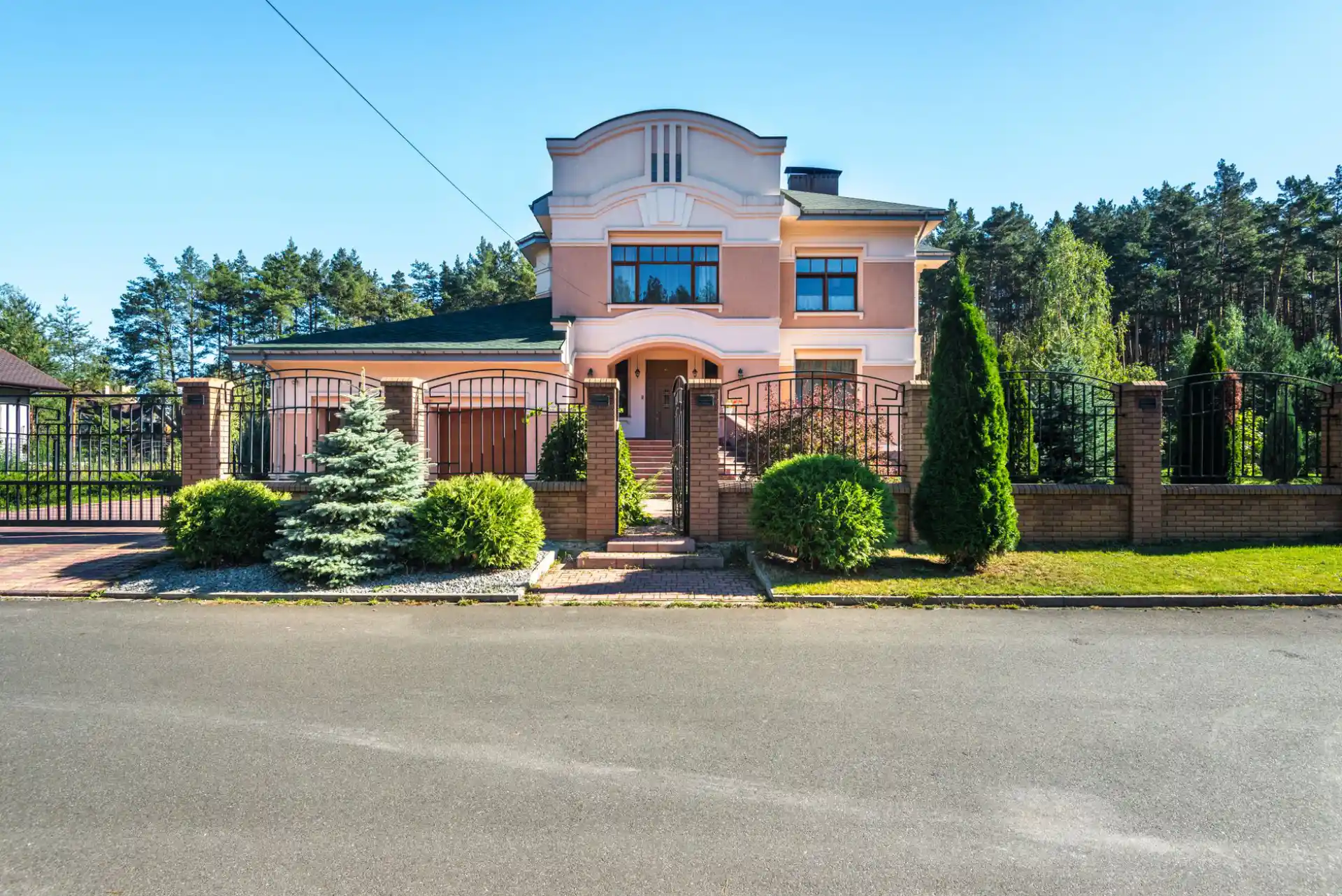
Driveway Gates in Elgin, IL — Residential & Commercial Entrance Specialists
The gate that fits your drive depends on the grade, the apron length and how far a car can pull off the road. All three get measured before anything gets quoted.
Elgin Elite Metal Gates is your local resource for driveway gates, automatic gate operators and ornamental ironwork across Elgin, Kane County and the Fox Valley. We work with experienced fabricators who size the gate to your approach and grade rather than to the width of the opening alone.
Most driveway gate mistakes are decided before anyone picks a style. A swing gate needs somewhere for the leaf to go, and it needs the ground under that arc to stay level or fall away. A drive that rises toward the house — common on the older east-side lots above the Fox River — will let a swing gate open beautifully in July and scrape a groove into the asphalt by January, when frost has lifted the apron an inch.
The other measurement people skip is how far a vehicle can pull off the road before it reaches the gate. If the apron is short, a car waiting for the gate to open is a car still sitting in the street. That pushes you toward a slide, which starts moving out of the way immediately, or toward automation with a sensor far enough back to start the cycle early. It's a safety question more than a convenience one.
Everything after that — single leaf or bi-parting, steel or aluminum, ornamental or flat panel — is genuinely a matter of budget and taste. The two site measurements are not.
What a Driveway Gates Quote Covers
- Measurement of the clear opening, the grade across the swing arc, and the usable apron between the gate and the street
- A recommendation on swing versus slide with the reason stated, not just the price difference
- Frame and infill spec in writing — tube wall thickness, picket stock, and total leaf weight
- Post and footing work dug below Elgin's 42-inch frost depth, with a JULIE locate placed first
- Hinge, roller or cantilever hardware sized to the actual leaf weight rather than a catalog default
- Operator selection matched to gate weight, length and daily cycle count if the gate is automated
- Safety devices where an operator is fitted: photo eyes and edge sensors as UL 325 requires, plus the gap and bottom-edge limits ASTM F2200 sets
- Conduit routing and trenching from the power source, planned before the drive gets patched rather than after
- Elgin permit guidance, including the historic-district Certificate of Appropriateness where it applies
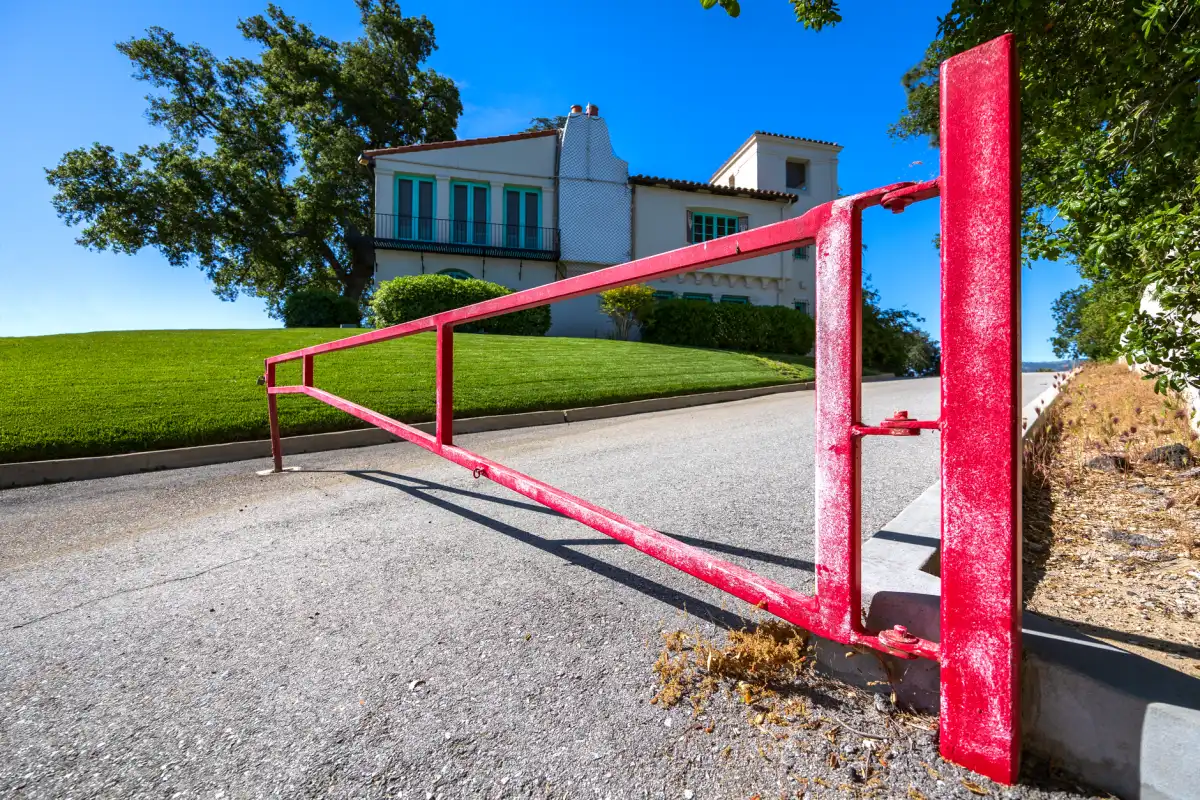

Driveway Gate Installation in Elgin, IL
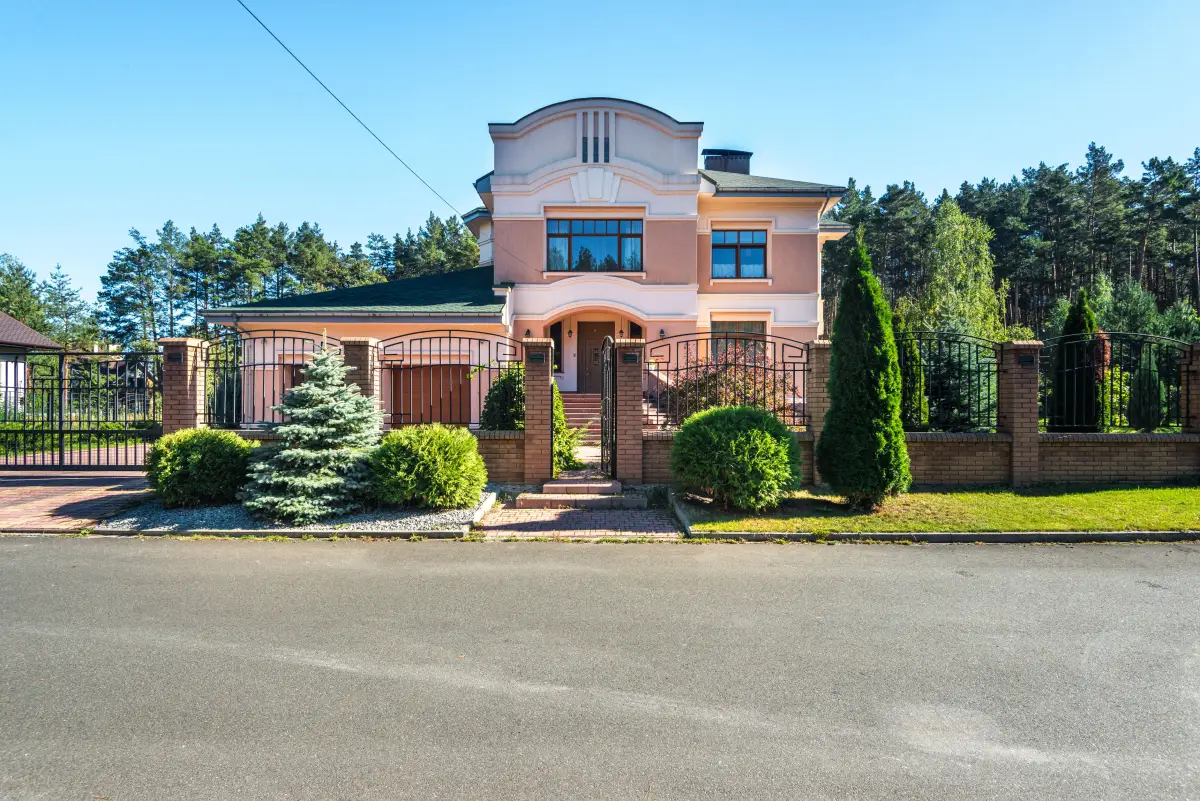
Custom Metal Driveway Gates
A driveway gate is the widest single span on most properties, which makes it the one where cutting corners on frame stock shows up fastest. A 12-foot leaf hung on light tube will develop a visible droop at the latch end within a few years — the gate racks, going from a rectangle to a parallelogram, and the symptom people describe is a driveway gate sagging or a gate that suddenly won't latch without being lifted. The fix is designed in, not added later: adequate frame wall thickness, a diagonal brace or a properly tensioned cable inside the frame, and hinges rated well above the leaf weight. Custom fabrication also lets the top rail follow a rising grade instead of leaving a wedge-shaped gap at one end, which is the giveaway on a stock panel forced onto a sloped opening. See custom metal gates for the full material and finish breakdown.
Automatic Driveway Gates
Automation changes the gate, not just what's attached to it. A leaf that a person opens twice a day gets cycled by a motor several times an hour, and every hinge, weld and fastener sees that multiplied. Operators are selected by leaf weight, leaf length and duty cycle — an undersized motor on a heavy ornamental gate runs hot, stalls in cold weather, and fails early, which is the actual story behind most automatic gate stuck open calls. Wind load matters too: a solid-panel gate catches air like a sail and needs more motor than an open picket gate of identical weight. Safety is not optional here. UL 325 requires two independent means of entrapment protection at each entrapment point in each direction of travel, and operators built from 2016 onward will not run at all unless a monitored photo eye or edge sensor is connected. Full detail on automatic and electric gates.
Sliding Driveway Gates
A slide is the answer when the ground won't cooperate. Because the leaf travels parallel to the fence line instead of arcing across the drive, grade under the opening stops mattering — only the ground along the run does. That makes it the default on drives that climb toward the house and on short aprons where a car would otherwise wait in the street. The tradeoff is sideways room: a 14-foot opening needs roughly 14 feet of clear space beside it for the gate to park, plus the counterbalance tail on a cantilever design. Cantilever slides carry the leaf on rollers mounted to posts and never touch the ground, which is why they're preferred where snow and ice would otherwise pack a ground track solid every winter. V-track slides cost less but need that track kept clear. More on sliding gates.
Swing Driveway Gates
Swing gates are simpler, cheaper and quieter, and they're the right answer on a level drive with room to arc. Fewer moving parts means fewer things to fail, and a manual swing gate with good hinges can go a very long time without attention. Two things disqualify them. The first is grade: if the ground rises anywhere along the arc, the leaf either hits it or has to be hung high enough that the gap underneath defeats the point. The second is apron length, since a swing gate blocks the drive for its entire opening cycle. Where a swing gate does fit, arc direction is worth deciding deliberately — inward-swinging is standard and keeps the leaf off the public way, but it needs the space inside the property to be genuinely clear, including of snow piles in February. See swing gates.
Single & Double Driveway Gates
Past roughly 12 feet, a single swing leaf starts fighting physics. The longer the leaf, the more leverage it applies to its hinges and the more it wants to sag at the free end, which is why wide openings are usually built as a bi-parting pair — two leaves meeting in the middle, each half the span and a quarter of the trouble. Double gates need a center stop and a drop rod or cane bolt to hold the passive leaf steady while the active one latches against it; when a double gate won't latch, a bent drop rod or a heaved center stop is the usual culprit rather than the gate itself. Single-leaf gates keep the advantage on narrower openings: one hinge set, one operator, one thing to align. On a 10-foot opening a single leaf is simpler and cheaper. On an 18-foot one it's a repair waiting to happen.
Signs Your Driveway Needs a Particular Gate
- The drive climbs toward the house — a swing leaf will catch the grade, so plan on a slide
- There's less than a car length between the gate and the road, leaving a vehicle in the street while the gate opens
- The opening is wider than about 12 feet, which puts a single swing leaf into sagging territory
- There's no clear run alongside the opening for a slide to park into
- Snow gets piled inside the gate line every winter, which rules out an inward swing arc and a ground-level V-track
- The gate needs to open for delivery vehicles or trades several times a day, which makes cycle count an operator-sizing question
- You want to open the gate from the car without a remote in every vehicle — see gate access control systems
How a Driveway Gate Gets Specified and Installed

- 1
Grade, apron and swing-arc survey
This visit decides swing versus slide, and it decides it with a level rather than a preference. The fall across the opening gets measured, then the ground is checked along the entire arc a swing leaf would travel — not just at the posts, because the high point is usually somewhere in the middle. The apron gets measured from the gate line back to the edge of the roadway to see whether a waiting vehicle clears traffic. Sideways clearance beside the opening gets measured too, since that's what makes a slide possible or impossible. Post positions are checked against setbacks; under Elgin's zoning any yard adjoining a street counts as a front yard, which carries tighter height limits than a side or rear yard. Where the property sits in a subdivision, private covenants get reviewed, since the city does not enforce them but the association does and they frequently override what zoning would allow.
- 2
Gate and hardware selection
Configuration first, then material, then hardware — in that order, because each constrains the next. A bi-parting pair on a 16-foot opening means two lighter leaves and two hinge sets; a cantilever slide on the same opening means one heavy leaf, roller assemblies mounted to posts, and a counterbalance tail extending past the opening. Leaf weight gets calculated rather than estimated, because it determines the hinge or roller rating and, if the gate is automated, the operator class. Solid infill is flagged here as well: a panel gate catches wind, and wind load is added to the operator sizing rather than discovered later when the motor starts stalling on gusty days. This is also the point to decide finish, since a galvanize-then-powder-coat sequence has to happen before the gate is assembled on site, not after.
- 3
Posts, footings and conduit
A JULIE locate goes in first — free, legally required in Illinois, and it takes a couple of business days, so it usually sets the schedule. Gate posts carry far more load than fence posts and get sized and footed accordingly, below Elgin's 42-inch frost depth. Below it, not to it: a footing that terminates inside the frost zone gets jacked upward a fraction each freeze-thaw cycle, and after a couple of Fox Valley winters the gate no longer meets its strike. If the gate is being automated now or later, conduit gets trenched at this stage while the ground is already open, along with any low-voltage runs for photo eyes, loop detectors or an intercom at the road. Running that conduit after the drive is finished means cutting and patching concrete, which routinely costs more than the operator itself.
- 4
Hanging, alignment and safety setup
Posts cure before any weight goes on them; hanging a leaf on green concrete is how a gate ends up leaning inside a season. The leaf goes up, gets shimmed square, and gets checked through its full travel rather than just at the closed position — a gate can latch perfectly and still bind at the halfway point. Latch, drop rod or cane bolt gets set last, aligned to where the gate actually rests. Where an operator is fitted, ASTM F2200's construction requirements apply: openings in the gate frame are kept under 2.25 inches so a small hand can't pass through, bottom edges stay smooth with protrusions no greater than half an inch, and the gate is built so it won't fall more than 45 degrees from vertical if it comes off its hardware. Photo eyes and edge sensors get positioned and function-tested before the gate is handed over.
What Do Driveway Gates Cost in Elgin, IL?
- Opening width, and whether it's spanned by a single leaf, a bi-parting pair, or a slide
- Swing versus slide — a cantilever slide costs more in hardware but can be the only workable option on a rising drive
- Leaf weight and infill: open pickets versus solid panel, which changes both hardware rating and wind load
- Frame stock and finish system, particularly whether hot-dip galvanizing sits under the powder coat
- Automation — operator class, safety devices, and whether power already reaches the gate line
- Trenching distance from the power source, and whether the run crosses finished concrete or asphalt
- Post footing conditions: how many posts, what's underground, and whether existing piers can carry a gate at all
- Permit, and the Certificate of Appropriateness review in a historic district
The line item worth scrutinising on a driveway gate quote is trenching, because it's the one most often left out and the hardest to add later. Power has to reach the operator, and low-voltage runs have to reach the photo eyes on the far post and any keypad or intercom out at the road. If that path crosses a finished driveway, the work involves cutting concrete or asphalt and patching it. Quotes that assume power is already at the gate line are common and are the usual source of a change order once the crew arrives.
What to Look for in an Elgin Driveway Gate Installer

Grade Measured, Not Eyeballed
The swing-versus-slide decision comes from a level along the arc. An installer who recommends a configuration before walking the drive is guessing.
Apron Length Actually Discussed
How far a car can pull off the road before it reaches the gate is a safety consideration, and it belongs in the conversation before style does.
Leaf Weight Calculated
Hinge rating, roller rating and operator class all follow from leaf weight. A quote that doesn't reference it is a quote where those were assumed.
Trenching Priced Up Front
Conduit from the power source to the gate is real work with real cost. Seeing it on the quote means it won't reappear as a change order.
Safety Devices as Standard, Not an Upsell
UL 325 requires two independent means of entrapment protection per entrapment point per direction. These aren't optional extras on an automated gate.
Fixed Quotes, Decided On-Site
The grade, the apron and the post conditions get checked and the number gets set before the posts go in the ground.
Residential & Commercial Driveway Gates
Residential
Residential drives in Elgin split along the river. East-side properties bring shorter aprons, narrower openings and stone piers that may or may not be able to carry a gate — a decorative brick pier built to hold a lamp will not hold a 400-pound leaf without steel inside it. Newer west-side subdivisions bring long straight approaches that suit slides, wider openings that suit bi-parting pairs, and covenants that are frequently stricter than city zoning.
Commercial
Commercial driveway gates get sized by the largest vehicle that has to clear them and by how many times a day the gate cycles, not by the width of the drive. A gate opening sixty times a day needs a high-cycle operator and heavier hardware than the identical gate on a house. See commercial metal gates and commercial automatic gates.
When a Driveway Gate Isn't the Right Call
- There's no clear run beside the opening for a slide and the grade rules out a swing. Some drives genuinely can't take a gate without regrading first, and that's a different trade and a bigger budget.
- You want automation but power doesn't reach the gate line and the run crosses a finished concrete drive. It's doable, but price the trenching before falling in love with the gate.
- Your existing driveway gate is structurally fine and just isn't moving — that's gate opener repair, not a replacement.
- The gate is only for foot traffic. A pedestrian gate is a fraction of the cost and the right tool.
- The property is outside Kane, Cook, DuPage, McHenry and Lake Counties.
Related Services
- Sliding Gates in Elgin, IL
Cantilever and V-track systems, and why grade under the opening stops mattering.
- Swing Gates in Elgin, IL
Single and bi-parting leaves, arc direction, and the grade limits that decide against them.
- Automatic & Electric Gates in Elgin, IL
Operator sizing, UL 325 safety devices and what automation changes about the gate itself.
- Custom Metal Gates in Elgin, IL
Material and finish in depth — steel, aluminum, ornamental iron, and why galvanizing goes under the powder coat.
Serving Nearby Cities
Gate work across Kane, Cook, DuPage, McHenry & Lake Counties. Each city page covers the local permit requirements, footing depth and the configurations that come up most often there.
- South Elgin
- Streamwood
- Bartlett
- Carpentersville
- Hanover Park
- Hoffman Estates
- St. Charles
- Algonquin
- Schaumburg
- Lake in the Hills
- West Chicago
- Carol Stream
- Huntley
- Batavia
- Glendale Heights
- Palatine
- Crystal Lake
- Wheaton
- Arlington Heights
- Addison
- Lombard
- Mount Prospect
- Buffalo Grove
- Aurora
- Elmhurst
- Des Plaines
- McHenry
- Naperville
- Downers Grove
- Woodstock
Frequently Asked Questions
- Should I get a swing or sliding driveway gate?
- Grade decides it more often than preference does. If the drive rises anywhere along the arc a swing leaf would travel, the gate will eventually catch the ground, and a slide is the right answer. If the drive is level or falls away and there's room for the leaf to arc, a swing gate is simpler, quieter and cheaper. The second factor is apron length — a slide starts clearing the opening immediately, which matters when a waiting car would otherwise sit in the road.
- How wide can a single driveway gate be?
- Past roughly 12 feet a single swing leaf starts applying serious leverage to its hinges and wants to sag at the free end. Wider openings are normally built as a bi-parting pair so each leaf is half the span. A slide doesn't have this constraint in the same way, since the leaf is supported along its length rather than cantilevered off hinges — but it does need clear space beside the opening to park into.
- Why is my driveway gate sagging?
- Usually the frame has racked — the leaf has gone from a rectangle to a parallelogram under its own weight, which shows up as a corner dropping and a gate that needs lifting to latch. Causes are an undersized frame, a missing or slack diagonal brace, or hinges rated below the leaf weight. The other possibility is that the gate is fine and the post has moved, which in Elgin usually means a footing that didn't get below the 42-inch frost depth. Those are different repairs, so the diagnosis matters. See [metal gate repair](/services/metal-gate-repair).
- Do I need a permit for a driveway gate in Elgin?
- Yes — fence and gate work in Elgin requires a building permit and work can't begin before it's issued. Properties in a historic district additionally need a Certificate of Appropriateness. It's also worth checking subdivision covenants, which the city doesn't enforce but a homeowners association will, and which are often stricter than zoning.
- Can a driveway gate be added to an existing fence?
- Often, but the gate posts are the question rather than the fence. Gate posts carry a load fence posts never see, so an existing fence post usually can't simply be reused — it typically needs replacing with a properly sized post on a footing below frost depth. Existing masonry piers need checking too; many are decorative and have no steel inside them to hang a leaf from.
- How long does driveway gate installation take?
- The install itself is short. What sets the schedule is everything around it: permit issuance, a Certificate of Appropriateness if the property is in a historic district, the JULIE utility locate before digging, concrete cure time before any weight goes on the posts, and fabrication lead time. Ask for those as separate stages rather than one number, because that's where the variation lives.
Learn More
- City of Elgin — Fence Permit Quick Guide — Elgin's permit requirements, street-yard height limits, and the Certificate of Appropriateness rule for historic-district properties.
- JULIE — Illinois One-Call Utility Locate — The free locate request that has to go in before anyone digs a post hole in Illinois.
- DASMA — An Installer's Guide to ASTM F2200 — The construction requirements an automated gate has to meet: gap limits, bottom-edge protrusions, and how the gate has to behave if it leaves its hardware.
Get a Quote for Driveway Gates in Elgin, IL
Send over the opening you’re working with and get an on-site measurement and quote — no charge for the estimate, no obligation to book it.
Get My Free Estimate