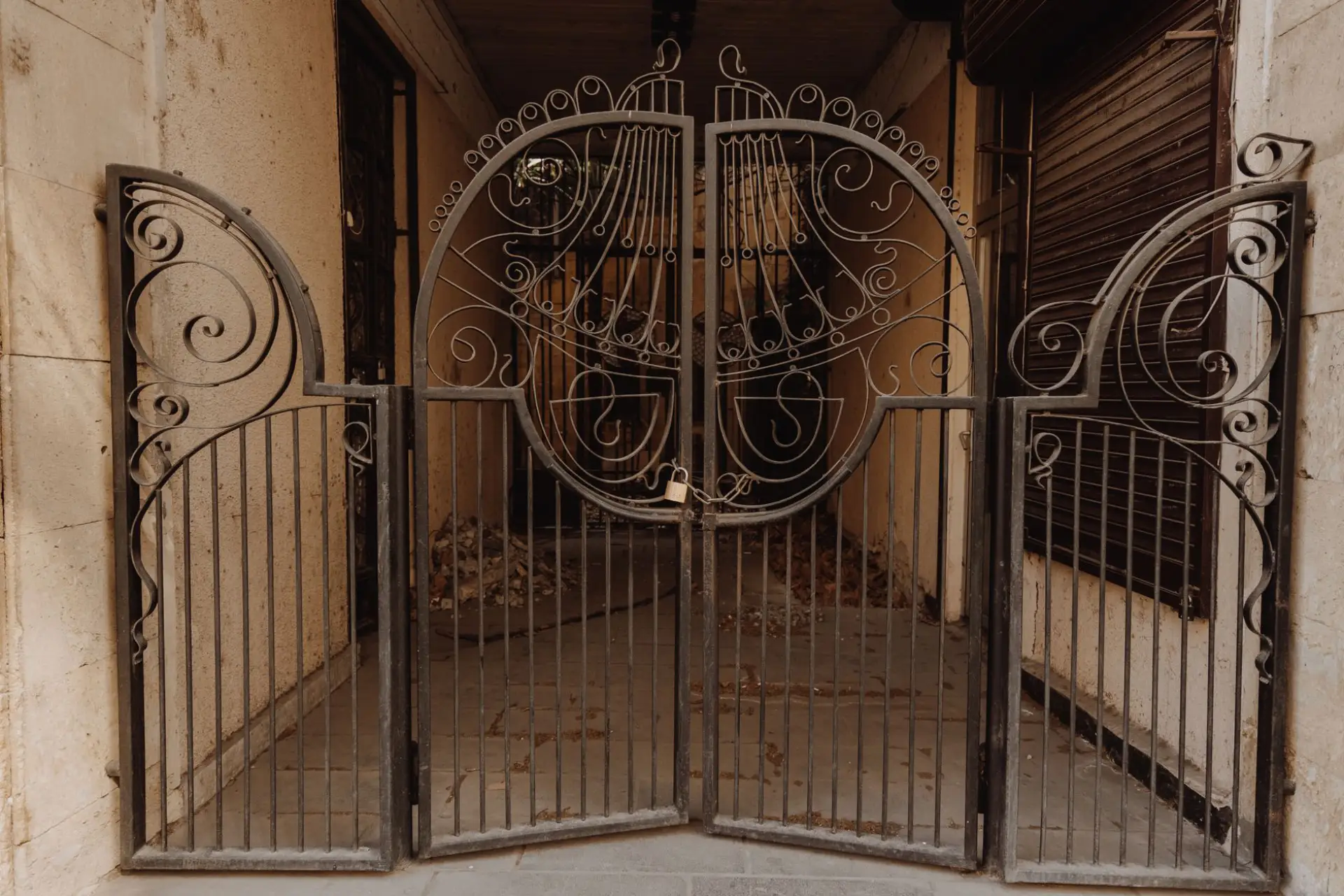
Custom Wrought Iron Gates in Elgin, IL — Residential & Commercial Ornamental Ironwork
Ornamental iron built to match what's already standing — pattern, picket spacing and finial style, not just colour. With a straight answer about what wrought iron actually is.
Elgin Elite Metal Gates is your local resource for wrought iron gates, ornamental ironwork and historic gate matching throughout Elgin, Kane County and the Fox Valley. We work with trusted ornamental iron specialists who will tell you plainly what the material in your gate actually is.
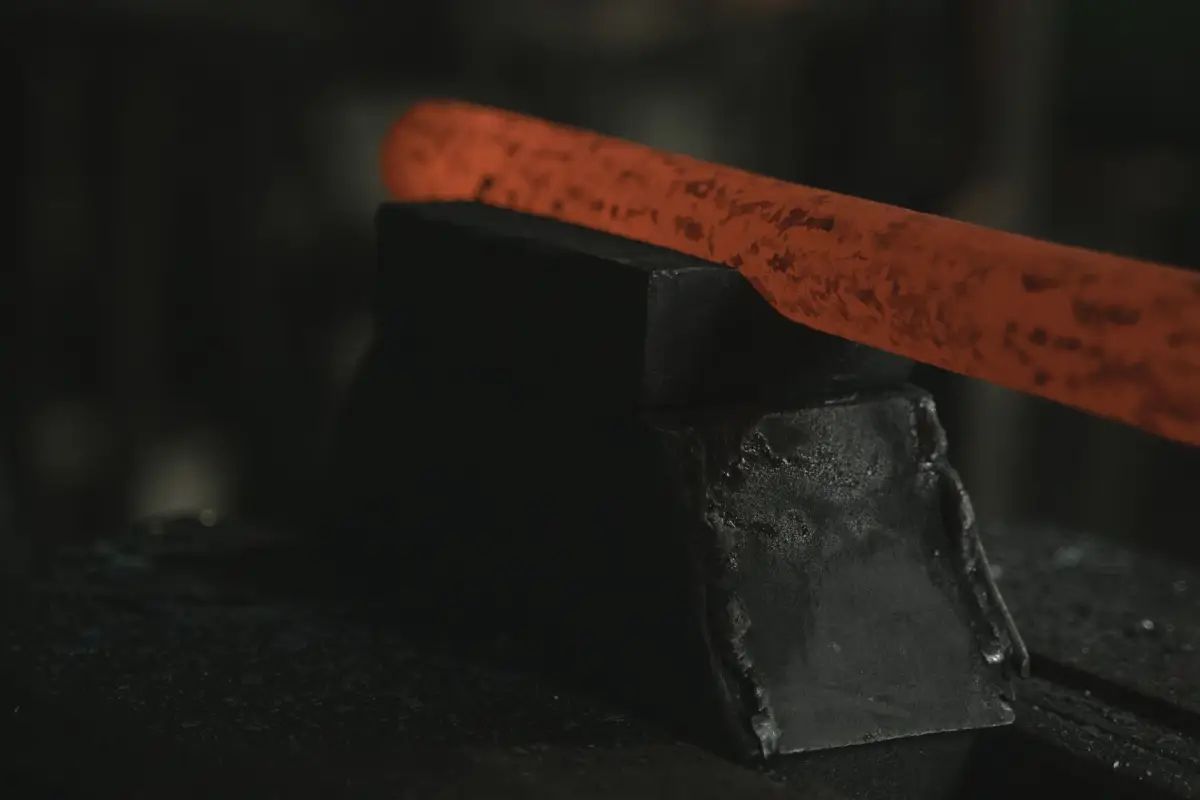
Start with the honest version, because most of the industry skips it. True wrought iron — the fibrous, slag-streaked material that was worked at a forge — hasn't been produced commercially in any volume for roughly a century. What the market sells as a wrought iron gate is mild steel, usually with cast decorative components. That's a genuinely good gate. It's only a problem when someone charges wrought-iron money for it and lets you believe otherwise.
So the real decisions are different from the ones the label implies. Solid bar stock or hollow tube. Forged components, worked hot with visible tool marks, or cast ones pulled from a mould and uniform. Those choices determine what the gate costs, what it weighs, and how it looks from three feet away — which is where ornamental work is actually judged.
In Elgin there's a further constraint that shapes most of this work. East of the Fox River, around the Gifford Park and Spring–Douglas historic districts, a new gate frequently has to answer to ironwork already on the property or next door. Matching there means pattern, picket spacing and finial style, and the design goes through a Certificate of Appropriateness review before it gets built.
What a Wrought Iron Gates Quote Covers
- A plain-language answer about material — what the gate will actually be made of, and what your existing ironwork actually is
- On-site measurement plus documentation of any existing ironwork the gate has to match
- Design drawing showing picket spacing, rail placement, scroll layout and finial style at real proportions
- Written spec covering solid versus tube stock and cast versus forged components
- Fabrication with welds ground and dressed on every face visible from the street
- Finish system built for road salt — hot-dip galvanizing under a zinc-rich primer and TGIC polyester powder coat
- Post footings below Elgin's 42-inch frost depth, with a JULIE locate placed first
- Hardware sized to a heavier ornamental leaf rather than to a catalog default
- Certificate of Appropriateness support where the property sits in a historic district
- Operator planning if the gate is to be automated, since ornamental infill adds weight and wind load
Custom Wrought Iron Gates in Elgin, IL
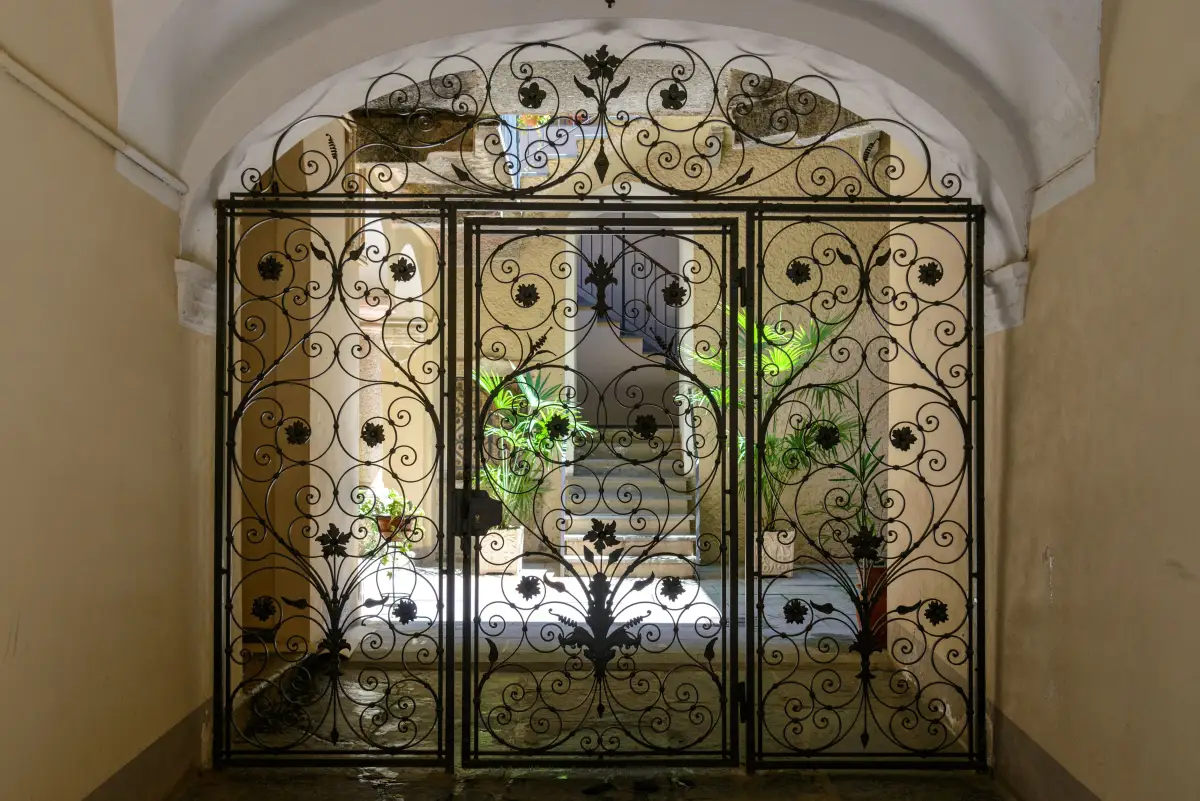
Wrought Iron Driveway Gates
An ornamental driveway gate is the heaviest version of this work, and weight is where the decisions bite. Solid bar pickets look and feel substantially better than hollow tube — they take knocks without denting and they have a density you can see in the shadow line — but a full-height ornamental leaf in solid stock gets heavy quickly. That weight drives the hinge rating, the post size, the footing, and if the gate is automated, the operator class. It also makes sag a live risk on any leaf over about 12 feet, which is why wide ornamental openings are almost always built as bi-parting pairs with a diagonal brace or internal tensioned cable hidden in the frame. Ornamental infill catches wind, too, which adds to operator sizing in a way the weight alone doesn't predict. None of this argues against a heavy gate — it argues for specifying the hardware around it rather than after it. See driveway gates.
Wrought Iron Pedestrian Gates
Walk gates are where ornamental iron earns its money, because they're seen from three feet away at walking pace. Scrollwork, collars and hammered detail read properly at that distance in a way they simply don't on a driveway gate glimpsed from a moving car — so a modest budget spent on a front walk gate often does more visually than a much larger budget spread across a wide drive gate. The practical constraint is height. Elgin caps street-yard fencing at 3 feet solid or 4 feet at 40% open, and in a historic district at 42 inches and 50% open, so a front ornamental gate is short by rule. That changes the design rather than limiting it: picket spacing and finial scale drawn for a 6-foot gate look wrong at 42 inches, and the proportions have to be redrawn rather than truncated. See pedestrian gates.
Automatic Wrought Iron Gates
Automating an ornamental gate is entirely normal, but it changes two things people don't expect. The first is operator sizing, because ornamental infill adds both mass and wind load — a scrolled panel gate catches air like a sail, and the operator has to be specified for the gust, not the average. The second is the operator's visibility. An articulated arm bolted to a hand-forged gate is a real aesthetic cost, which is why underground operators come up so often on this kind of work: the mechanism disappears entirely into a housing in the ground. The tradeoff is drainage. An underground housing that fills with meltwater and freezes will not move the gate in January, so the drainage detail matters as much as the operator choice. Safety obligations are identical to any automated gate — two independent means of entrapment protection per point per direction under UL 325, and ASTM F2200's 2.25-inch gap limit, which is worth checking against ornamental infill at the design stage rather than after fabrication.
Decorative & Ornamental Iron Gates
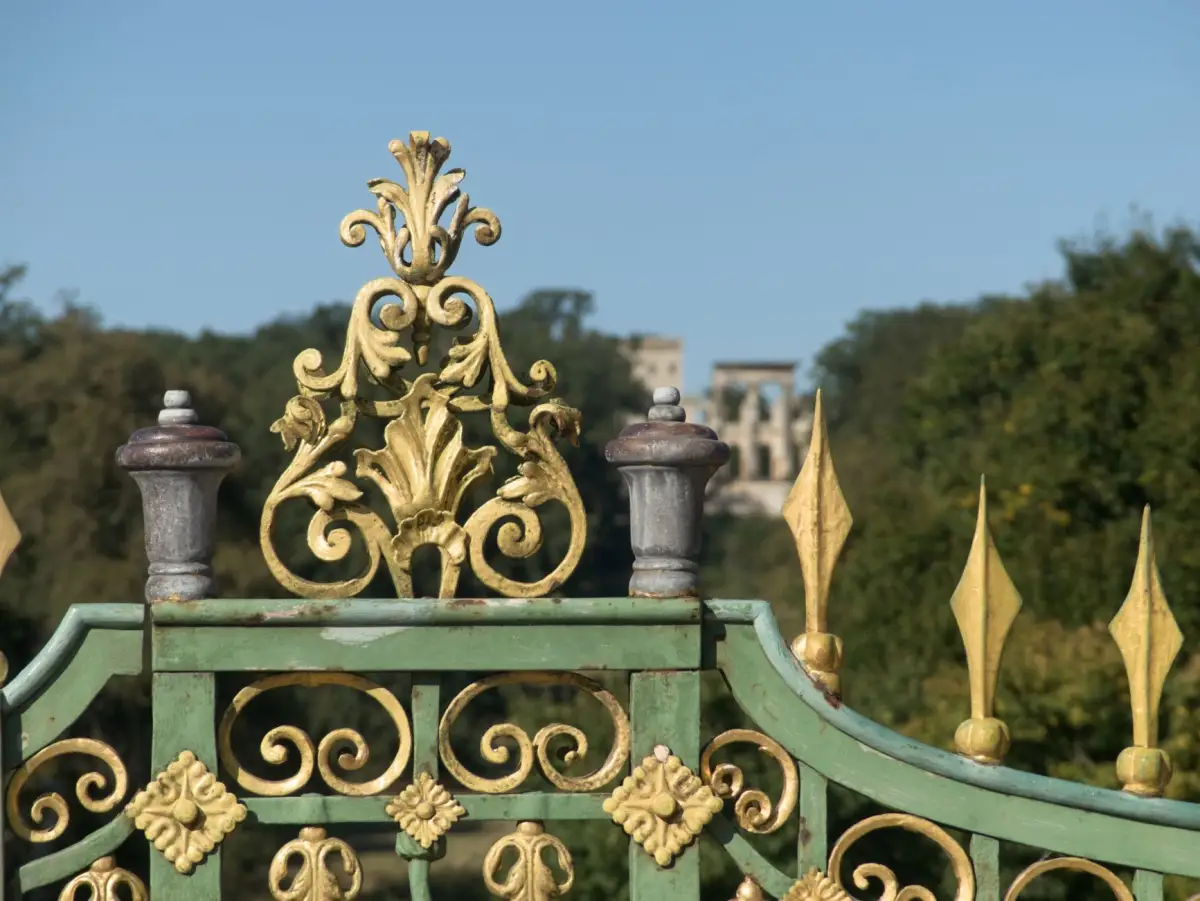
The vocabulary is worth knowing before you compare quotes, because it's where two similar-looking prices diverge. Pickets and rails form the frame. Finials cap the pickets. Collars wrap the point where bars cross. Scrolls, rings and hammered spheres fill the panel. Every one of those can be cast or forged. Cast components are poured into a mould — consistent, cheaper, and identical to each other. Forged components are worked hot, so the tool marks vary from one to the next and the surface has a texture a mould can't reproduce. At a distance nobody can tell. At three feet, on a front gate people walk past daily, the difference is obvious. That's the whole basis for deciding: put forged work where it's seen closely and cast work where it isn't, rather than paying for forged detail on a gate nobody approaches on foot.
Custom Wrought Iron Gate Designs
Most ornamental work in Elgin is either matching or original, and they're different jobs. Matching means documenting what's already standing — measuring picket spacing, photographing finial and scroll profiles, noting rail heights — and reproducing it on a new opening. It's more shop time than an original design, because the fabricator is working to someone else's proportions rather than their own, and it's what a Certificate of Appropriateness review in the Gifford Park or Spring–Douglas districts will expect to see. Original design is freer but has its own discipline: a pattern that looks balanced on paper can read as fussy at full scale, and scroll density that suits a 3-foot walk gate becomes overwhelming on a 12-foot drive gate. Either way the drawing gets approved before anything is cut, at real proportions rather than as a sketch. See custom metal gates for the material and finish decisions underneath the ornament.
Signs Ornamental Iron Is the Right Choice
- There's existing ironwork on the property — a porch rail, a fence run, an old gate — that a new gate should agree with
- The property is in or near one of Elgin's historic districts, where matching is expected and reviewed
- The gate is a front entrance people pass on foot, where close-range detail is actually seen
- You want a gate that takes decades of knocks without looking damaged, which favours solid stock over tube
- The house has a traditional character that horizontal slat or flat plate designs would fight
- You've been quoted 'wrought iron' and want to know what you're actually buying
- A previous ornamental gate has rusted at the seams and you want to know why before replacing it
How an Ornamental Iron Gate Gets Built
- 1
Measurement and documenting what's already there
Alongside the clear opening, the fall across it and the swing arc, this visit documents any ironwork the new gate has to live with. Picket spacing gets measured rather than estimated, rail heights recorded, and finial and scroll profiles photographed closely enough to reproduce. This matters more than it sounds: a new gate with pickets an inch off the spacing of the fence it joins reads as wrong to everyone who sees it, without most of them being able to say why. Where the property sits in a historic district, this documentation is also what supports the Certificate of Appropriateness application, since the review is concerned with pattern and proportion rather than colour. Existing masonry piers get assessed too — many older Elgin piers are decorative brick with no steel inside, and they will loosen before a properly rated hinge does.
- 2
Design drawing and material specification
The drawing is produced at real proportions, not as a sketch, because ornamental density is the thing that most often looks different at full scale than on paper. It fixes picket spacing, rail placement, scroll layout and finial style. Alongside it comes the written spec that actually determines the price: solid bar or hollow tube, frame tube wall thickness, and whether each decorative component is cast or forged. This is the document worth comparing between quotes, since two prices for visually identical gates routinely differ by thousands on exactly these points and neither difference shows in a rendering. Where the gate will be automated, the operator gets chosen at this stage — ornamental infill's wind load has to be in the sizing calculation before the panel design is finalised, not discovered afterward when the motor stalls on a gusty day.
- 3
Fabrication, welding and finish
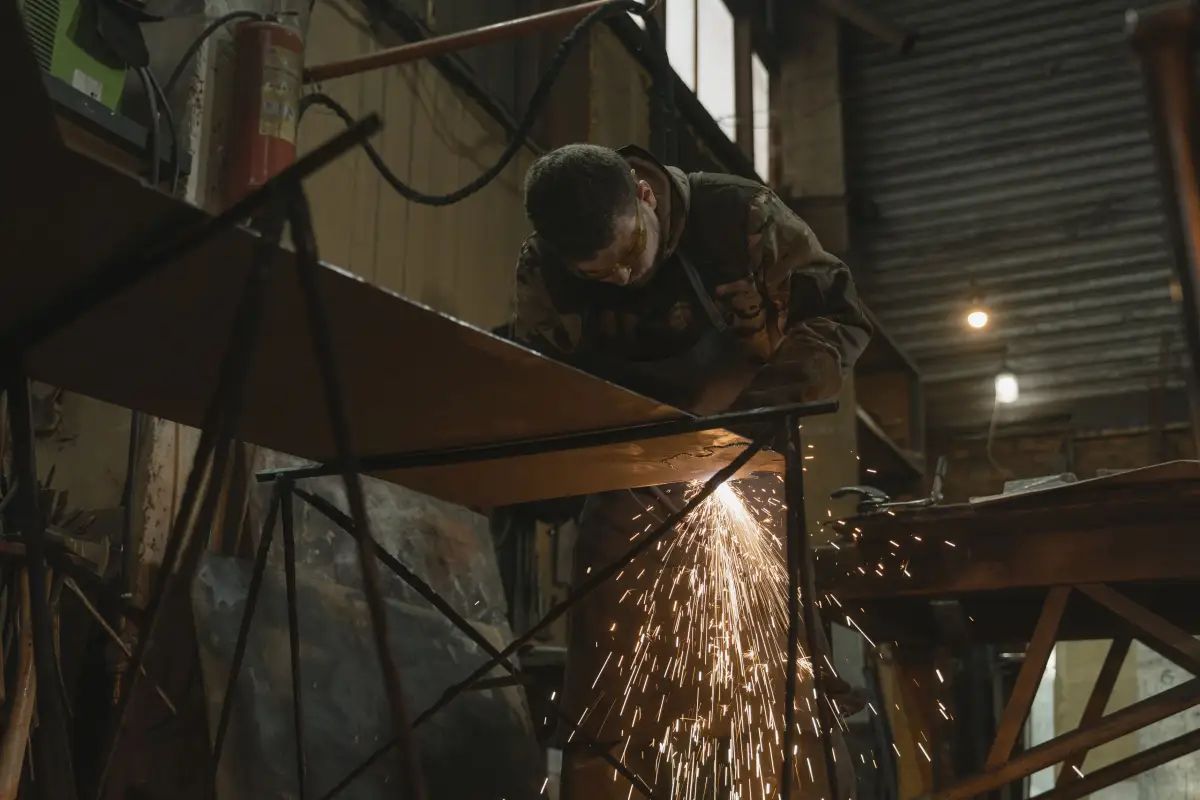
The frame is cut and squared, infill goes in, then decorative components are added. On faces visible from the street the welds are ground and dressed so the joint disappears; hidden welds inside the frame don't need it. Longer leaves get their diagonal brace or internal tensioned cable at this stage, concealed within the frame so it does its structural job without spoiling the pattern. Then the finish, which on ornamental work is where most of the long-term value sits. Powder coat applied straight to mild steel looks identical on delivery to a properly prepared gate and fails years sooner, because the first chip lets moisture under the film with nothing beneath it. Hot-dip galvanizing followed by a zinc-rich primer and TGIC polyester powder coat puts a sacrificial zinc layer between road salt and the steel. On a gate with dozens of welded joints — and ornamental gates have many — that matters more than on a plain one.
- 4
Posts, hanging and hardware
A JULIE locate goes in before digging. Ornamental leaves are heavy, so posts get sized for the load and footed below Elgin's 42-inch frost depth — below it, not to it, since a footing terminating inside the frost zone gets jacked upward each freeze-thaw cycle until the gate no longer meets its strike. Posts cure fully before any weight is hung; a heavy ornamental leaf on green concrete will pull a post out of plumb within a season. Hinges get rated comfortably above the calculated leaf weight rather than at it, because play at the hinge becomes droop at the free end and on an ornamental gate that droop distorts the pattern visibly. The leaf is hung, shimmed square and swung through its full arc, and the latch, drop rod or cane bolt is set last to where the gate actually rests.
What Do Wrought Iron Gates Cost in Elgin, IL?
- Solid bar stock versus hollow tube, which is the single largest driver and invisible in a rendering
- Forged versus cast decorative components — forged costs more and shows at close range
- Ornamental density: the number of scrolls, collars, rings and finials, each of which is fabrication time
- Opening width, and whether it's a single leaf or a bi-parting pair with concealed bracing
- Matching existing ironwork, which takes more shop time than an original design
- Finish system, particularly whether hot-dip galvanizing sits under the powder coat
- Post sizing and footings, which scale with a heavier ornamental leaf
- Automation, where ornamental wind load pushes the operator class up
- Certificate of Appropriateness review where the property is in a historic district
The line most worth reading closely on an ornamental quote is the material spec, because ornamental gates are where the gap between two similar prices is widest and least visible. A gate in hollow tube with cast components and a gate in solid bar with forged components can be drawn identically, quoted thousands apart, and look the same in a photograph. From three feet away on a front walk they don't. Ask which you're being quoted, in writing, on every quote you collect.
What to Look for in an Elgin Ornamental Iron Fabricator
A Straight Answer About the Material
True wrought iron hasn't been made commercially in about a century. A fabricator who tells you that unprompted is a fabricator being honest about everything else too.
Cast Versus Forged Stated in Writing
It's the difference you see at three feet and the difference you pay for. It should be on the spec, not left to be discovered on delivery.
Existing Ironwork Actually Measured
Matching means picket spacing and finial profiles recorded on site, not approximated from a photo. It's what a historic-district review will expect.
Bracing Concealed, Not Omitted
A long ornamental leaf needs a diagonal brace or internal cable. Hiding it inside the frame is craft; leaving it out is a gate that will sag.
Galvanizing Under the Coating
Ornamental gates have dozens of welded joints, and weld seams are where road salt starts. The finish matters more here than on a plain gate.
Drawings at Real Proportions
Ornamental density reads differently at full scale than on paper. An approved drawing at proper proportions prevents an expensive surprise.
Residential & Commercial Wrought Iron Gates
Residential
Residential ornamental work in Elgin divides between matching and original. East of the Fox River, around Gifford Park and Spring–Douglas, matching dominates — a new gate has to agree with ironwork already standing, and the design goes through review. Elsewhere the work is freer, and the usual conversation is about where to concentrate the budget: forged detail on the front walk gate where it's seen closely, simpler work on the drive gate seen from a car.
Commercial
Commercial ornamental iron shows up on entrances where appearance is part of the property's presentation — offices, institutions, apartment entrances. The design considerations are the same; the difference is cycle count, which pushes hinge and operator specification up substantially. See commercial metal gates.
Who Shouldn't Order an Ornamental Iron Gate
- You're expecting genuine antique wrought iron. It isn't commercially produced, and anyone offering to fabricate a new gate from it is either salvaging or misrepresenting.
- The budget is set for cast components but the expectation is hand-forged detail. Those are different price tiers, and the substitution is exactly what a vague quote enables.
- The gate faces a driveway seen only from a moving car. Ornamental detail is judged at three feet — spend it on the walk gate instead.
- Your existing ornamental gate has surface rust at the seams. That's treatable — see metal gate repair — not a reason to replace it.
- The property is outside Kane, Cook, DuPage, McHenry and Lake Counties.
Related Services
- Custom Metal Gates in Elgin, IL
Material and finish decisions underneath the ornament — steel, aluminum, stock and coatings.
- Pedestrian Gates in Elgin, IL
Front entry and garden gates, where close-range ornamental detail is actually seen.
- Driveway Gates in Elgin, IL
Vehicle openings, where ornamental weight and wind load drive hardware selection.
- Metal Gate Repair in Elgin, IL
Restoring existing ironwork — rust at the seams, sagging leaves and worn hinges.
Serving Nearby Cities
Gate work across Kane, Cook, DuPage, McHenry & Lake Counties. Each city page covers the local permit requirements, footing depth and the configurations that come up most often there.
- South Elgin
- Streamwood
- Bartlett
- Carpentersville
- Hanover Park
- Hoffman Estates
- St. Charles
- Algonquin
- Schaumburg
- Lake in the Hills
- West Chicago
- Carol Stream
- Huntley
- Batavia
- Glendale Heights
- Palatine
- Crystal Lake
- Wheaton
- Arlington Heights
- Addison
- Lombard
- Mount Prospect
- Buffalo Grove
- Aurora
- Elmhurst
- Des Plaines
- McHenry
- Naperville
- Downers Grove
- Woodstock
Frequently Asked Questions
- Is wrought iron actually iron?
- Not in anything sold new today. True wrought iron is a low-carbon, slag-streaked material that was worked at a forge, and it hasn't been produced commercially in volume for roughly a century. Every new gate described as wrought iron is mild steel, usually with cast or forged decorative components. That's a good gate — the term has simply become a style description rather than a material one. The thing to watch is being charged a premium on the assumption that the label means something it doesn't.
- What's the difference between cast and forged components?
- Cast components are poured into a mould, so they're consistent, cheaper, and identical to one another. Forged components are worked hot, so the tool marks vary and the surface carries a texture a mould can't reproduce. At a distance the difference is invisible. At three feet — on a front walk gate people pass daily — it's obvious. The sensible approach is putting forged work where it's seen closely and cast work where it isn't.
- Will an iron gate rust in Illinois winters?
- Bare or poorly finished steel will, and it starts at the weld seams, where the heat-affected zone gives road salt somewhere to work. Ornamental gates have far more welded joints than plain ones, so the finish matters more here. Hot-dip galvanizing under a zinc-rich primer and powder coat puts a sacrificial zinc layer between the salt and the steel. Powder coat applied straight to mild steel looks the same on delivery day and fails years earlier.
- Can a new iron gate match my existing ironwork?
- Yes, and it's a large share of the ornamental work in Elgin. Matching properly means measuring the existing picket spacing and rail heights on site and photographing finial and scroll profiles closely enough to reproduce them — not approximating from a photo. It takes more shop time than an original design because the fabricator is working to someone else's proportions. In a historic district it's also what the Certificate of Appropriateness review will expect to see.
- Do I need approval for an iron gate in a historic district?
- Yes. Properties in Elgin's historic districts need a Certificate of Appropriateness in addition to the building permit, and the review looks at pattern and proportion rather than just colour. Street-yard fencing there is also capped at 42 inches and 50% open, and all fences must be painted. Design accordingly from the start — it's much easier than revising after a review.
- Can an ornamental iron gate be automated?
- Yes, with two caveats. Ornamental infill adds wind load as well as weight, so the operator gets sized for the gust rather than the average — a scrolled panel catches air like a sail. And a visible operator arm on a hand-worked gate is a genuine aesthetic cost, which is why underground operators come up often on this kind of work. If you go underground, the housing's drainage detail matters as much as the operator: one that fills with meltwater and freezes won't move the gate in January.
Learn More
- City of Elgin — Fence Permit Quick Guide — Elgin's permit requirements, street-yard height limits, and the Certificate of Appropriateness rule for historic-district properties.
- American Galvanizers Association — Duplex Systems — Why hot-dip galvanizing under powder coat outlasts either finish on its own, particularly where road salt is in play.
- City of Elgin — Common Residential Permits — Which residential projects need a permit in Elgin and how the application is filed.
Get a Quote for Wrought Iron Gates in Elgin, IL
Send over the opening you’re working with and get an on-site measurement and quote — no charge for the estimate, no obligation to book it.
Get My Free Estimate